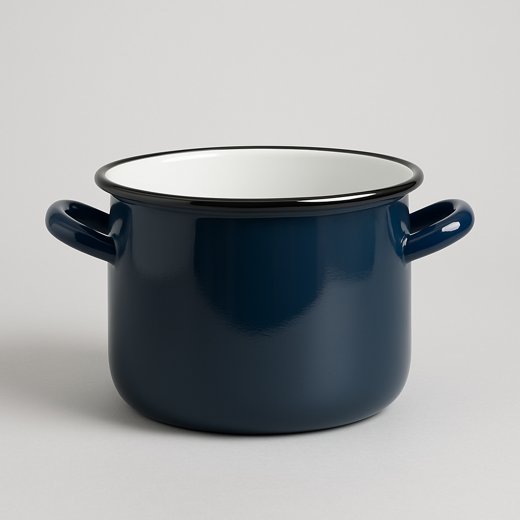
Steel Pot & Pan Bodies (Interior/Exterior)
Outgassing in deep-drawn steel can cause fish scale; decarburized steel and two-coat/one-fire powder enamel for a non-porous, acid-resistant interior.
Request Details & a Quote
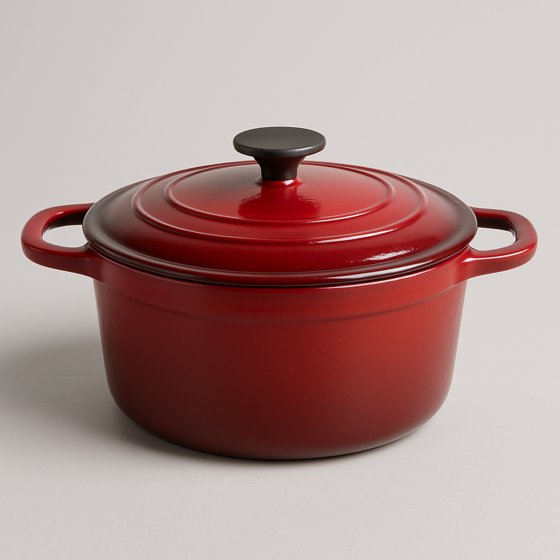
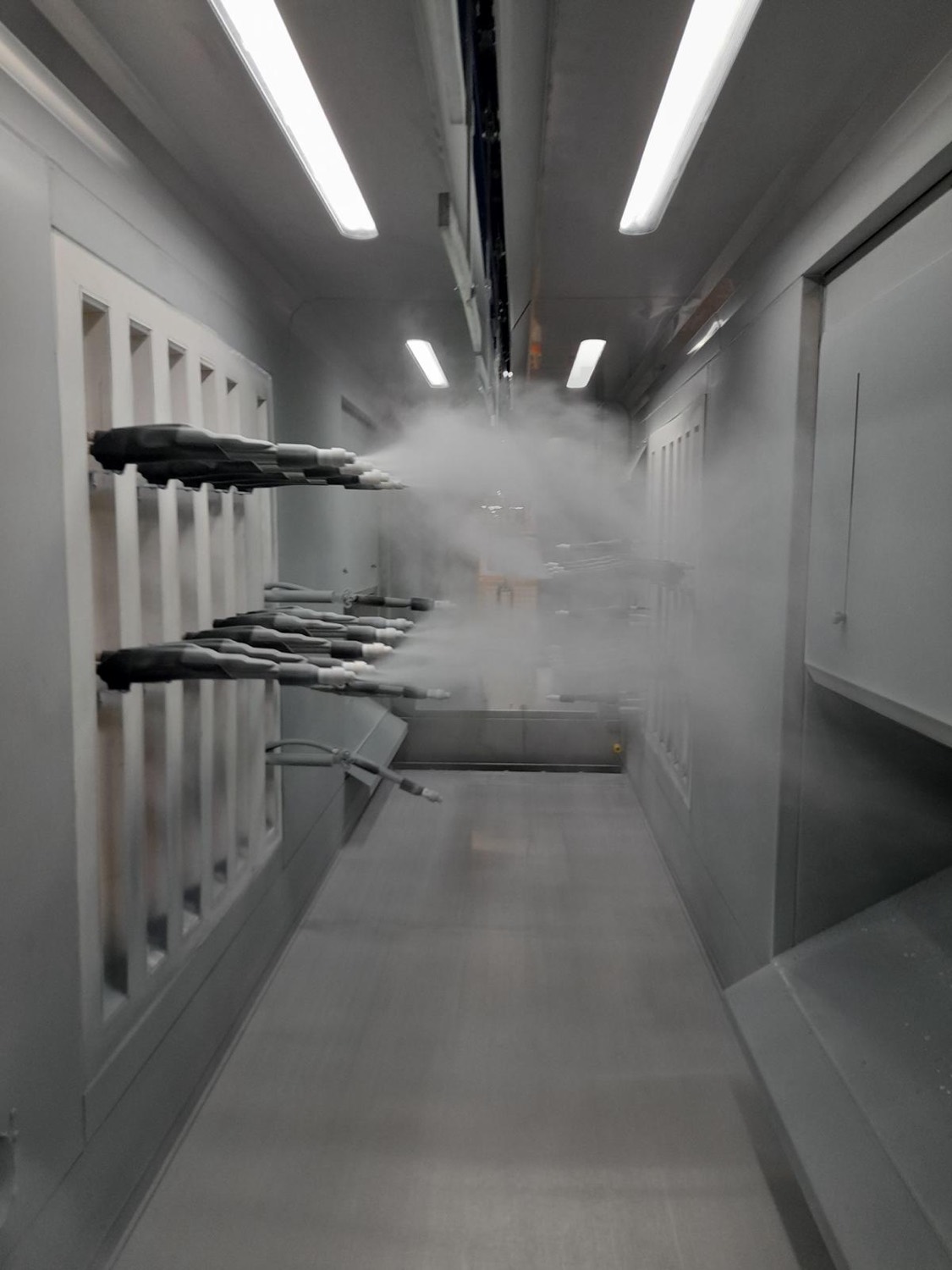
From dip wet (slip) enamel lines for cast iron pots and pans to electrostatic powder enamel plants for steel bodies — vitreous enamel surfaces that withstand heat, corrosion and food contact, engineered for production volume.
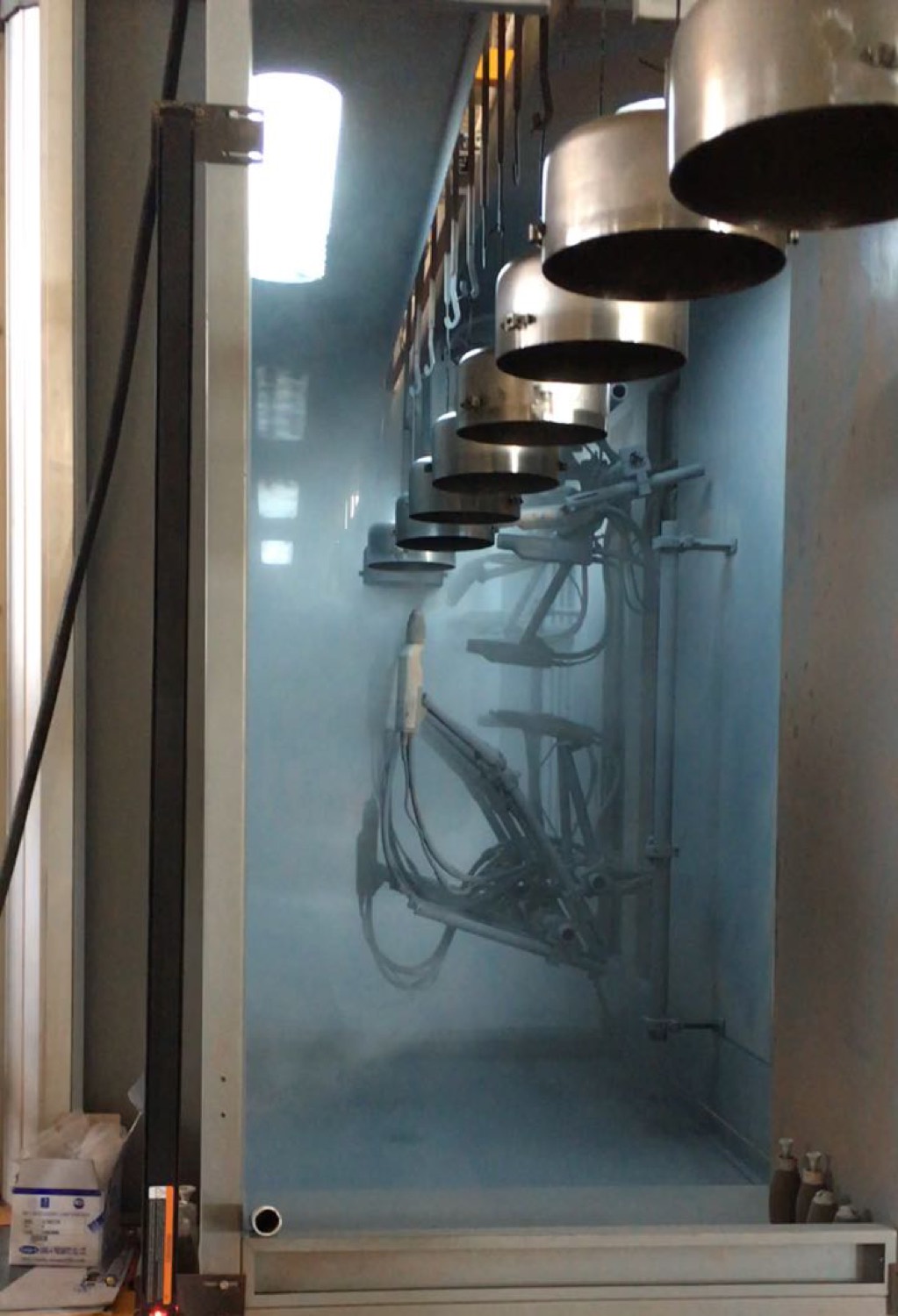
Enamel is a glass layer fused to metal at approximately 780–850°C — not a paint. Cast iron pots and pans need this vitreous surface to withstand heat, corrosion, scratching and food contact. STRONG3000 engineers the application, automation and enamel firing furnace technology for both electrostatic powder enamel plants for steel bodies and wet (slip) enamel lines for cast parts.
From individual application equipment to complete turnkey lines, we tailor the process to every cookware part and production target.

In cookware, the substrate (decarburized steel or gray cast iron) determines the process: steel bodies are coated with electrostatic powder enamel, cast parts with wet (slip) enamel. Below we summarize how we approach each part; you can download technical datasheets (PDF) for the part-specific engineering/metallurgy approach.

Outgassing in deep-drawn steel can cause fish scale; decarburized steel and two-coat/one-fire powder enamel for a non-porous, acid-resistant interior.
Request Details & a Quote
Outgassing from casting porosity in cast iron can cause blistering; ground coat + cover coat wet enamel and controlled firing for a food-contact interior and a decorative vitreous exterior.
Request Details & a Quote
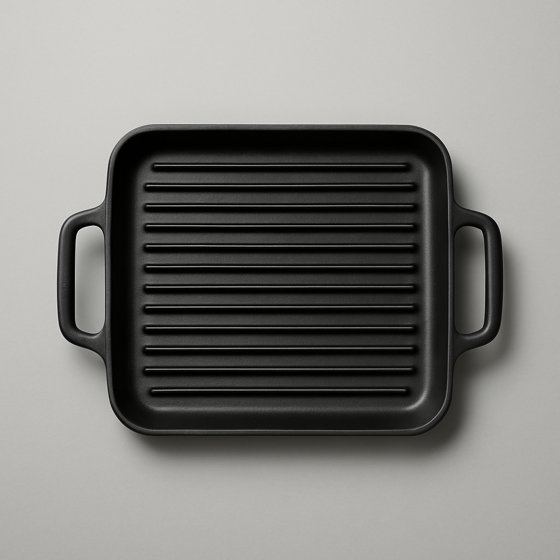
On ribbed grill profiles the ridge tops thin out and the groove bottoms pool; ground coat + cover coat wet enamel and a tuned slip recipe for a uniform grill surface that withstands high heat.
Request Details & a Quote
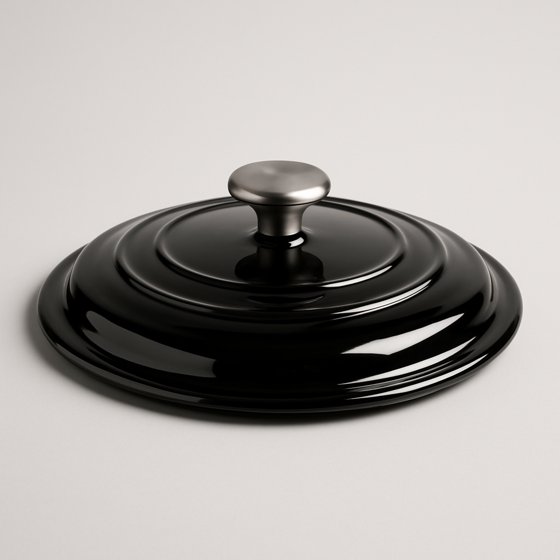
Drip nubs on the lid interior collect enamel and edges pull back; ground coat + cover coat wet enamel for a blister-free interior and exterior vitreous surface color-matched to the body.
Request Details & a Quote
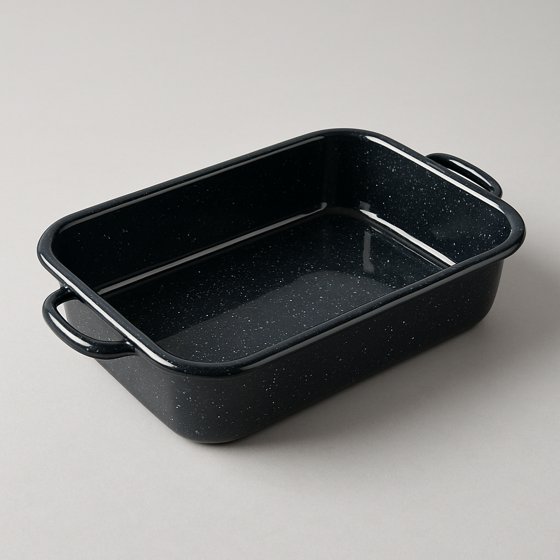
Edge pull-back and Faraday effect at corner radii and folded edges; decarburized steel and two-coat/one-fire powder enamel for an oven-heat-resistant, food-contact surface.
Request Details & a Quote
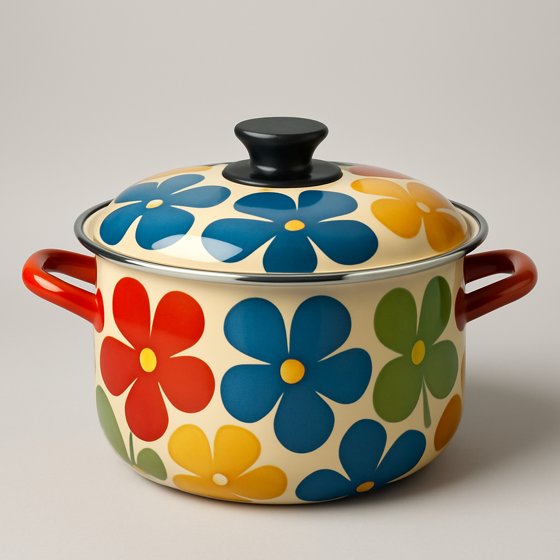
Color/gloss consistency over the large exterior surface and edge pull-back at the rim curl are critical; decarburized steel and uniform powder enamel for a decorative exterior that withstands cooktop heat.
Request Details & a QuoteDry glass-frit vitreous enamel, electrostatically applied and fired, for steel pots, pans and panels.
Wet (slip) enamel applied by dipping, flow coating or slip spraying, and enamel firing furnaces, for cast iron pots and complex hollow parts.
Robot and robotic application equipment for consistent, high-volume cookware production.
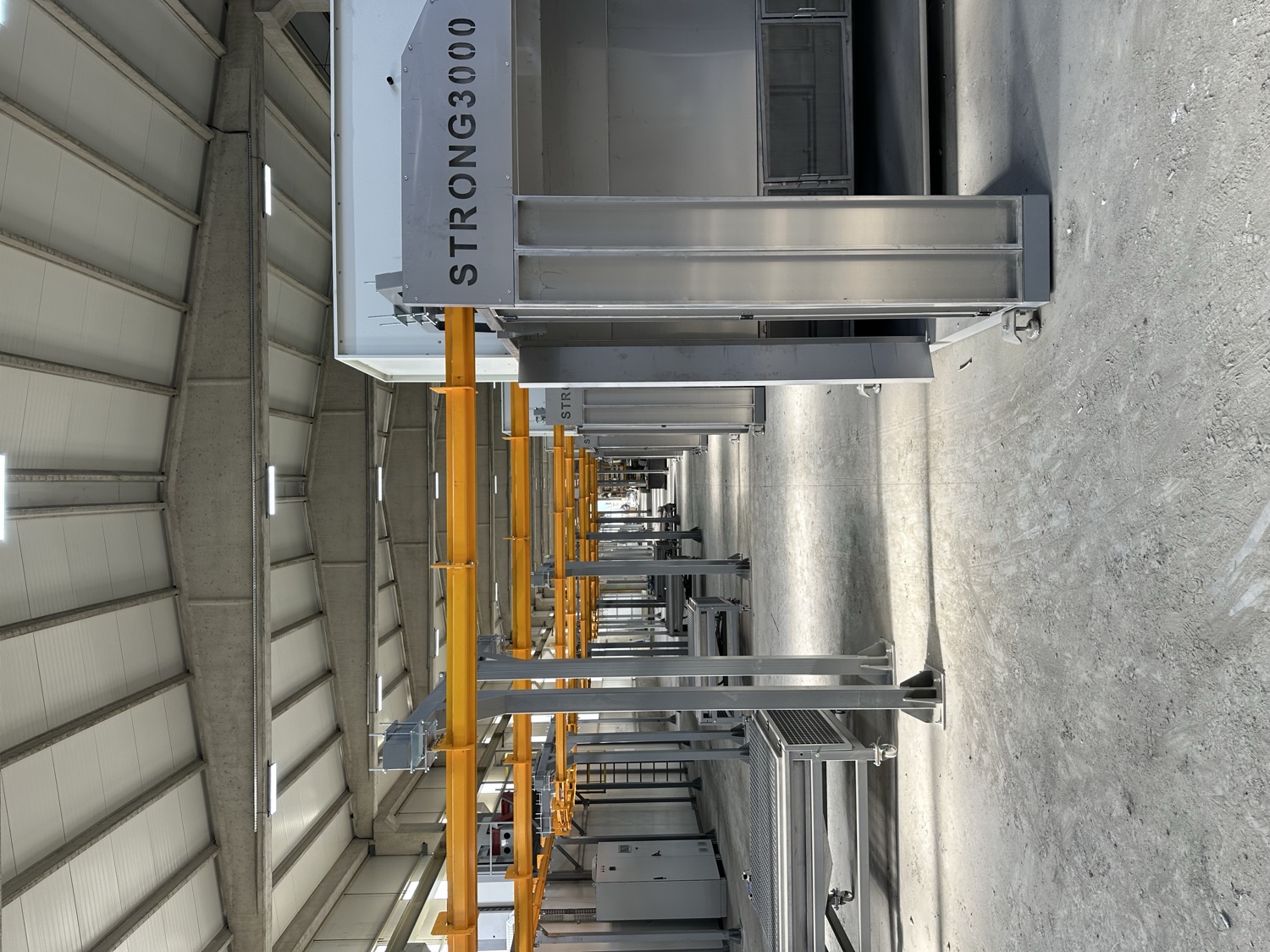
Complete enamel coating plants engineered around your cookware production targets.
Adaptive control for repeatable results across a wide variety of cookware parts.
Uniform enamel thickness on deep and hollow cookware geometries.
STRONG3000's expertise in both techniques — from powder enamel guns to enamel firing furnaces, and from slip enamel application equipment to turnkey cast iron enamel production lines — means a complete solution from a single partner.


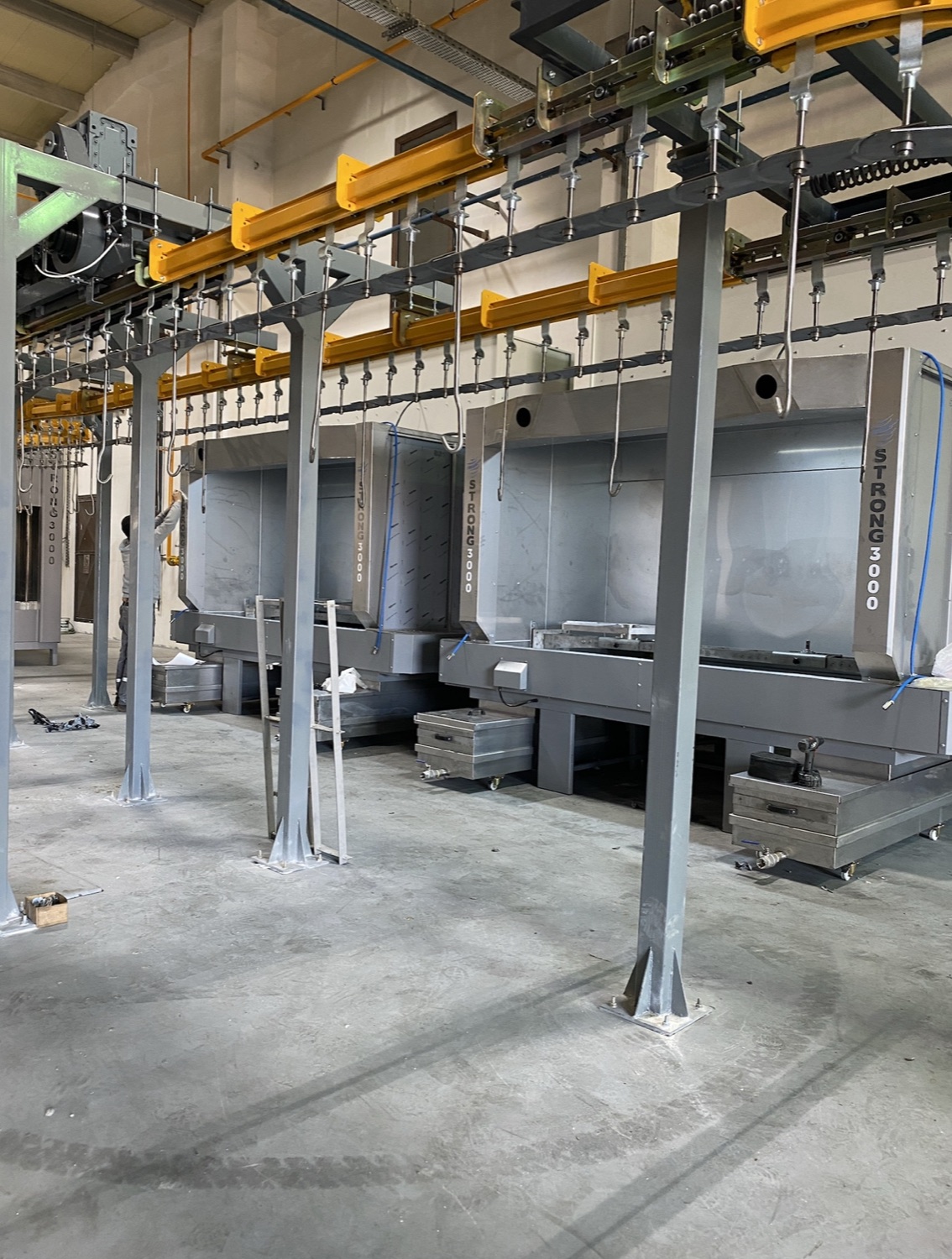
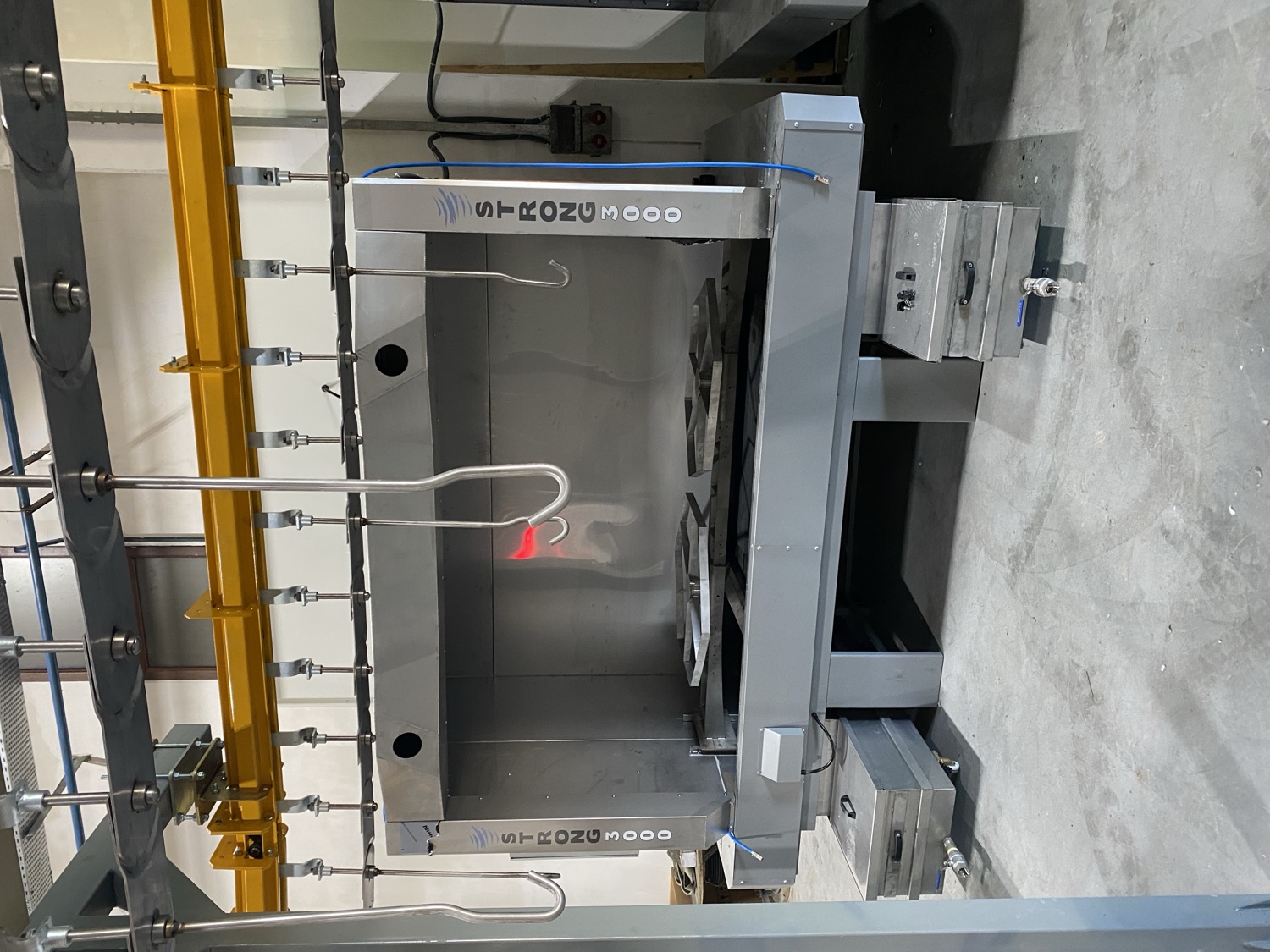
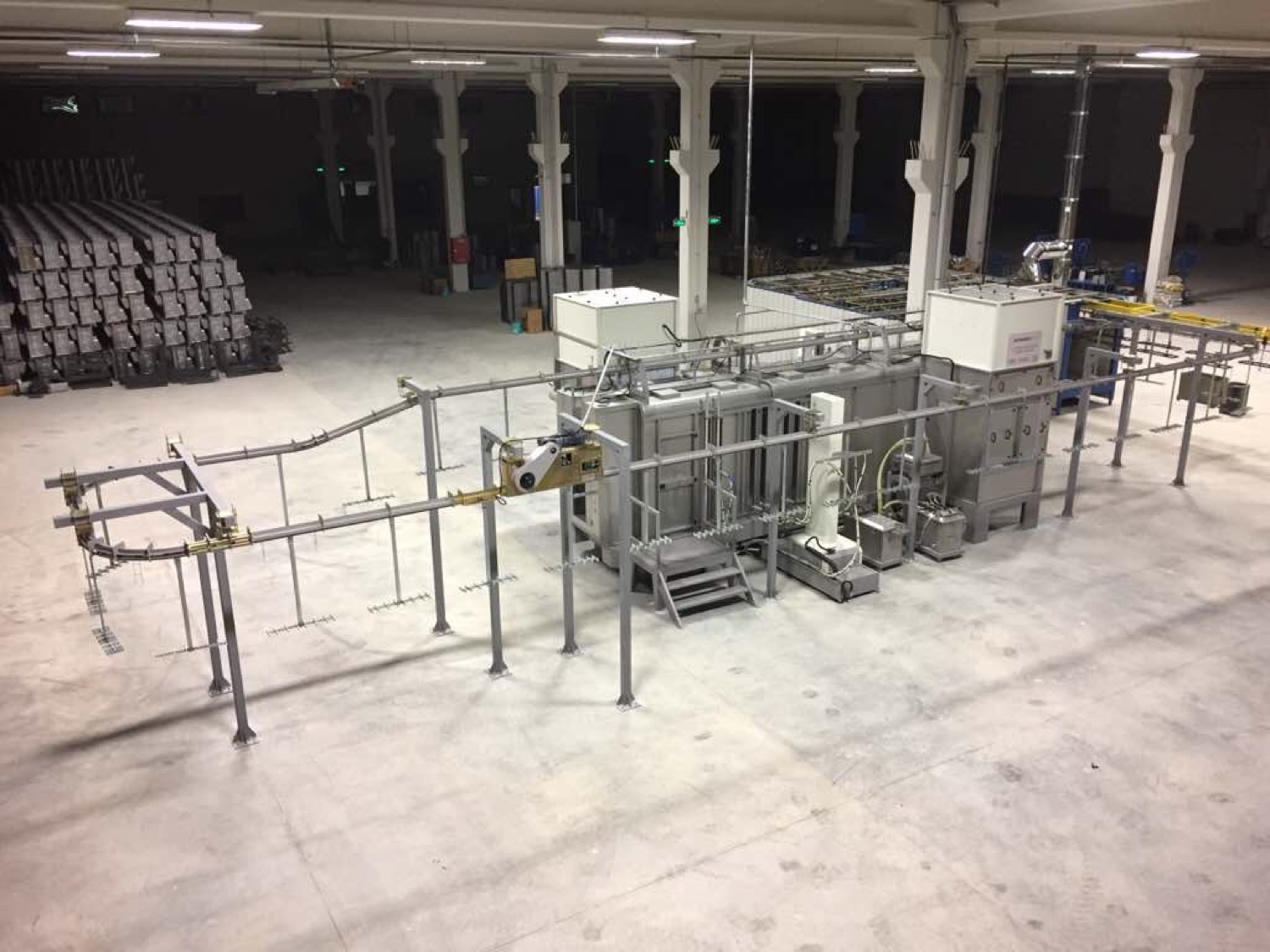
Wet enamel coating plant for grates and pots/pans, including a U-type enamel application booth.

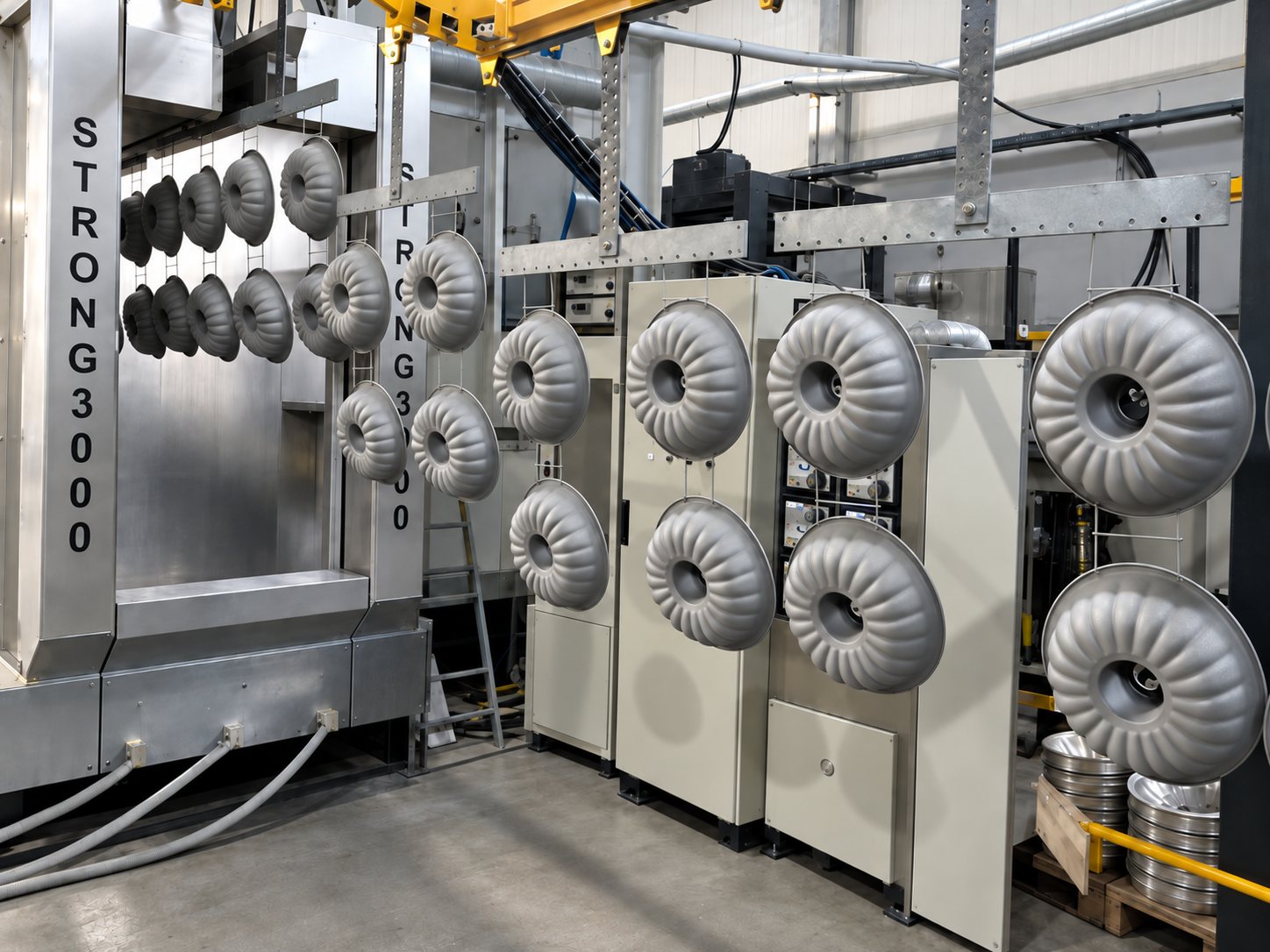
Enamel coating line with overhead conveyor for cake / bundt molds.

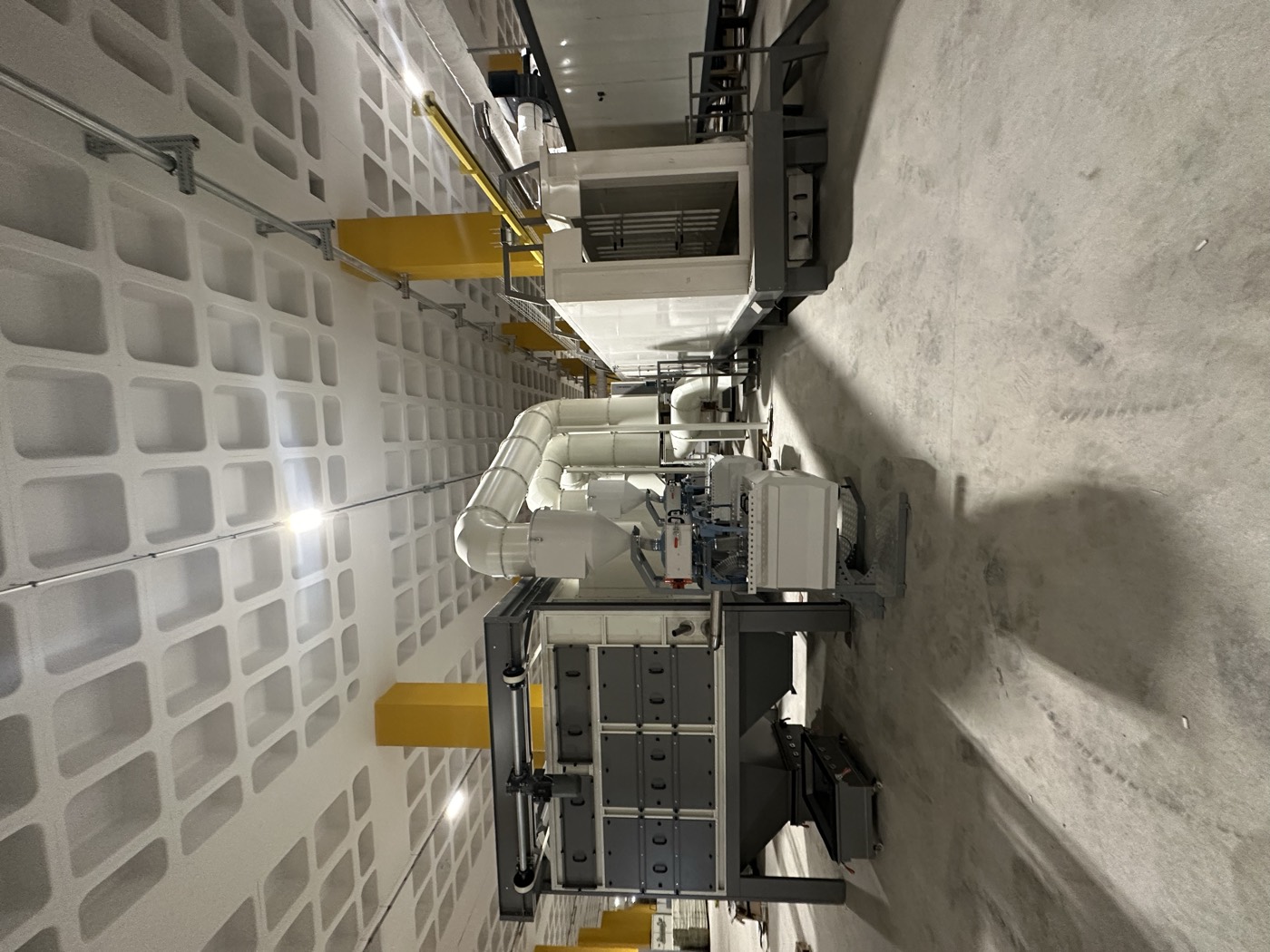
Sintering (enamel) furnace, washing and drying line for enameling plants.
Tell us about your part (cast iron / steel), substrate and production volume — we'll recommend the right enamel process (wet enamel line or electrostatic powder enamel plant) and line configuration.
Tell us about your cookware part and volume. A STRONG3000 engineer will get back to you with a recommended process.