Water & Wastewater
Valve Enamel Coating
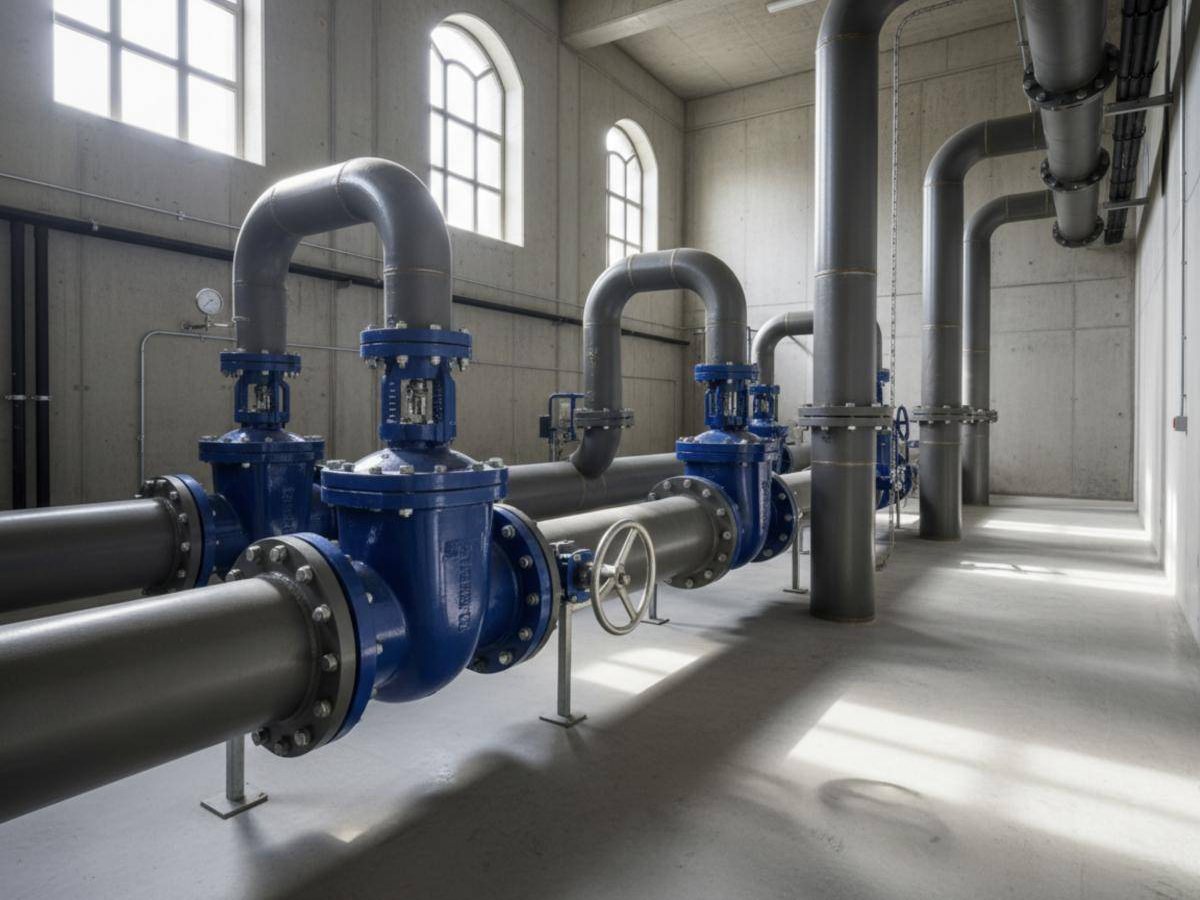
Inner and outer surfaces of gate and butterfly valves, hydrants and fittings. For raw and drinking-water valves, ISO 11177 defines the quality requirements and test methods for the enamel.


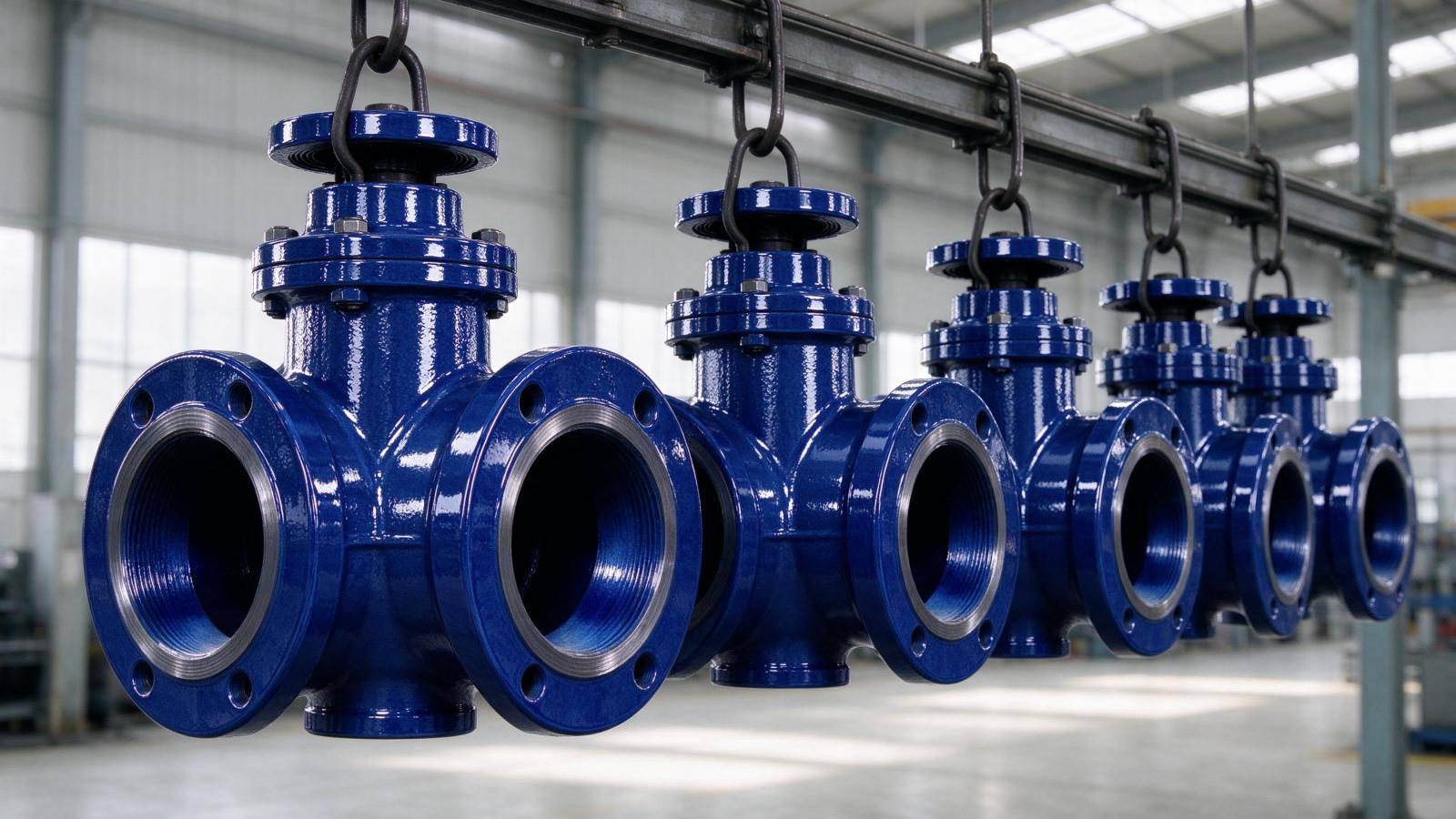
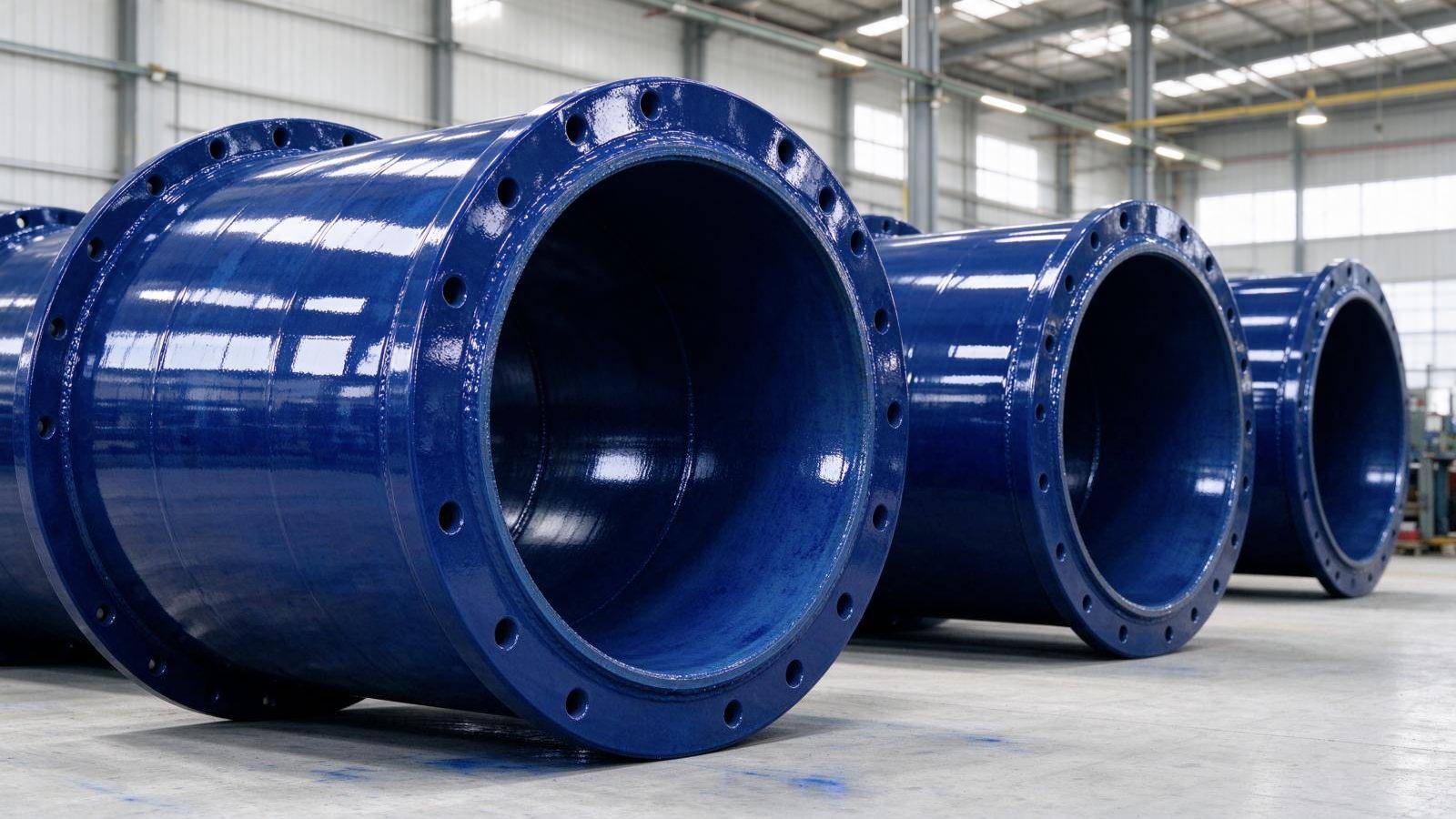
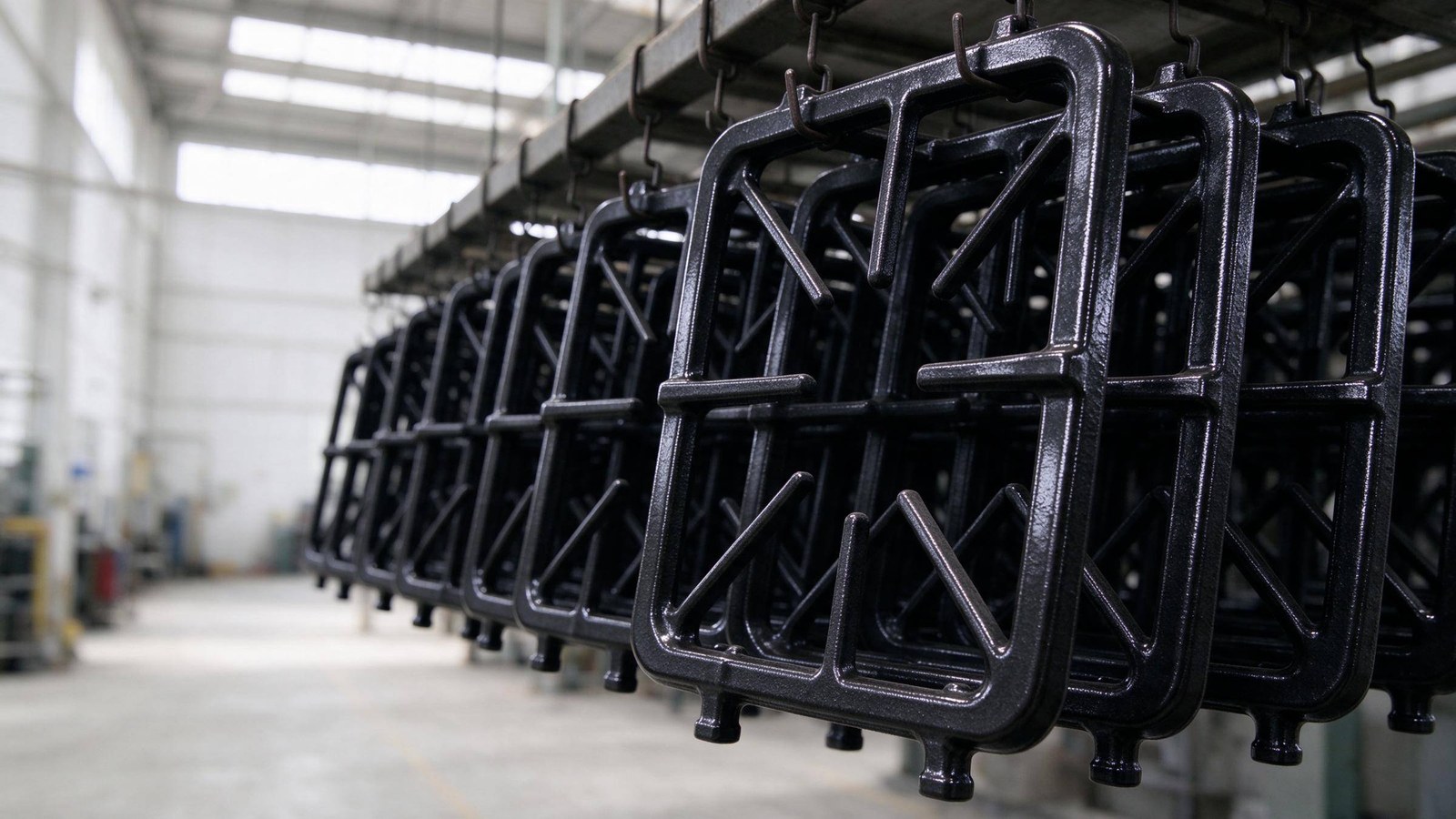
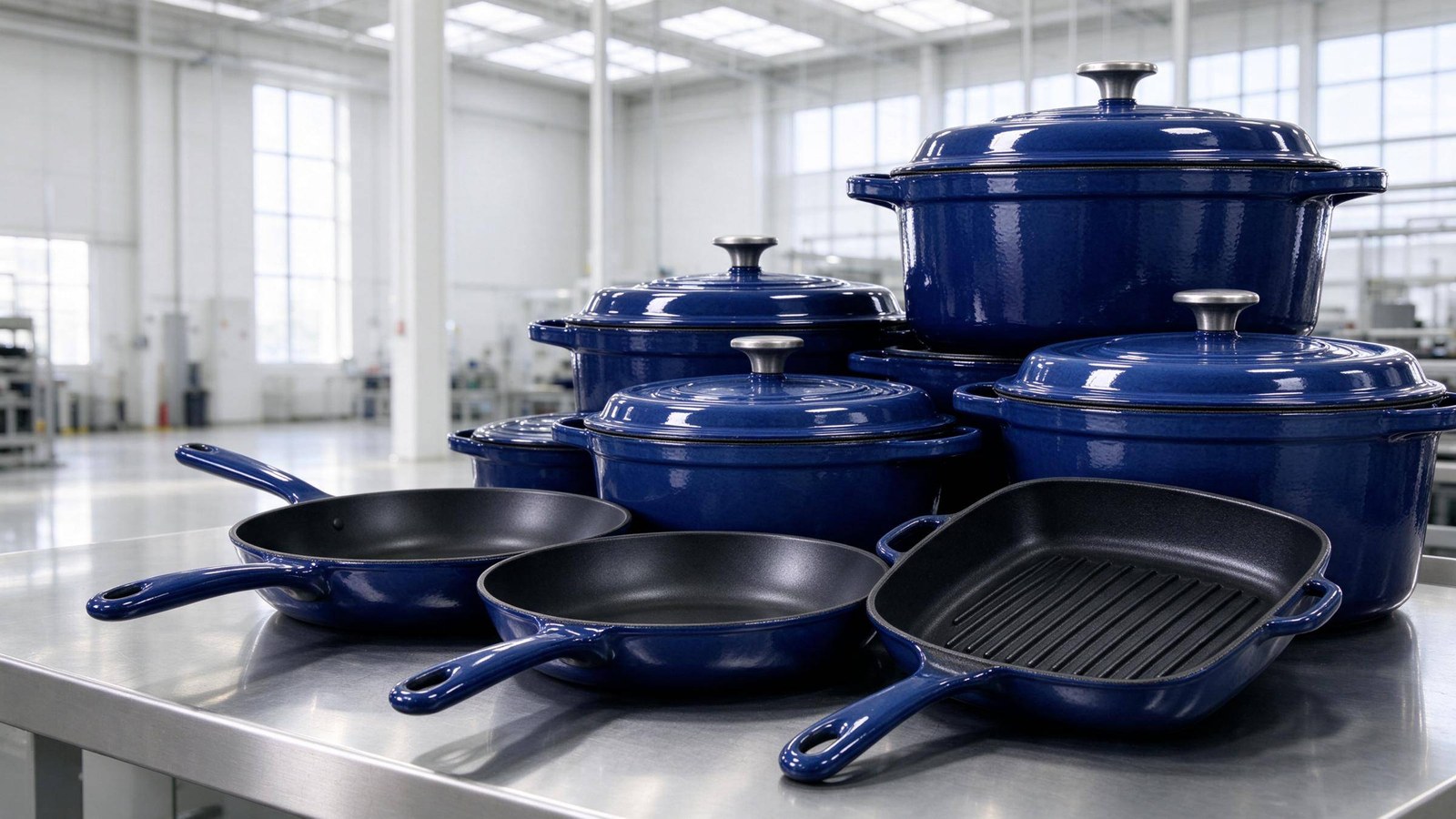
Inner and outer surface enamel for everything from valves, pipes and fittings to cast iron hob grates, pots and pans: a glass layer fused to the metal at about 830 °C that resists water, soil, salt, chemicals and heat.
Wet enamel is made by spraying a liquid enamel (slip) prepared from glass frit, clay and water onto the part, drying it and firing it at about 830 °C. During firing the glass melts and fuses to the steel or cast iron, forming a hard, glassy surface.
On parts with an internal volume, such as valve bodies and pipes, the liquid enamel also covers the inner surface and recesses. STRONG3000 designs the line as one system — from pretreatment and application booths to drying and firing ovens, conveyors and automation. Powder enamel application can also be set up for the same parts.
Not to be confused with the bitumen- and asphalt-based coatings that the pipe industry also calls “enamel”: vitreous enamel is glass-based and fired in a furnace.
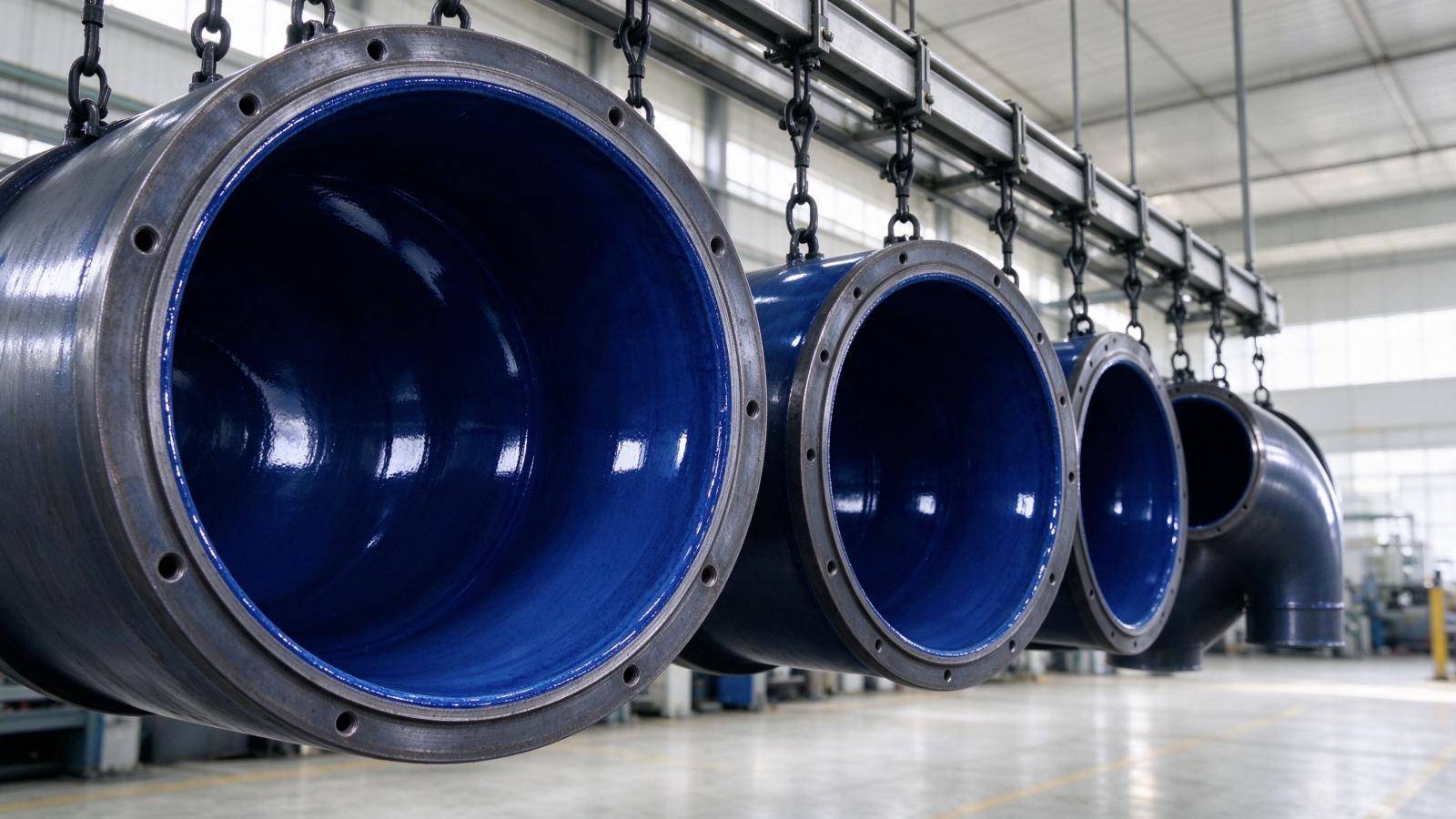
On valves and pipes in constant contact with water, soil, seawater and chemicals, the surface is the only barrier between the metal and its environment. Enamel builds that barrier as a glass layer fused to the metal.
Inner and outer surfaces of gate and butterfly valves, hydrants and fittings. For raw and drinking-water valves, ISO 11177 defines the quality requirements and test methods for the enamel.
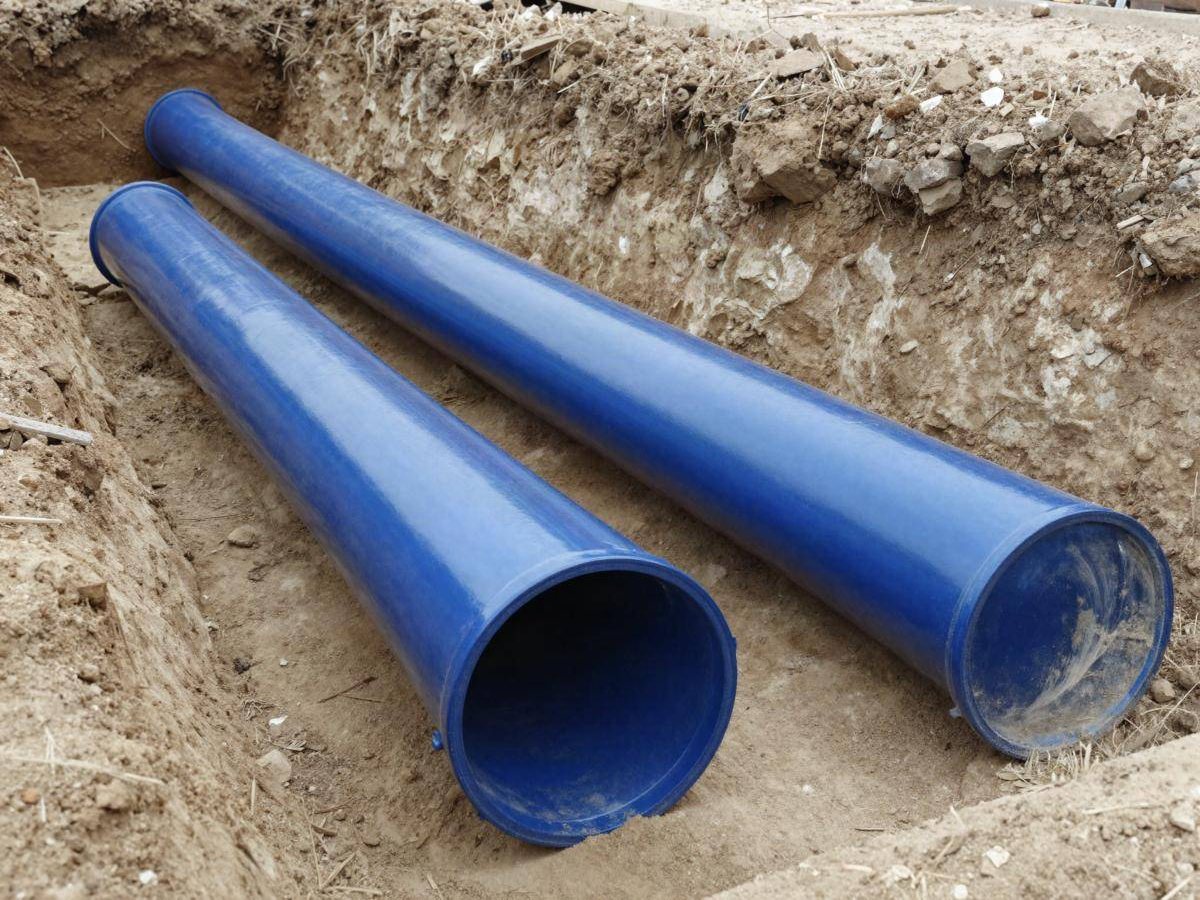
In buried water lines the outer surface meets the moisture and salts in the soil, while the inner surface carries the flowing water. Enamel covers both surfaces with a glass layer.
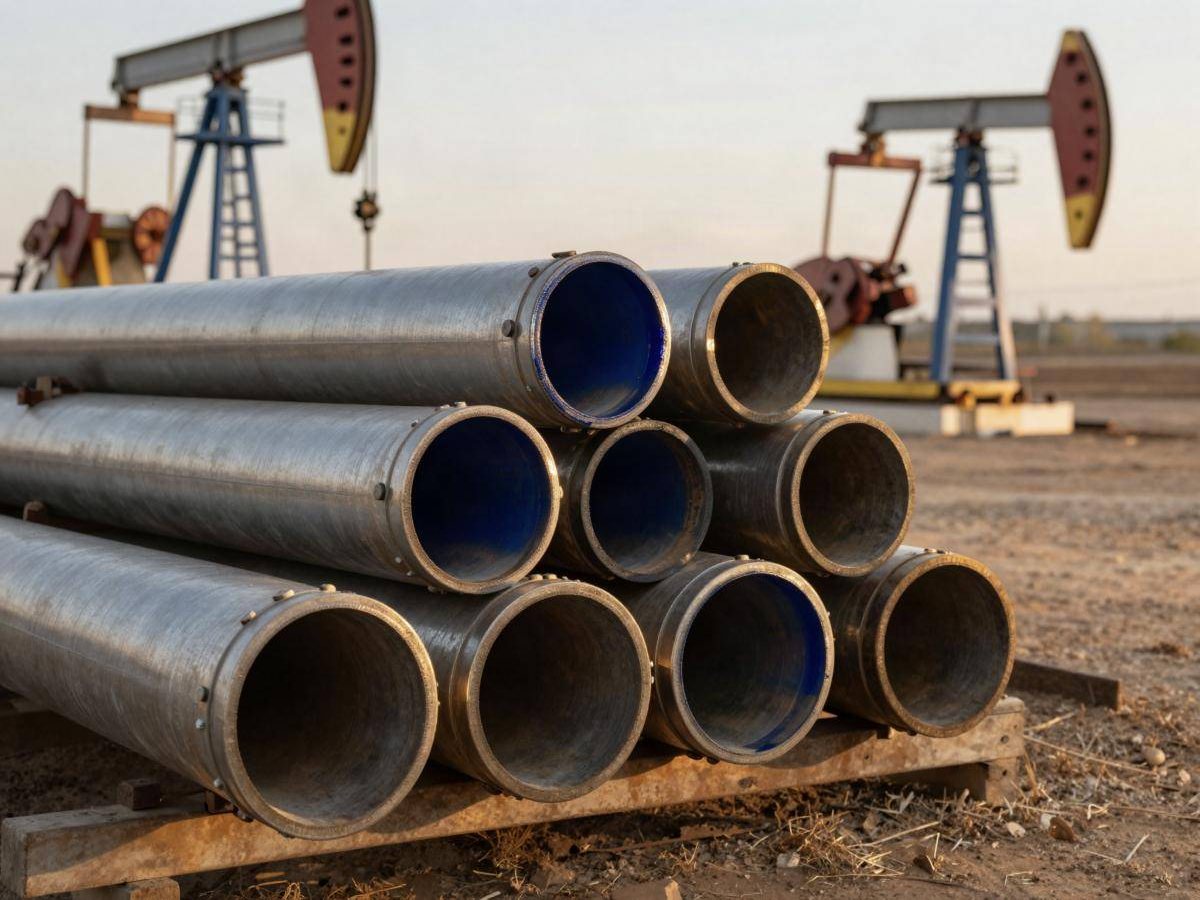
Lines carrying crude oil, saline produced water and sand need an inner surface that resists both corrosion and wear.
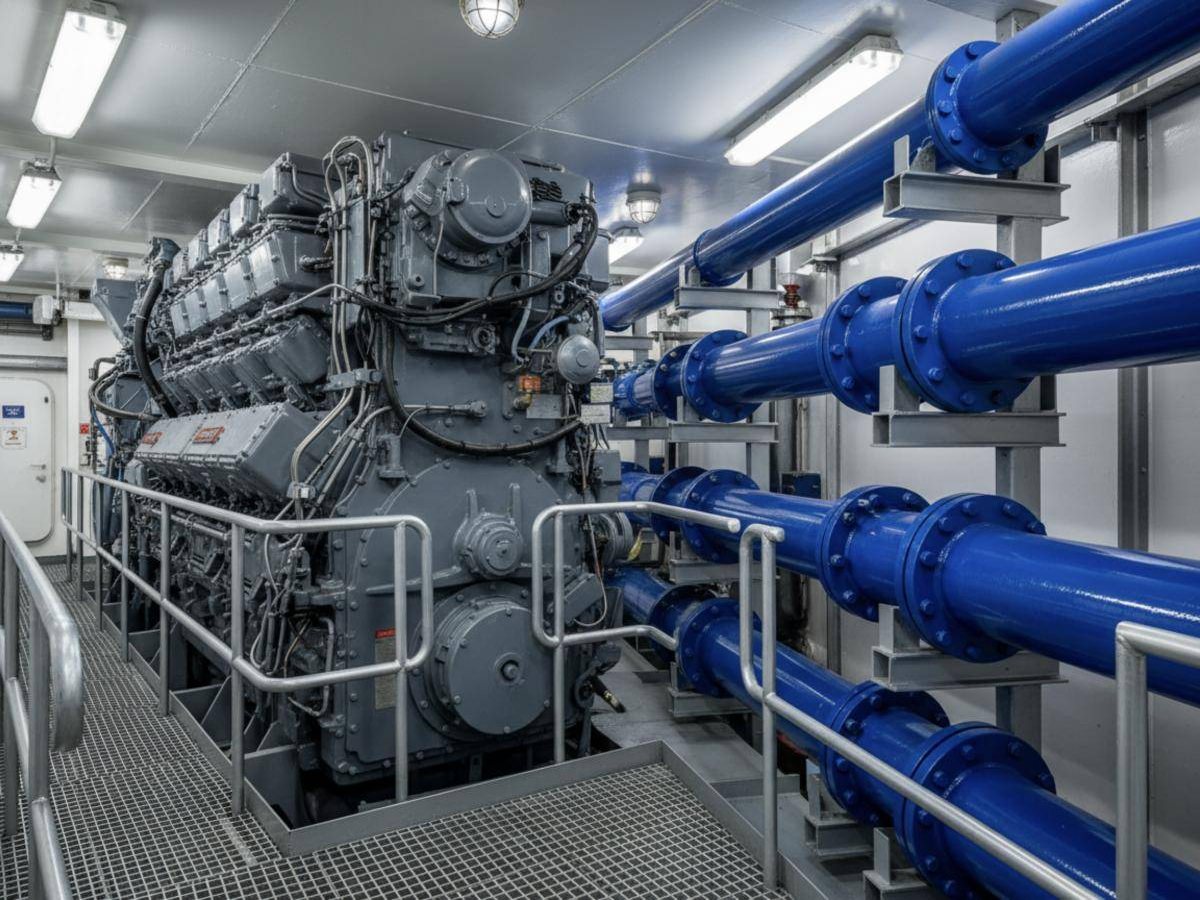
Lines exposed directly to seawater, such as the seawater cooling pipes in a ship’s engine room, and chemical process piping that carries acids and alkalis.
Enamel is not a paint: it is an inorganic glass that bonds chemically to the metal during firing. Its key properties for valves and pipes:
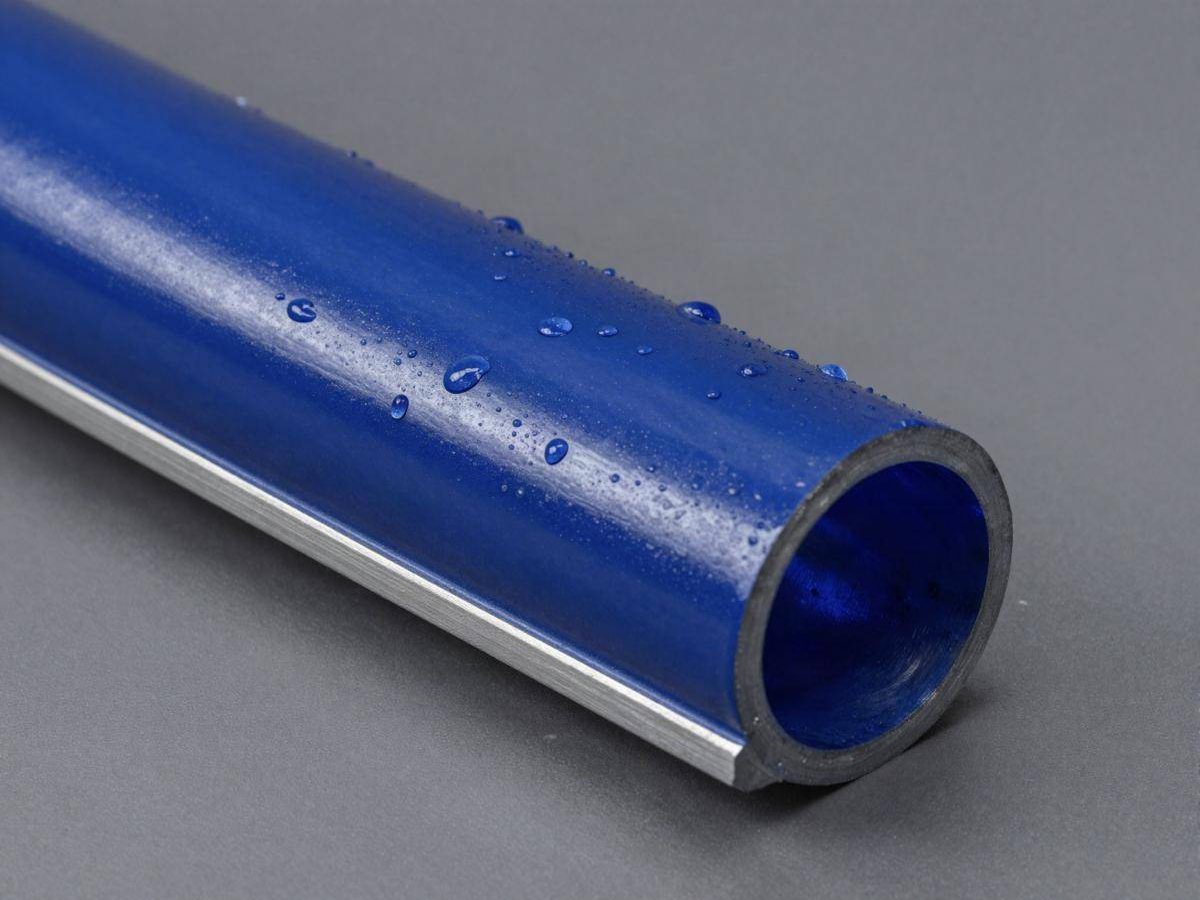
Covers surfaces in contact with water, seawater and soil with a glass layer fused to the metal.
Resists acids and alkalis; hydrofluoric acid and hot concentrated phosphoric acid are the exceptions.
The glassy surface reduces deposits and scale build-up.
The hard glass surface resists wear from fluids carrying sand and particles.
Its inorganic structure withstands hot water and changes in temperature.
The glass surface is easy to clean and is used on surfaces in contact with drinking water.


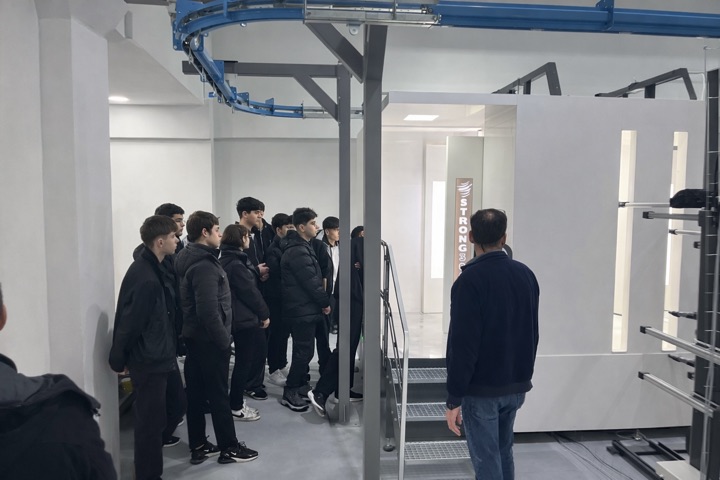
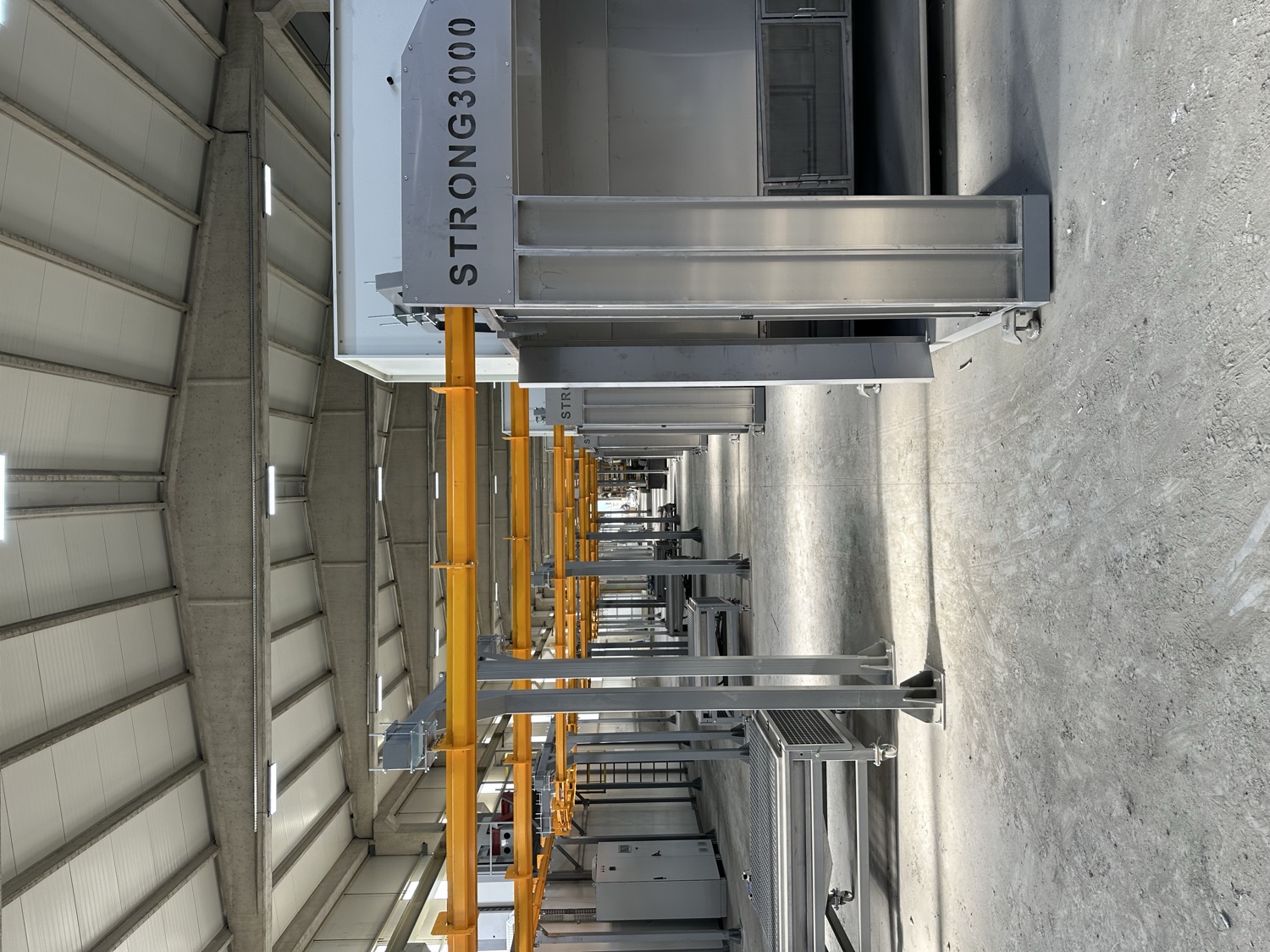
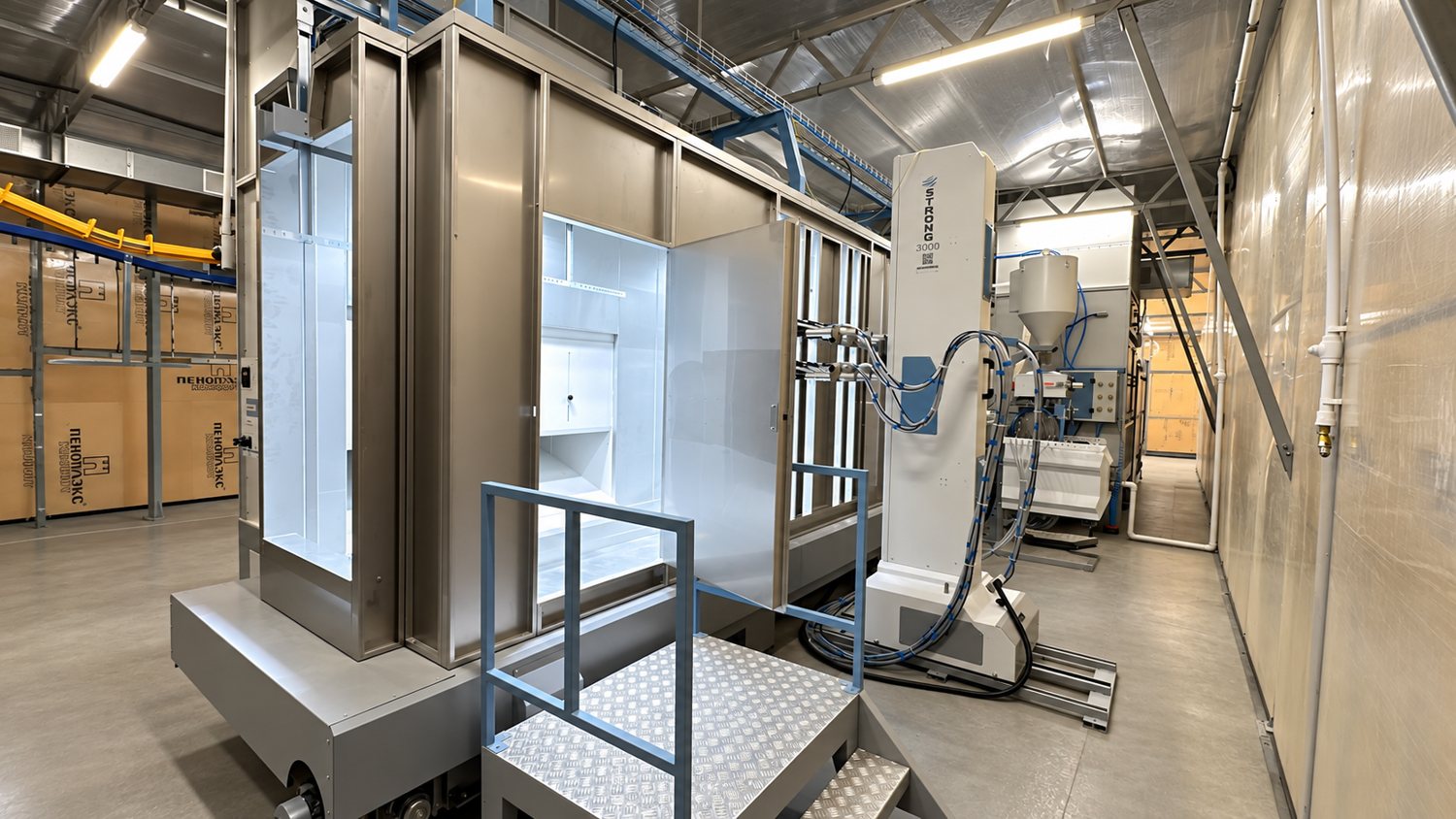
Wet enamel is applied with a manual gun in dry-filter booths or automatically in conveyorised line-type booths. The stainless body and efficient air extraction keep the work area clean for the operator.
| Type | Dry-filter manual / conveyorised line-type |
|---|---|
| Air velocity | 0.4 – 0.6 m/s |
| Filtration | Dry-type cardboard/fiber filter |
| Body | Stainless construction |
| Application | Wet enamel (slip) — inner and outer surface |
| Option | Climate room (temperature and humidity control) |
Values are typical ranges; final values are confirmed per project by STRONG3000 engineering.
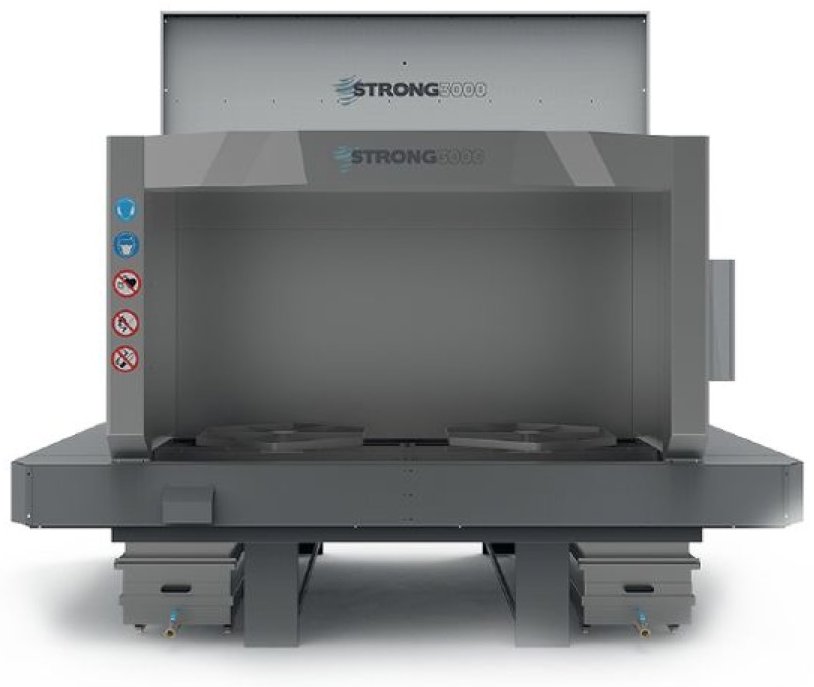
Valves are coated in a conveyorised line-type booth; cast iron hob grates, pots and pans in a manual booth with turntables. These are the main examples — for parts from other industries that need wet enamel, the booth and the line are configured to the part.
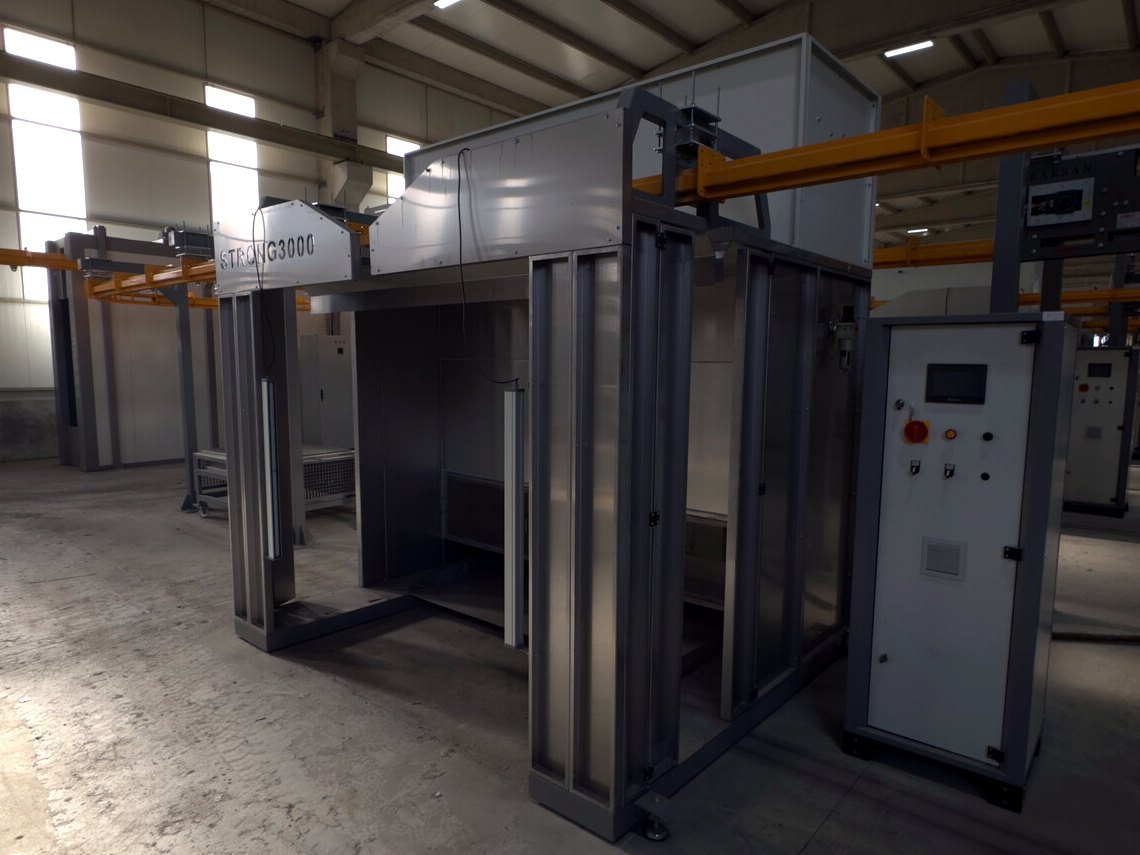
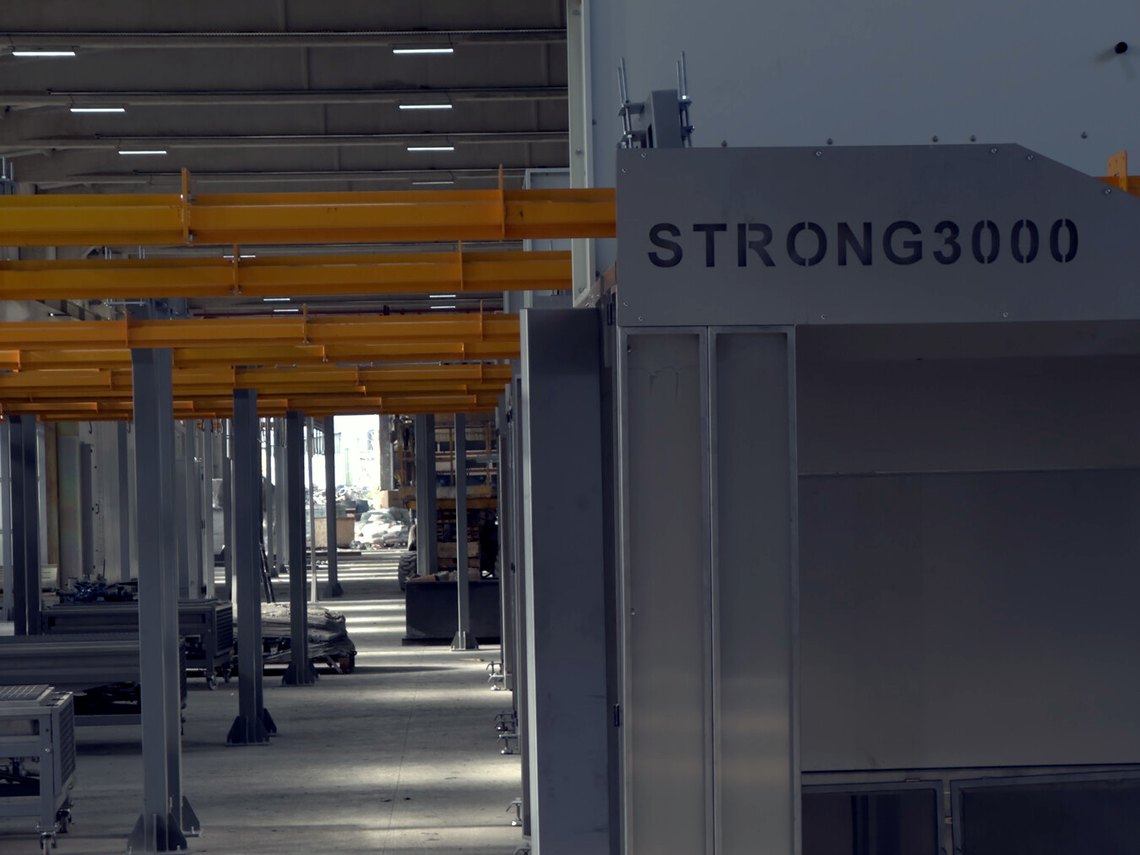
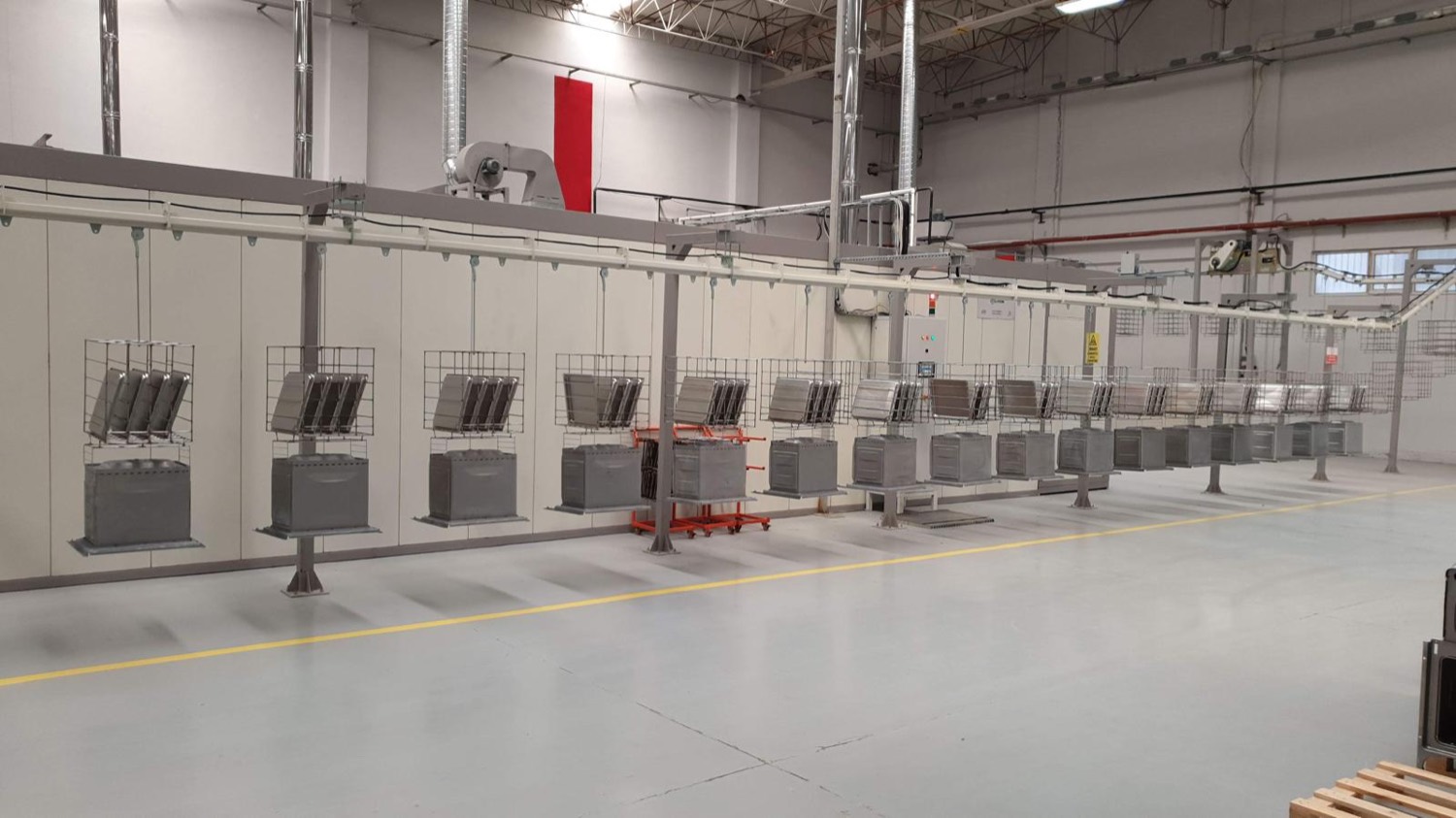
Valve bodies, bonnets and fittings pass through the booth on an overhead conveyor, and the wet enamel is sprayed onto the inner and outer surfaces. The booth is sized to the conveyor line and to the drying and firing steps that follow.
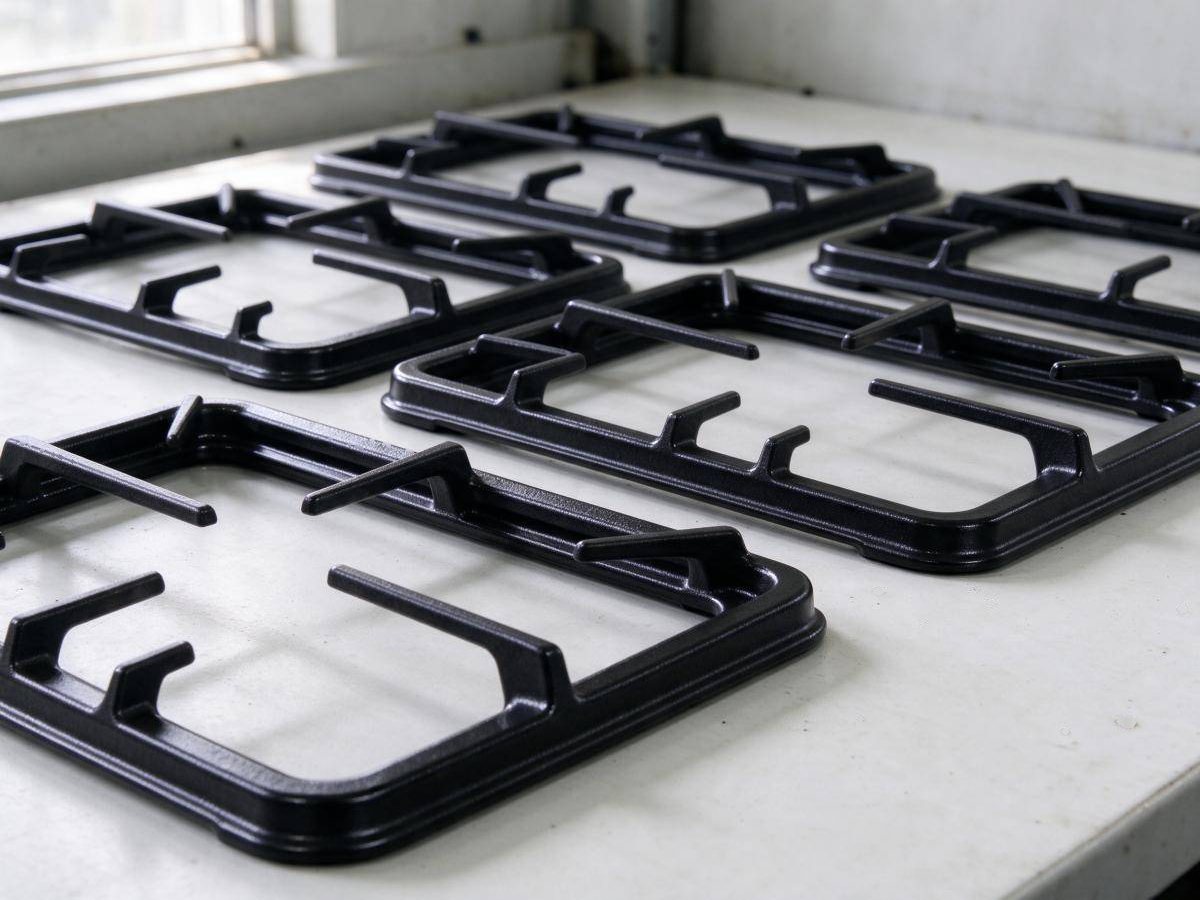
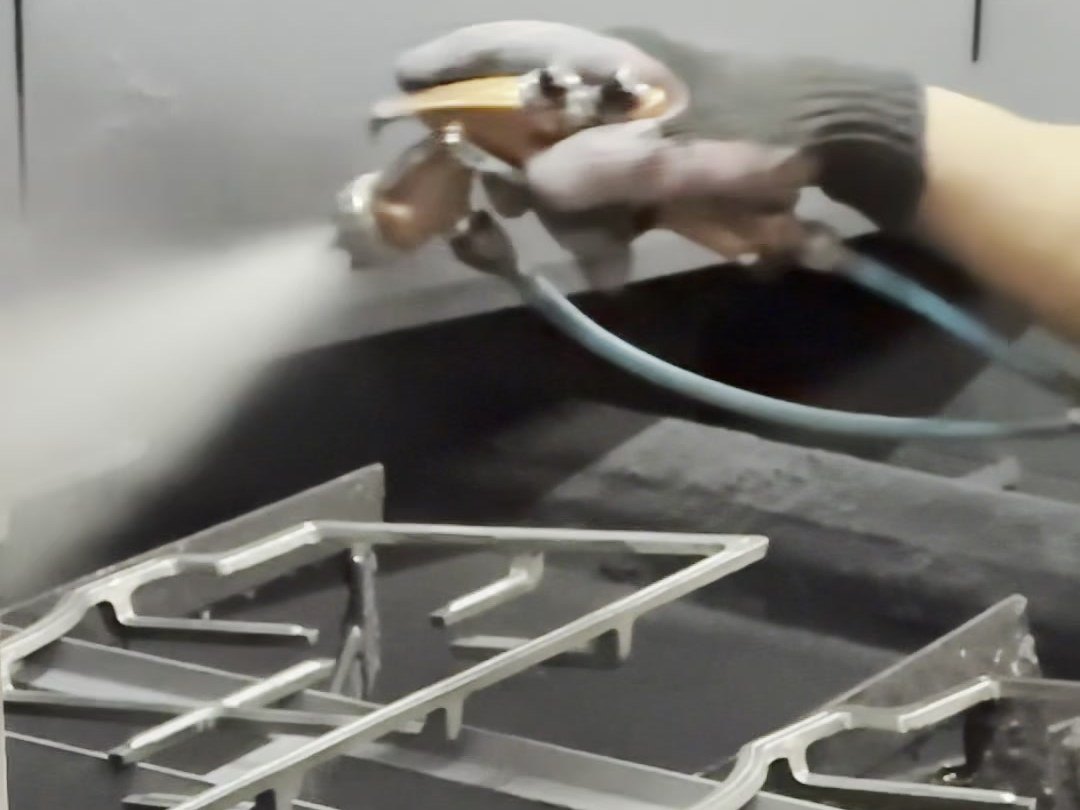
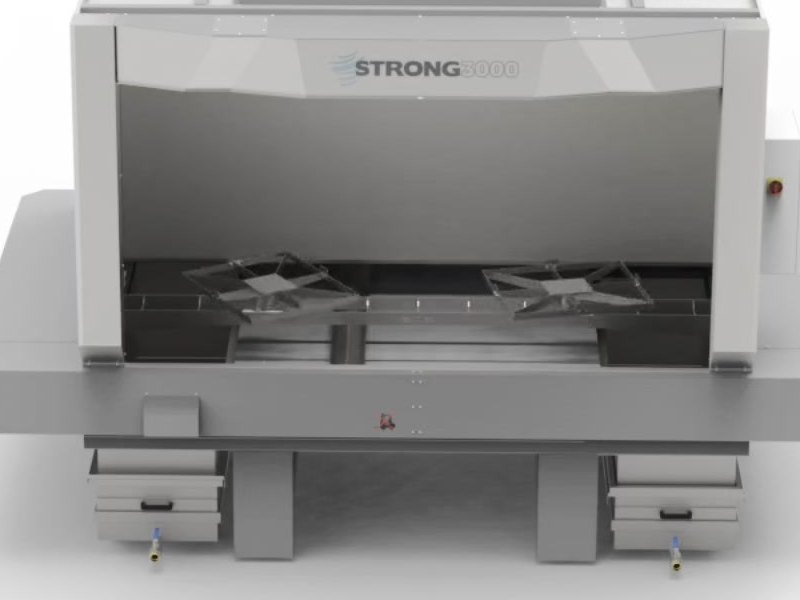
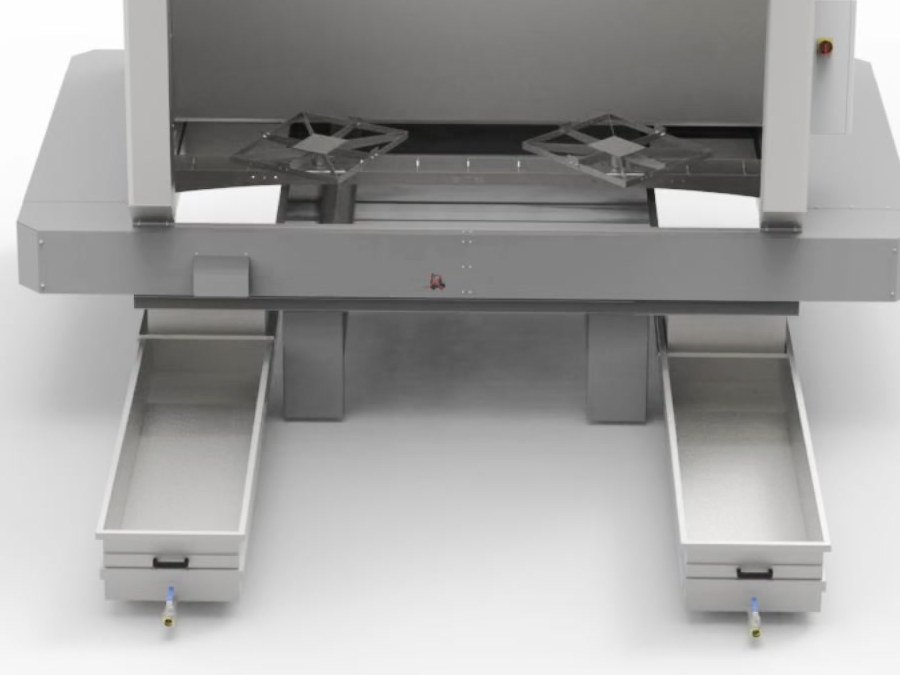
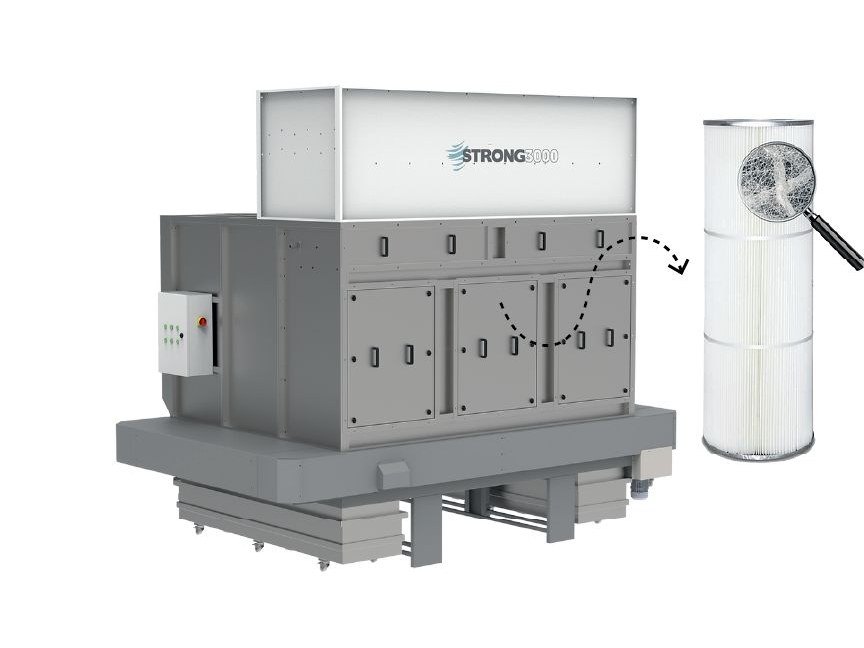
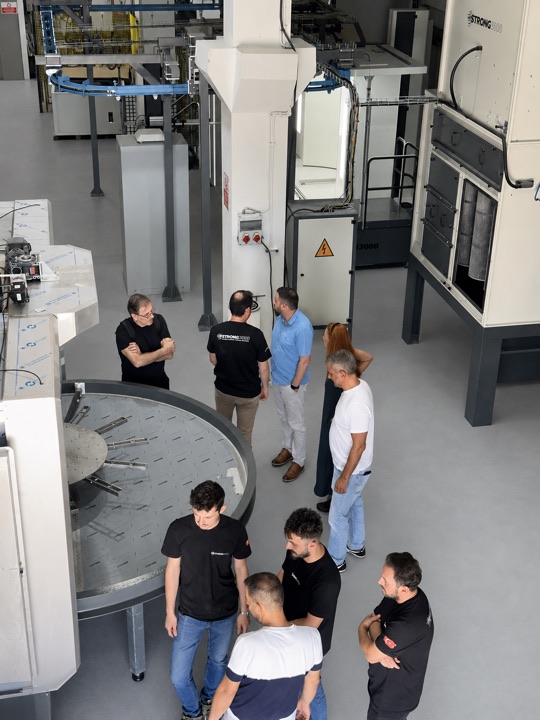
On a hob grate the enamel has to cover every surface, including the undersides of the arms, the edges and the feet. The grates are placed on the turntables of the manual booth, and the operator turns the table to spray the enamel from every angle. Enamel that misses the part collects in trays under the booth, and the booth air passes through a filter.
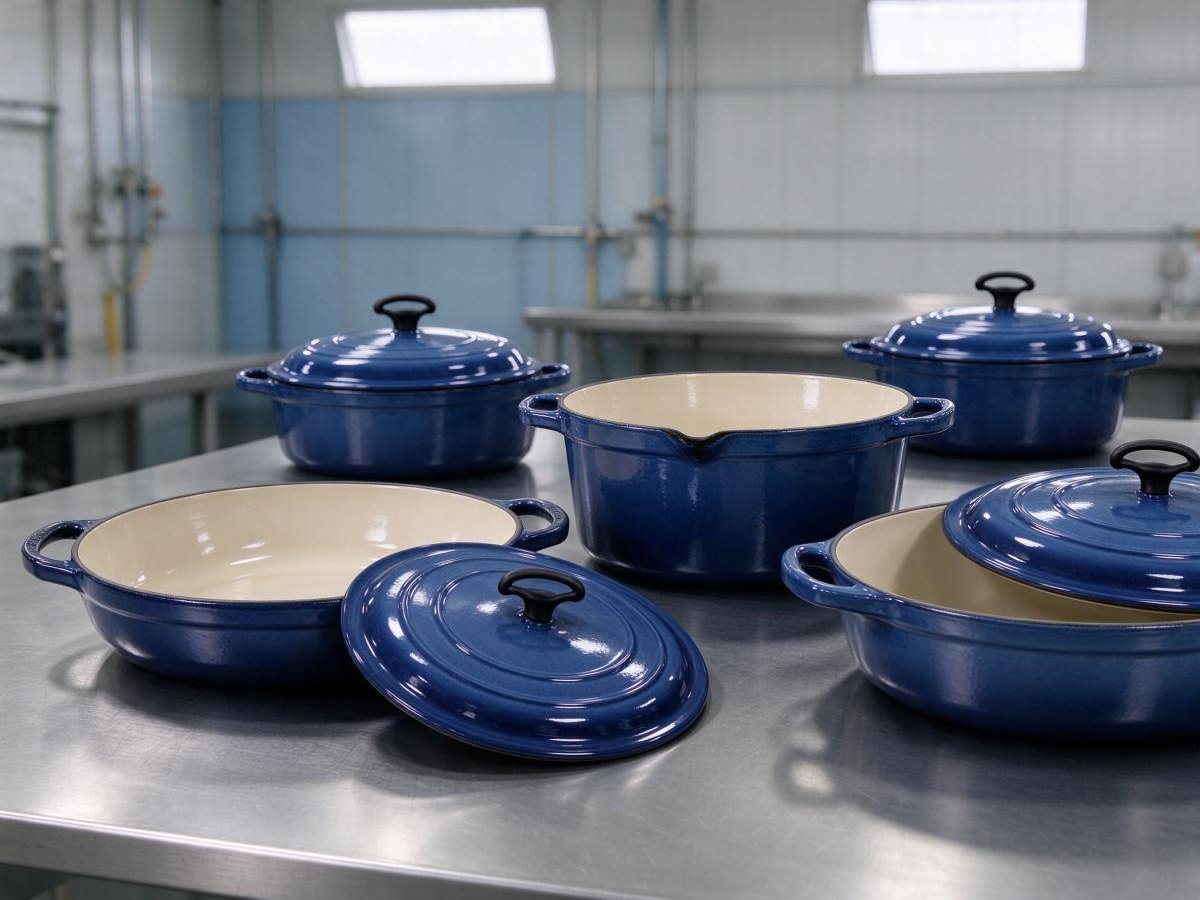
On pots and casseroles both the deep inner surface and the outer surface are coated; lids are enamelled as separate parts. As the part turns on the table, the enamel also reaches the rims and inner corners.
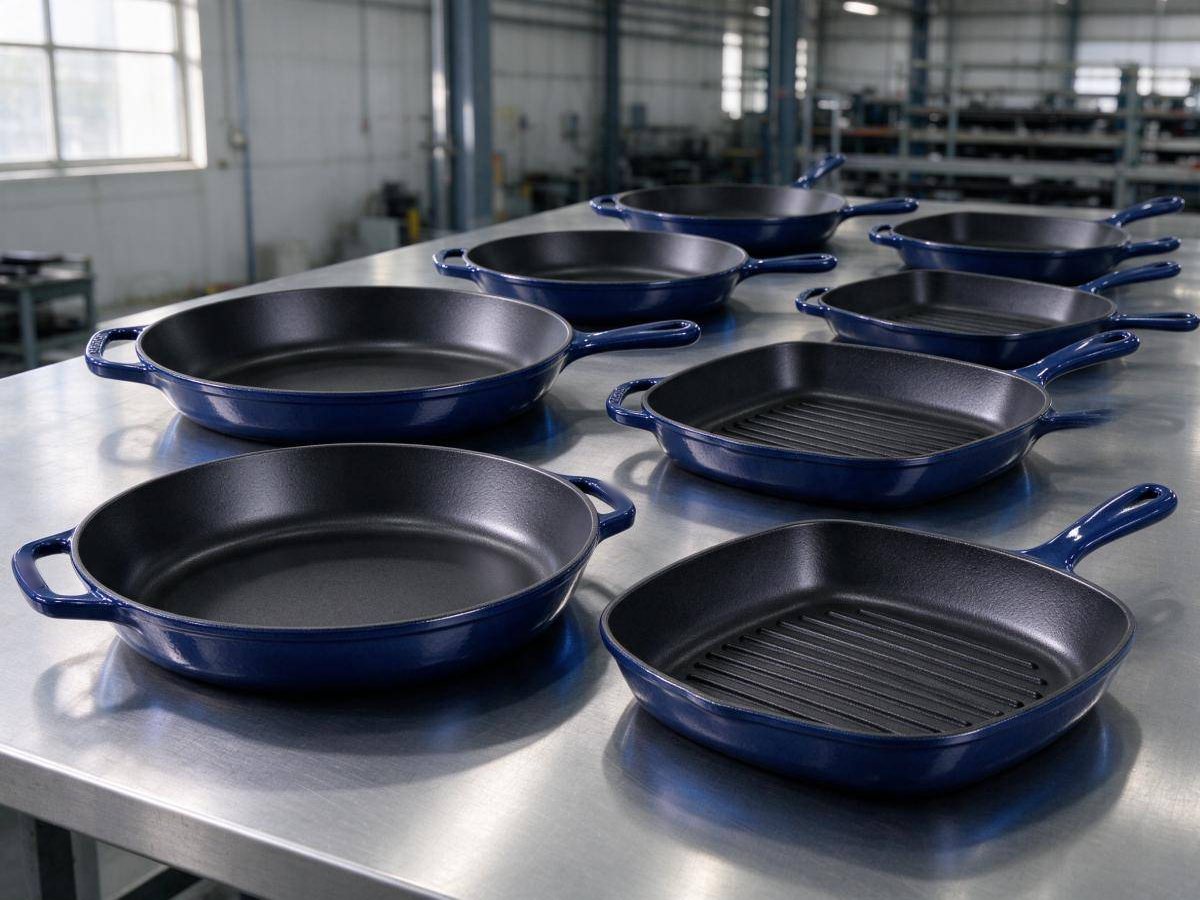
On pans the handle and rims are coated together with recessed surfaces such as the ribs of a grill pan. The operator aims the gun to suit the shape of the part, so the enamel reaches the bottom of the channels.
Degreasing and surface preparation suited to steel and cast iron substrates.
Explore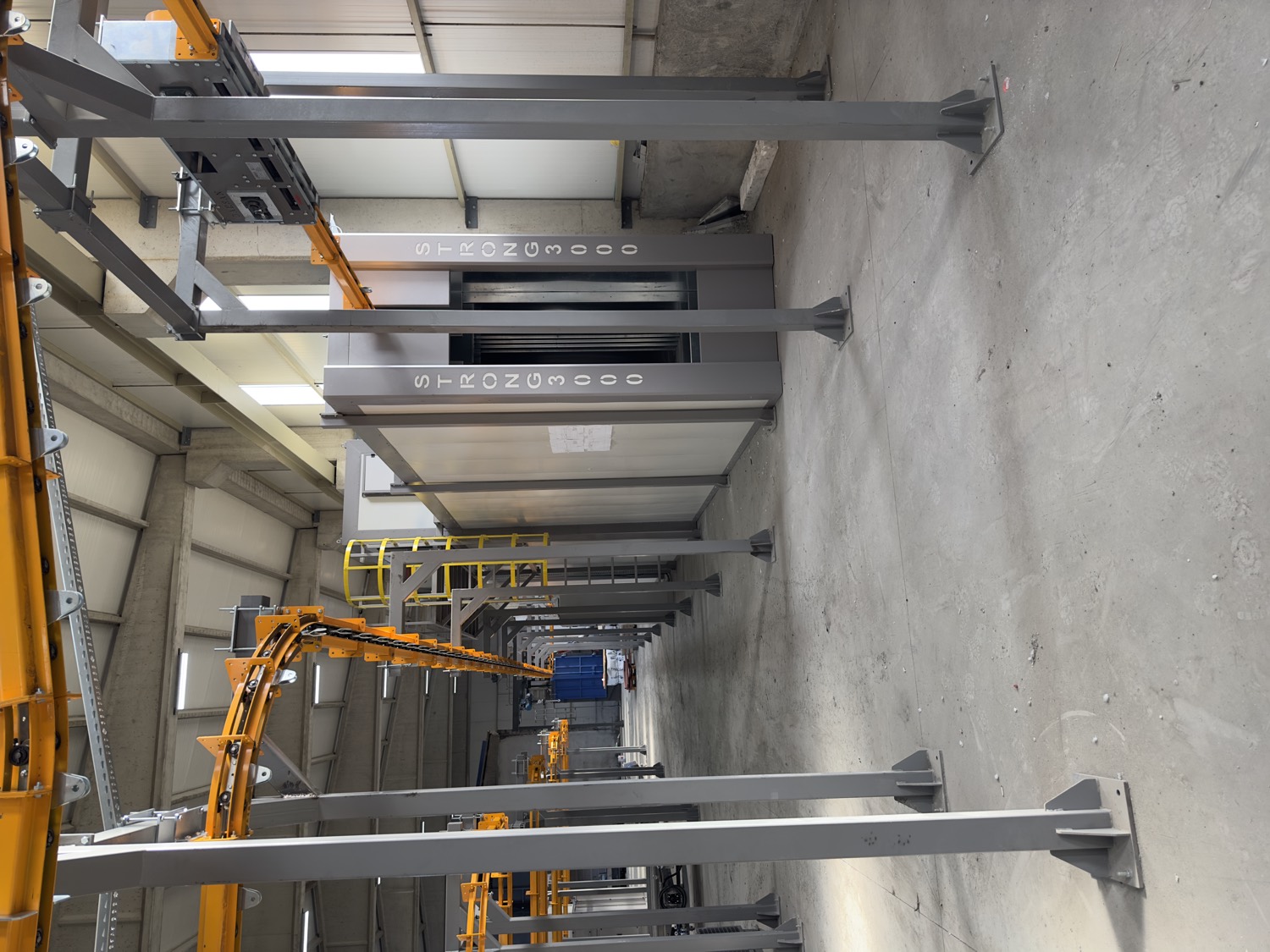
Removes the water from the wet enamel in a controlled way before firing.
Explore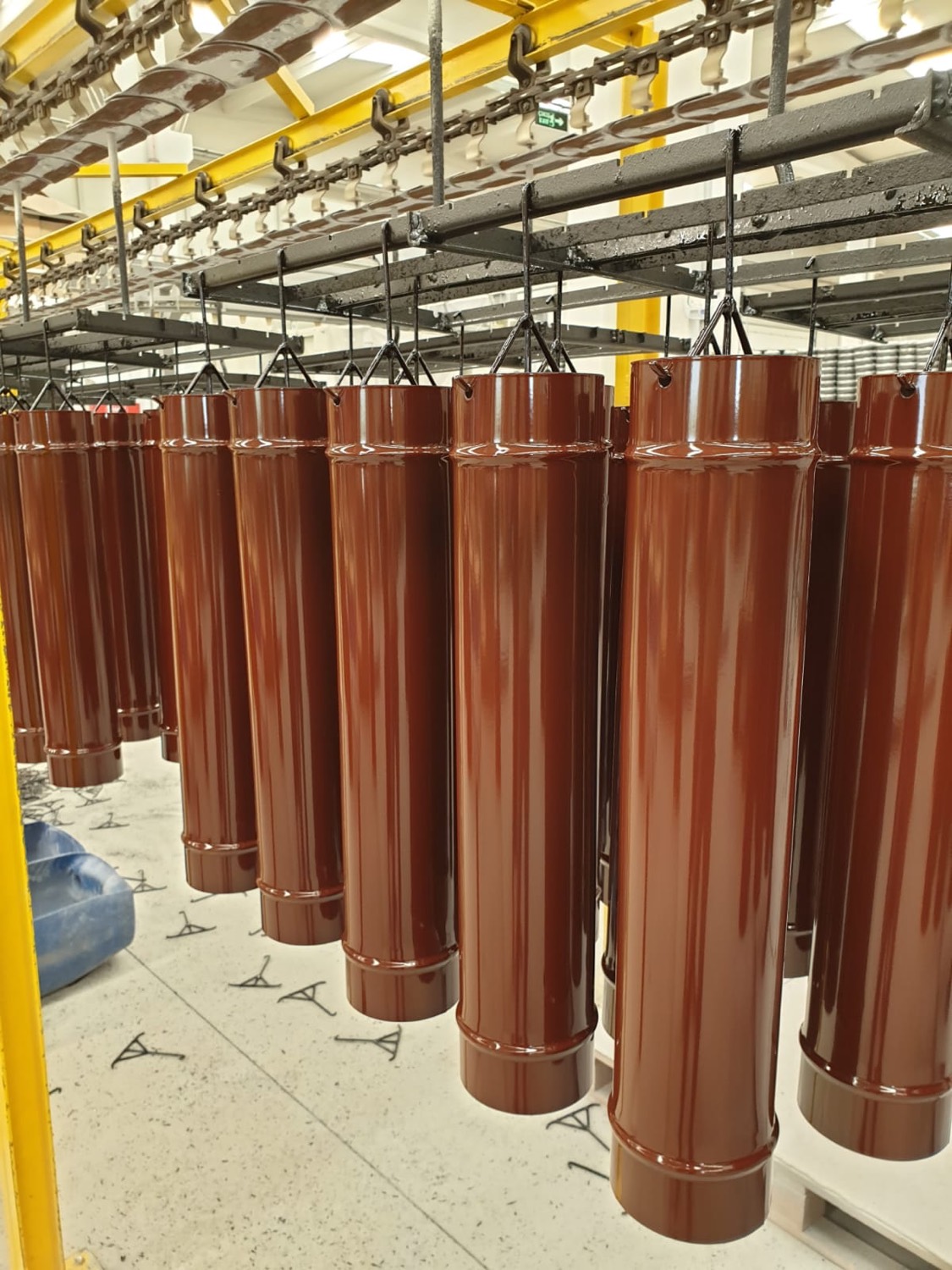
Box, conveyor and U-type high-temperature ovens for firing enamel.
Explore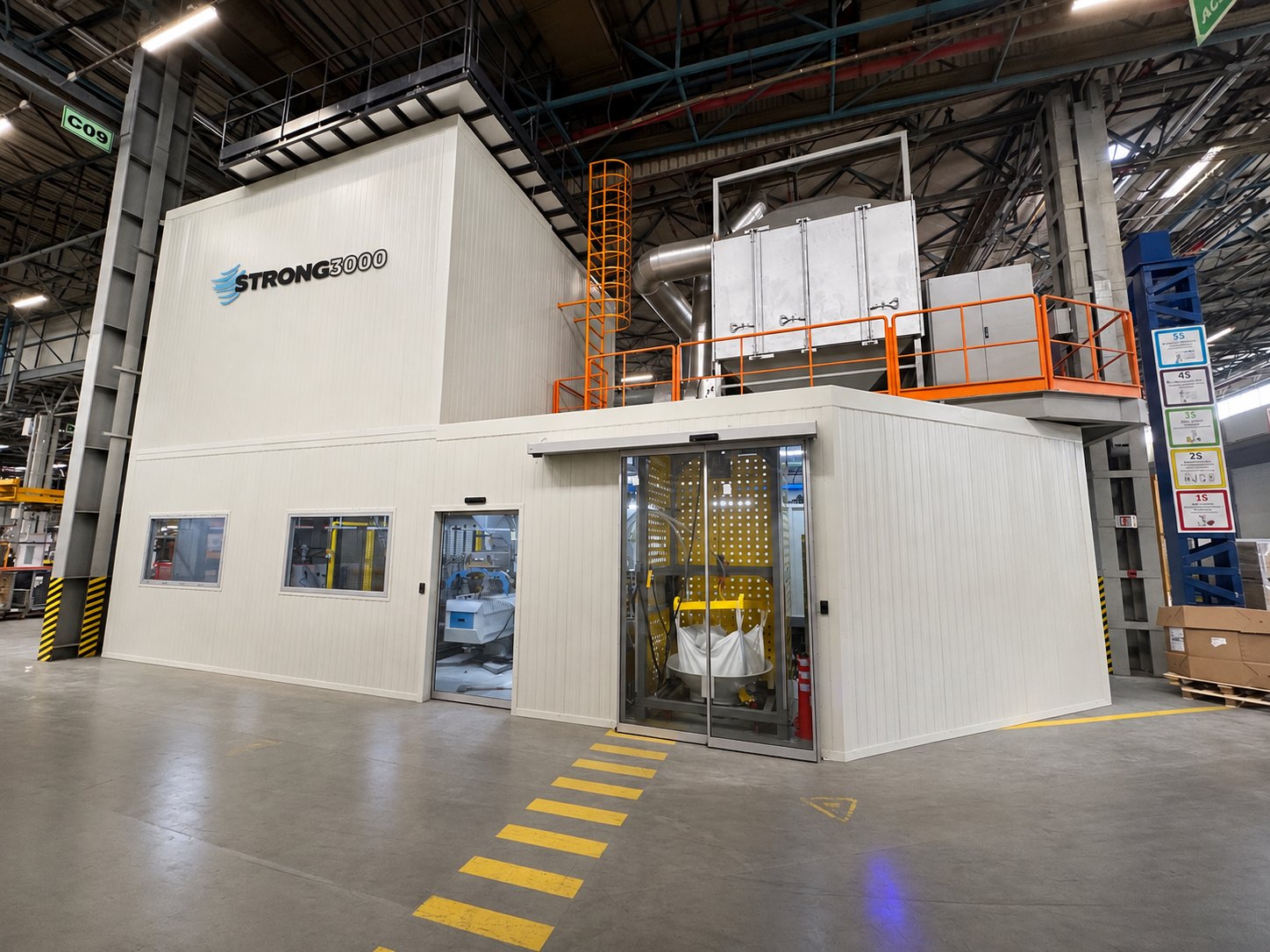
The application area is enclosed in an insulated room with controlled temperature and humidity.
Explore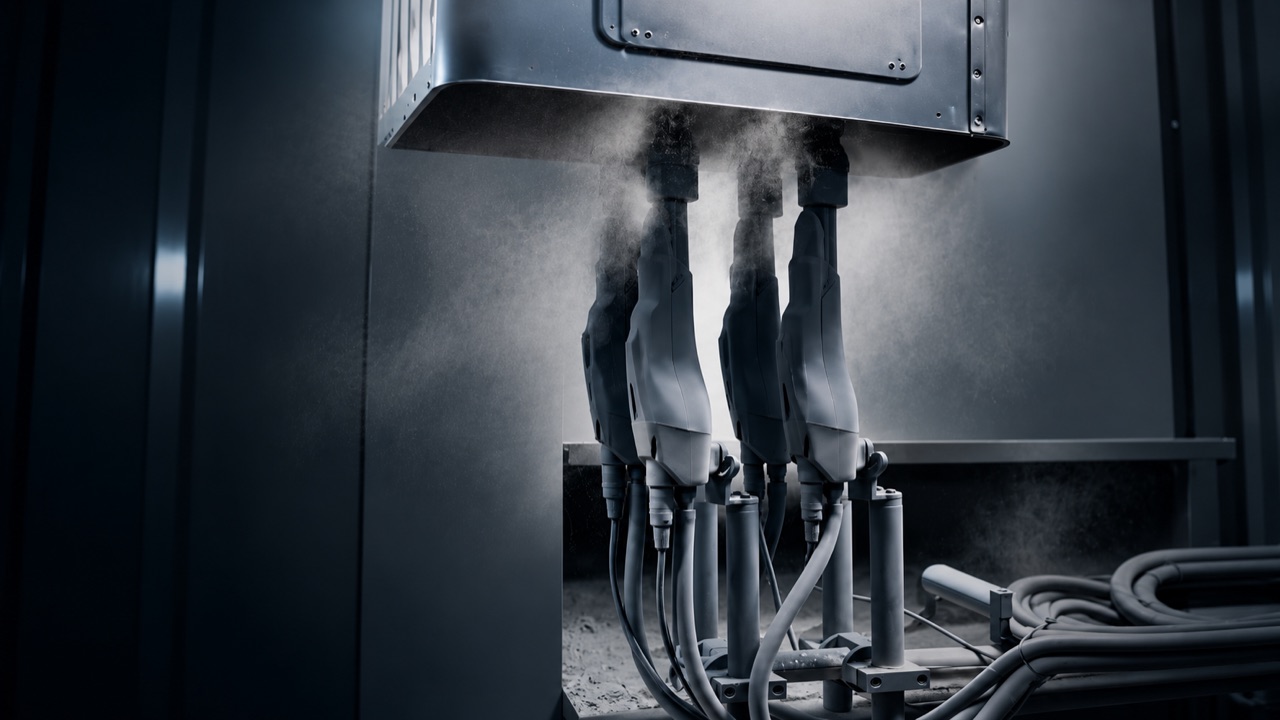
Reciprocators, robotics and conveyor control for consistent, high-volume enameling.
Explore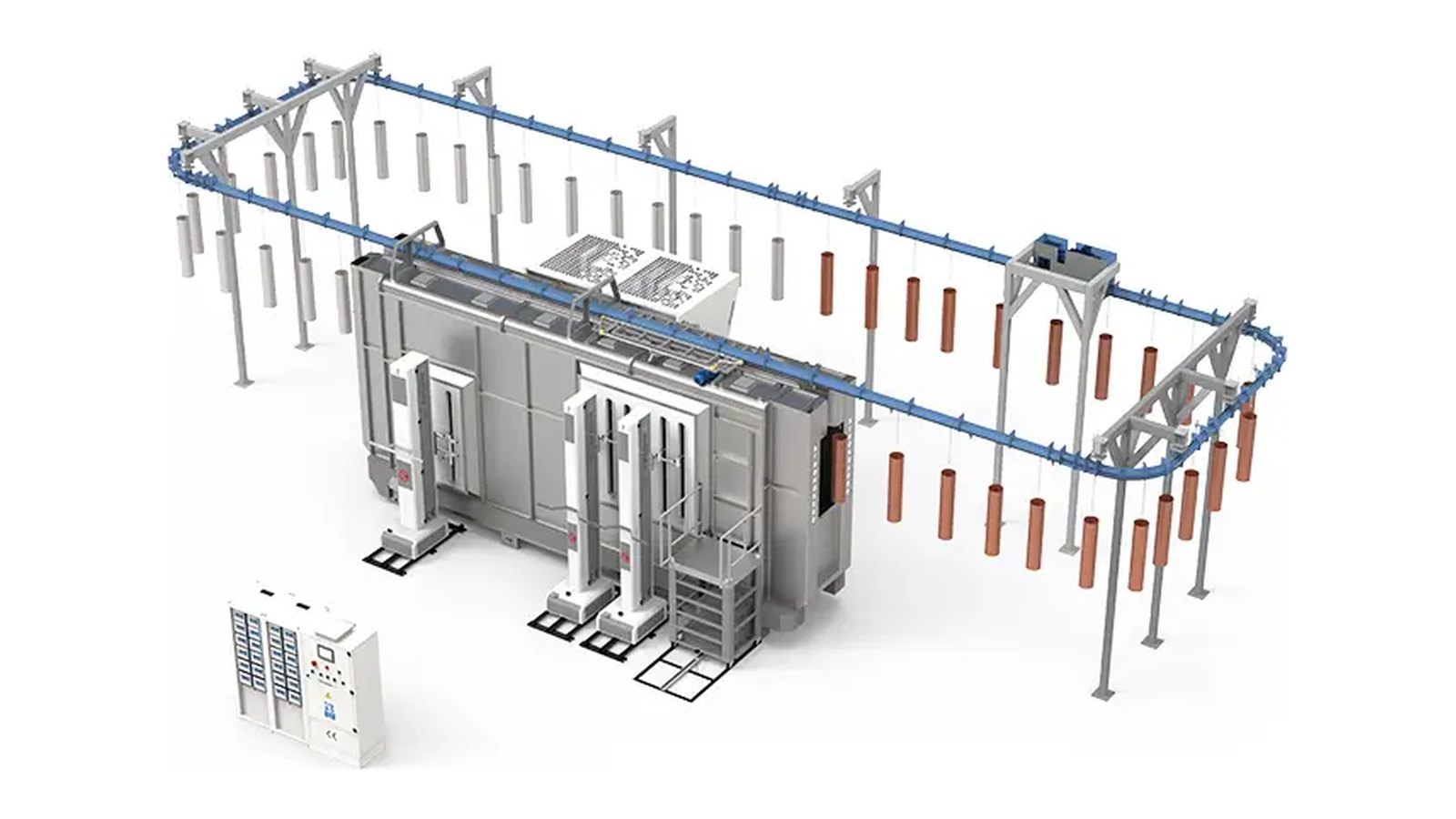
Automatic system that applies powder enamel to the inner and outer surfaces of pipes.
ExploreSTRONG3000 combines mechanical and electrical engineering, automation, control software and application technology in a single organization — so responsibility for the whole line stays in one place.
Booths, conveyors, ovens and recovery hardware.
Power, control cabinets and line wiring.
Reciprocators, robotics and PLC control.
Smart AI platform and line integration.
Gun, injector and powder delivery development.
Factory acceptance testing and on-site start-up.
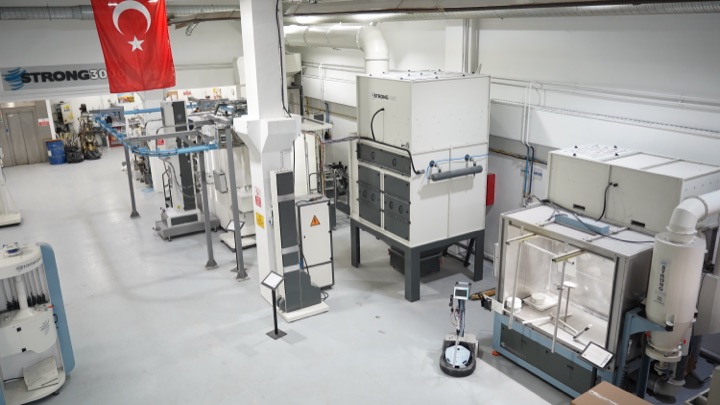
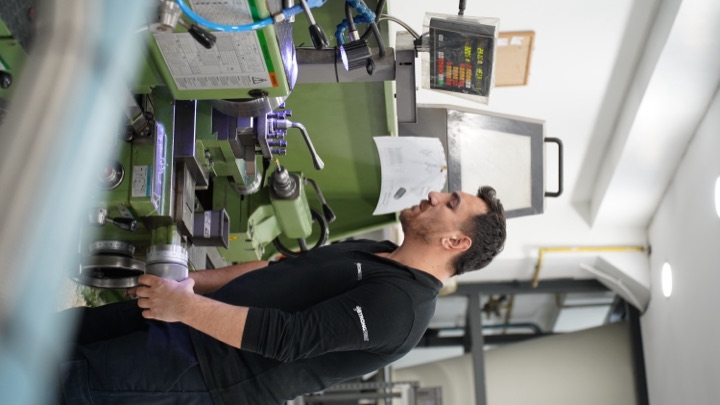
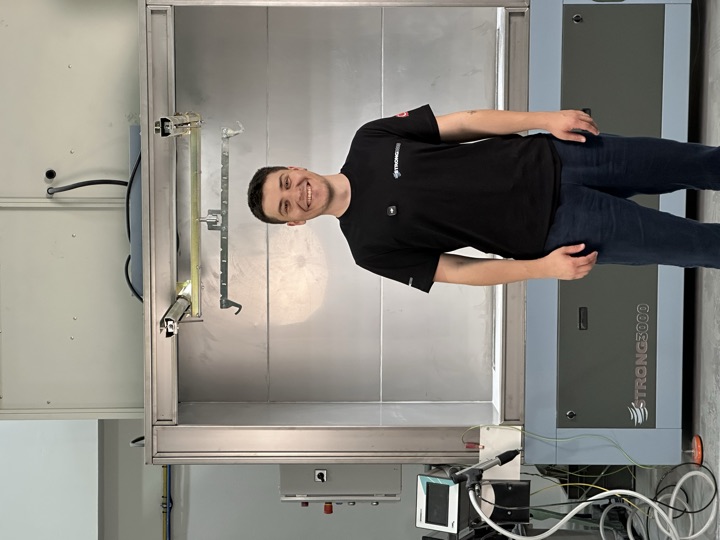
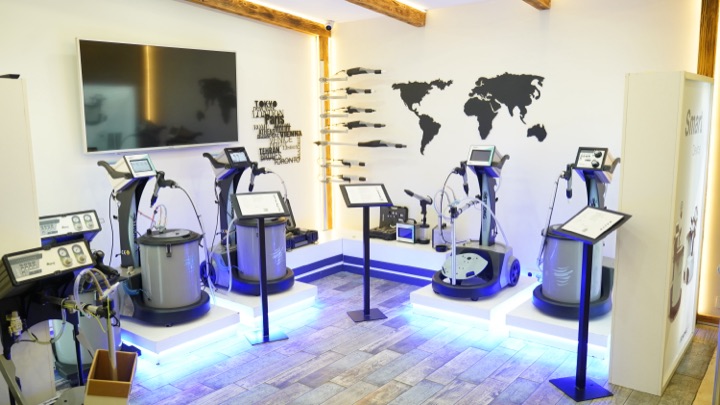
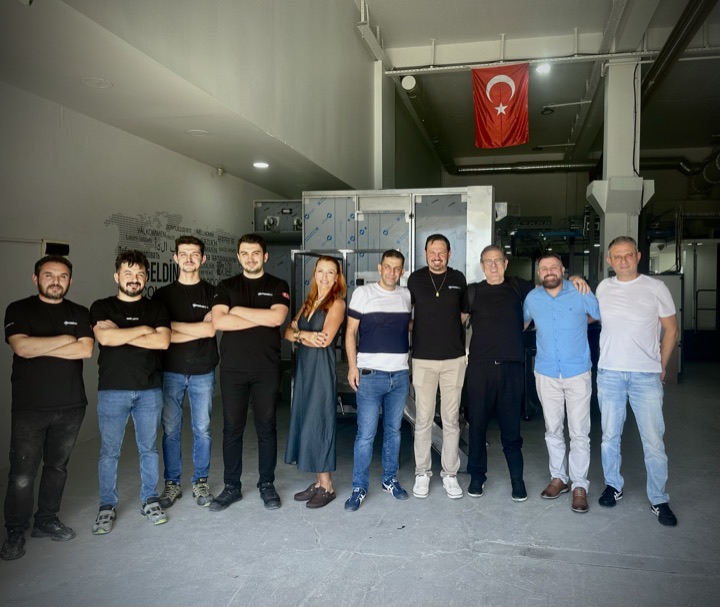
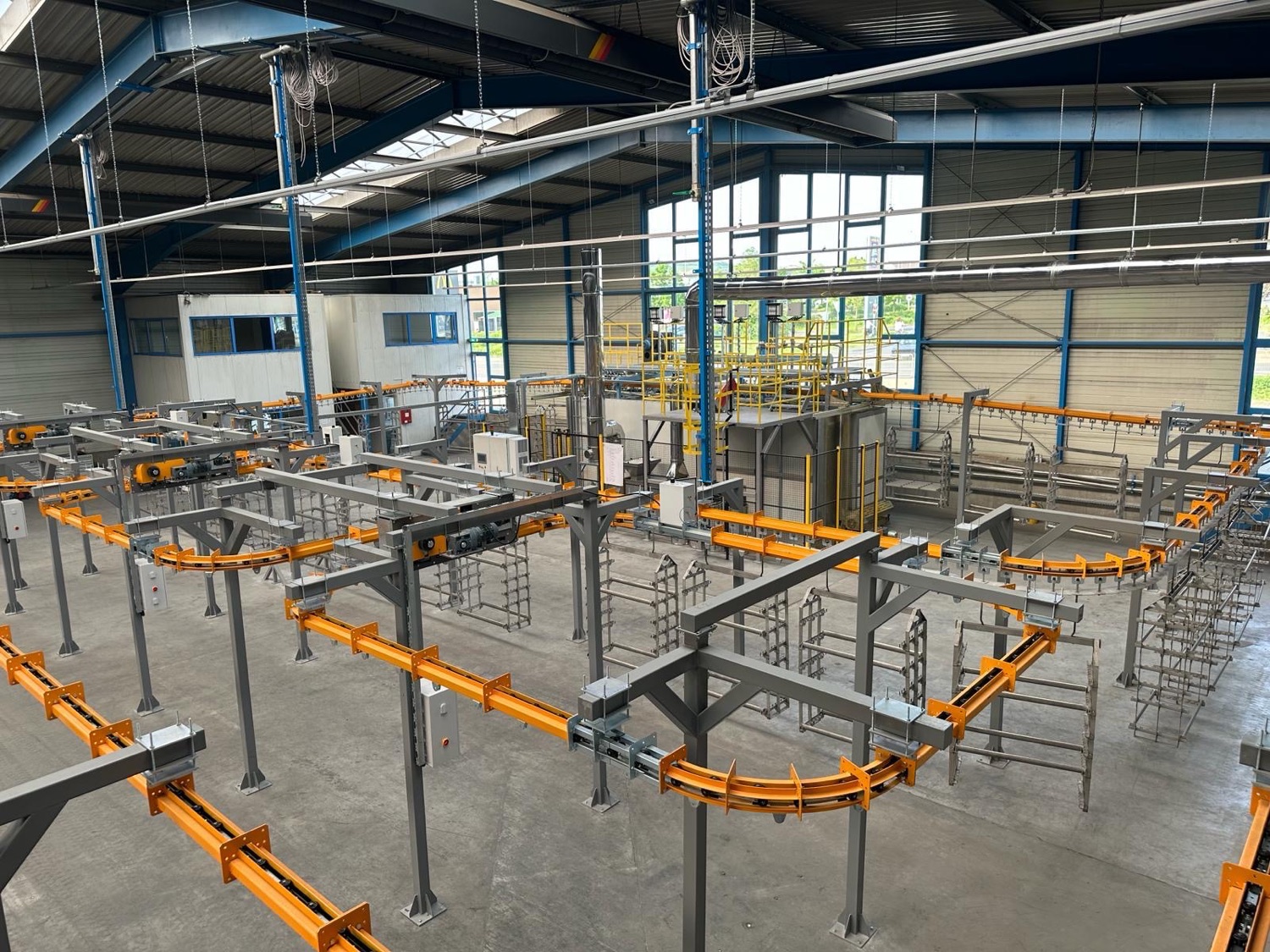
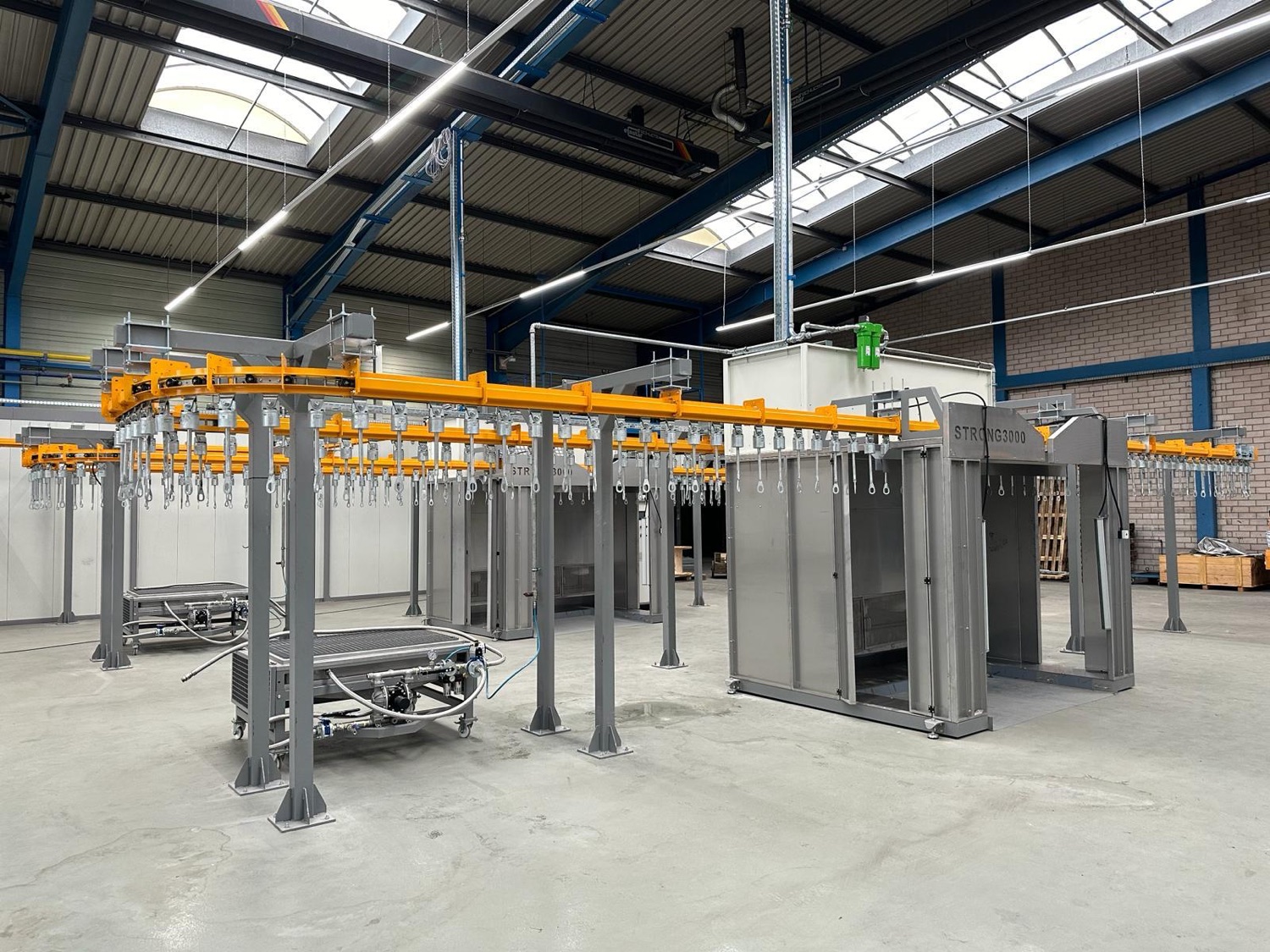
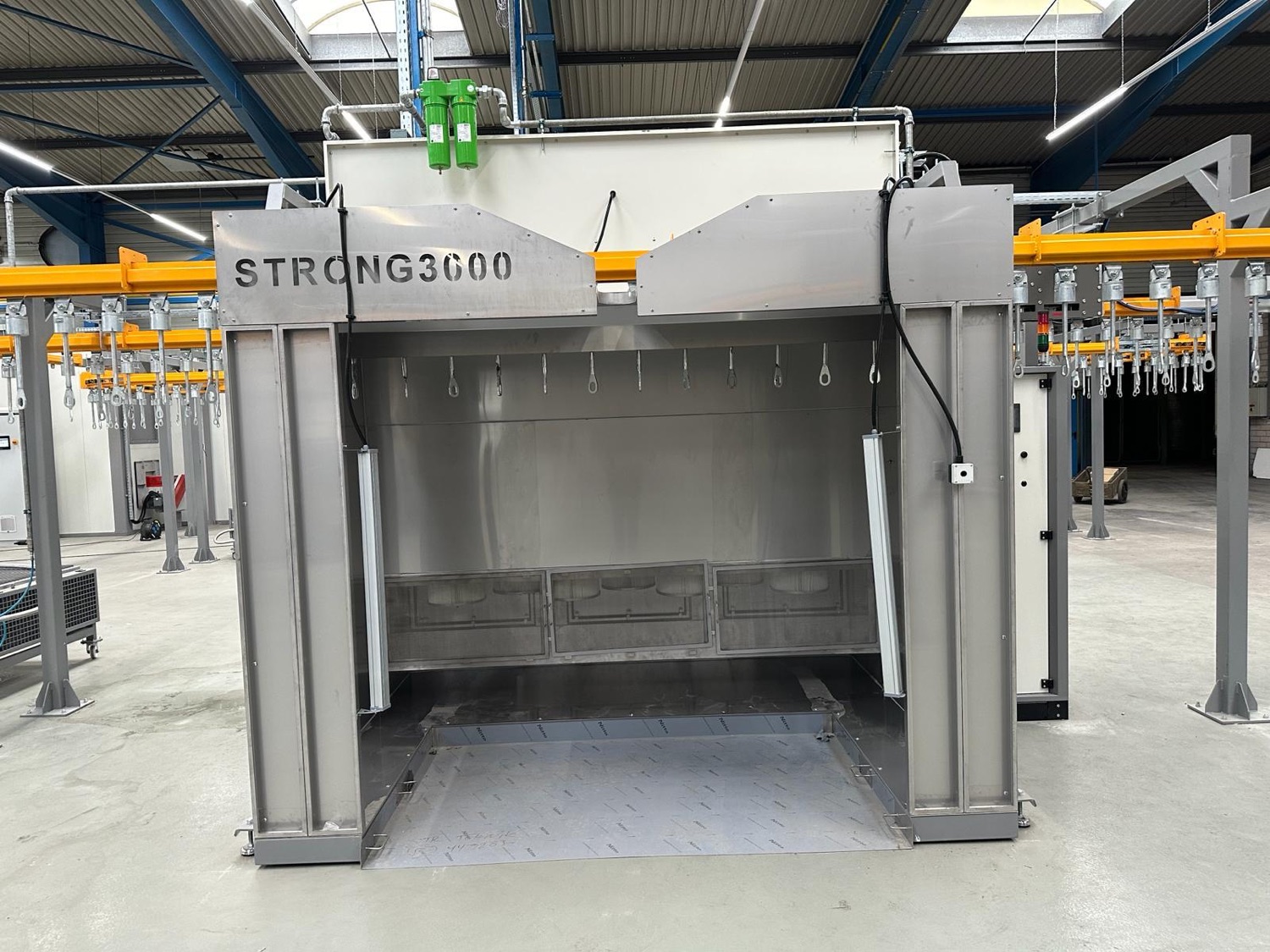
Automatic line-type wet enamel plant for the inside and outside of valves and pipes. Filtered, stackless application booths.
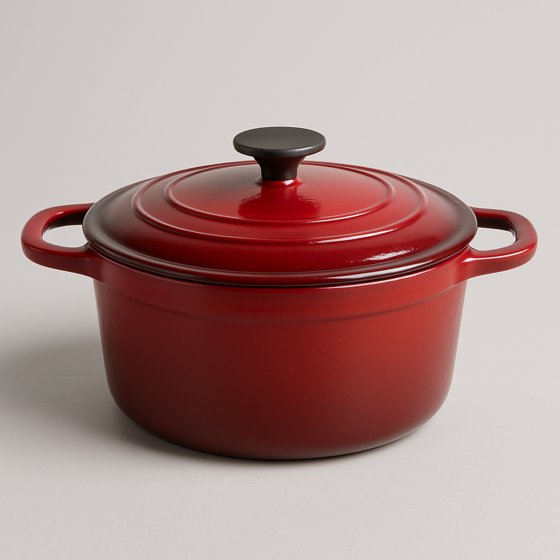
Applying water-based slip enamel by dipping, flow coating and spraying — for castings and complex geometries.
The 780–850 °C regime in which enamel fuses to metal, furnace types and energy.
Which part needs powder coating and which needs enamel? A decision guide based on temperature, durability and cost.
Discuss your part, enamel type and capacity directly with STRONG3000’s engineering team.
Tell us about your enamel part and firing requirements. A STRONG3000 engineer will respond with a tailored approach.