In Short
- The real loss in a color change is not the powder but cleaning the booth and the recovery system.
- A booth with a low-adhesion (PVC-type) interior and automatic air cleaning brings the time down to minutes.
- If you change colors 3 or more times a day, a monocyclone makes sense; with few colors and very fine powder, a cartridge filter booth does.
- Measure cross-contamination on the first parts; traces of the previous color usually show up not to the eye but on a light-colored background.
I once saw a line change colors twelve times a day. The powder change itself was a few kilos of powder; the real loss was the 30–40 minutes spent cleaning the booth, recovery and guns each time. Almost a third of an eight-hour shift went to cleaning. In most plants, speeding up color change frees up far more capacity than buying new guns.
Why Color Change Wastes Time
A color change covers three separate jobs at once: removing powder buildup from the booth interior, purging the recovery system (cyclone or cartridge) of the previous color, and cleaning the gun and hoses. Powder left in any of these shows up as cross-contamination on the first parts of the new color.
Contamination is most visible on light-colored backgrounds. On a white or light gray part, a single speck of the previous dark color means a reject. Going from dark to light is always the hardest; the reverse (light to dark) is more forgiving. That is why planning the color sequence saves significant time on its own: whenever possible, work from light to dark.
Cross-contamination does not always appear as a distinct color speck. If fine powder from the previous color mixes into the new batch in small amounts, the result may be a slight shift in shade or a textural flaw on the surface rather than isolated spots. Such subtle defects are sometimes diagnosed as surface defects, while the root cause is actually inadequate color cleaning. That is why, when switching to a new color, the first parts need to be evaluated separately for both color and surface.
The second dimension of the loss is the powder itself. The previous color left in the booth and recovery system goes to waste; fast and complete emptying reduces both contamination and scrap. These two goals point in the same direction: a system that is easy to clean means both cleaner color transitions and less waste.
Booth Design
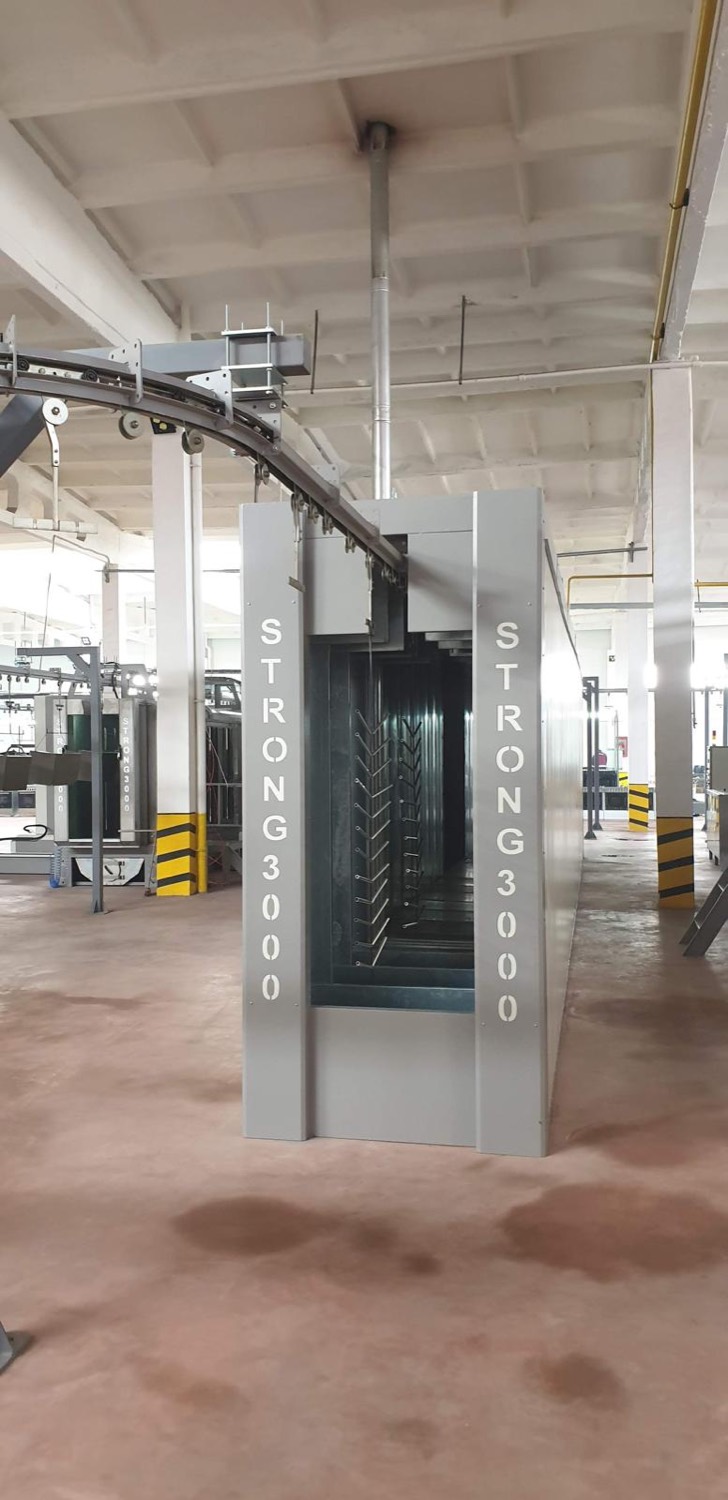
The single biggest factor determining color change time is the booth’s interior surface. A surface that powder does not cling to and slides off easily cleans many times faster than a sticky, statically charged or rough one.
- Low-adhesion plastic (PVC-type) interior: Powder does not stick to the surface and falls off with compressed air or a quick wipe. This is the standard for lines with frequent color changes.
- Stainless/galvanized sheet booth: Durable, but powder clings more; preferred for single-color or few-color, high-volume work.
- Rounded corners and smooth interior geometry: Sharp corners and ledges collect powder; the simpler and more curved the interior, the faster the cleaning.
The design of the booth floor and airflow also matters. When extraction is balanced, powder does not build up in specific spots, does not escape to the surroundings, and is collected in one direction during emptying. Unnecessarily deep pockets at the entry and exit, fixed ledges and hard-to-reach cavities create powder beds that must each be cleaned at every color change. When choosing a booth, the question “how fast does it empty and how easy is the interior to access” is as decisive as capacity.
The right booth type must be chosen according to the part, number of colors and level of automation; we cover this decision in detail in the booth selection guide.
Tip
Verify the color transition not on a part but on a light-colored test panel. Inspect the first panel after switching to the new color under good lighting; traces of the previous color are usually caught on this first panel, not on the product.
Cyclone vs Filter
The recovery type affects color change time as much as the booth does. There are two basic approaches, and the choice depends directly on the number of colors per day.
A monocyclone separates powder with a cyclonic airflow. Because its main body has no permanent filter surface, it empties and cleans quickly, which gives it a clear advantage for frequent color changes. The trade-off is that some very fine particles (roughly below 10 µm) pass through the cyclone uncaptured and go to the final filter. With standard powder, recovery can reach up to 95%, while with powder high in fines, this figure drops lower.
A cartridge (filter) booth, on the other hand, captures powder on the cartridge surface and also holds fine particles; its overall efficiency is high. However, changing color requires cleaning or replacing the cartridges, which takes longer than with a cyclone. It is the right choice for lines running high volumes with few colors that want to recover fine powder.
| Criterion | Monocyclone | Cartridge / Filter Booth |
|---|---|---|
| Color change speed | Fast (minutes) | Slower (cartridge cleaning) |
| Fine powder (<10 µm) capture | Limited | Good |
| Overall recovery efficiency | ~95% with standard powder, lower with fine powder | Generally high |
| Suitable scenario | 3+ colors per day | Few colors, high volume |
Some lines combine both: a cyclone for fast color change and a final filter stage to capture the fine powder leaving the cyclone. We examined the efficiency and color change balance of the two systems in detail in our monocyclone vs filter booth comparison.
Caution
Control the ratio when mixing recovered powder with virgin powder (typically 20–30% recovered). If fine powder accumulated in the system during color change is mixed into virgin powder at too high a ratio, the flow and hiding quality of the new color drop. After a color change, it is safe to keep the first batch close to virgin powder.
Cutting the Time
Shortening color change time is not about a single piece of equipment but the sum of several practices. Here is what works in the field, in order:
- Automatic air cleaning: Systems that clean booth walls and gun paths with pulsed air shorten the time markedly compared with manual wiping and give repeatable results.
- Dedicated cartridge or quick-release module: If a separate cartridge can be assigned to each color or color group, you swap instead of cleaning; downtime falls.
- Dedicated gun/feed per color: If the volume justifies it, keeping separate guns and powder hoppers for the most-used colors eliminates hose cleaning altogether.
- Color sequence plan: Work from light to dark; run similar shades back to back. The right sequencing can make even full cleaning unnecessary for some transitions.
- Short cleaning procedure: Who blows off what, in which order, for how many seconds? A written and timed procedure eliminates variation from operator to operator.
Application equipment that moves automatically and can repeat programs also helps indirectly: when gun paths are fixed, the cleaning program is fixed and fast too. But the real gain lies in cleaning speed on the booth and recovery side.
One point must not be overlooked: residue left in the cleaning hoses and powder feed often shows up not on the first parts but a few parts later. As the system fills with the new color, old powder on the hose walls is slowly stripped away. So base the acceptance decision for a color transition on the first several parts, not a single one.
Measure your color change time once. With a stopwatch, record the time from the moment cleaning starts to the first acceptable part in the new color. In most plants this number is over 30 minutes, and with the right booth, the right recovery and a sound procedure it can drop below 10 minutes. Which target is realistic depends on the part, number of colors and powder type; the exact value is established by measurement on your own line.
Frequently Asked Questions
On most lines, the time from the start of cleaning to the first acceptable part in the new color is over 30 minutes. With a suitable booth, the right recovery and a written procedure, this can drop below 10 minutes. The exact value is measured on your own line, depending on the part, number of colors and powder type.
By completely purging the booth, recovery system and guns of the previous color. A booth with a low-adhesion interior, automatic air cleaning and a light-to-dark color sequence reduce contamination. Verifying the first part on a light-colored test panel catches traces early.
A general threshold is 3 or more color changes per day. At this pace, a monocyclone has the advantage because it cleans and empties quickly. For lines running high volumes with few colors that want to recover fine powder, a cartridge filter booth is more suitable.