In Short
- Three variables determine booth selection: colors per day, the size of the largest part and whether application will be manual or automatic.
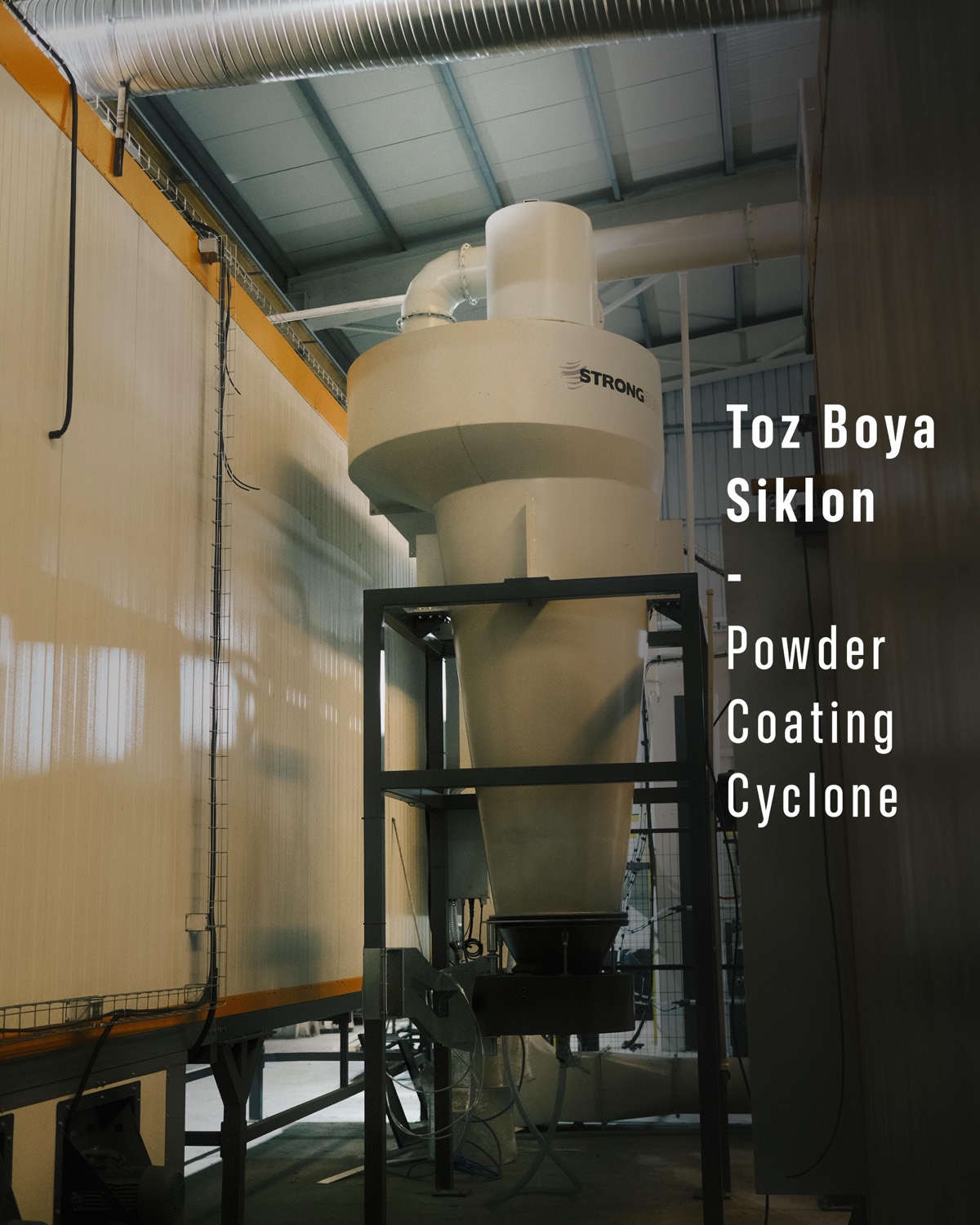
- If you run more than 3 colors a day, a quick-clean PVC booth with monocyclone recovery stands out; for high output with few colors, a cartridge filter system makes sense.
- A stainless steel booth is durable, but color change is slower than with PVC; the recovery type is as much a decision point as the booth material.
- Booth size follows not from the part but from the air extraction velocity; a face velocity of 0.4–0.6 m/s is generally targeted.
In a powder coating line, the booth is the item most companies think about last but regret most later. The gun and oven are discussed up front; the booth is chosen on the basis of “as long as the powder doesn’t escape.” Yet the booth’s type, material and recovery method directly determine your daily color change time, your powder waste and how often the operator has to wipe down. The choice is made by looking at three numbers: how many colors you run per day, how big your largest part is and whether application will be manual or by robot.
Booth Types: Material and Construction
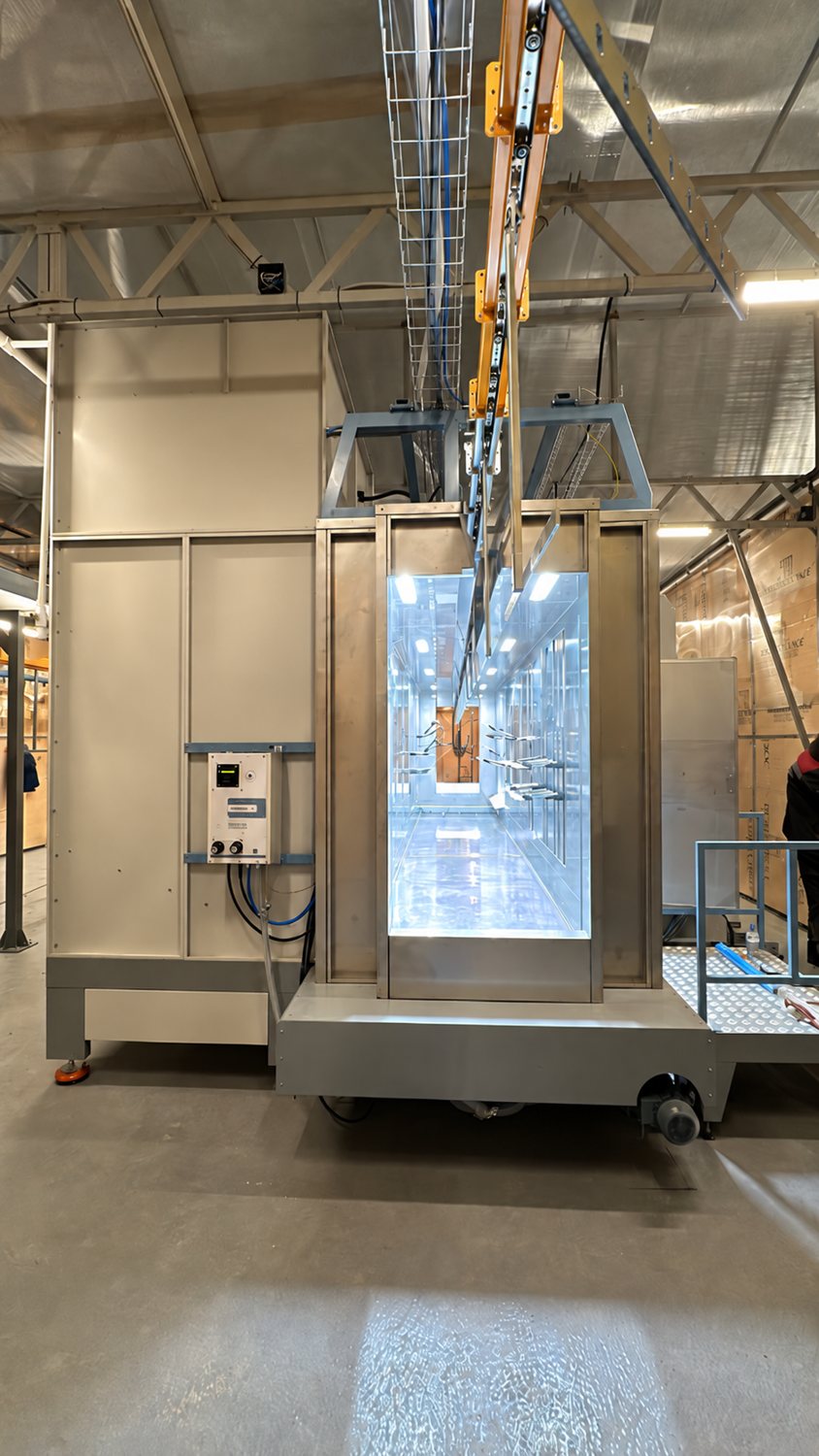
The booth body is usually made of one of two materials: sheet metal (mostly stainless) or plastic-based PVC/PP panels. The difference between them is not aesthetic but how powder adheres. Powder particles are charged and cling to a conductive surface; they stick much less to an insulating surface. That is why the inner walls of PVC booths are wiped down in a few minutes at a color change, while stainless steel walls hold more powder and cleaning takes longer.
| Feature | PVC / Plastic Panel Booth | Stainless / Sheet Metal Booth |
|---|---|---|
| Powder adhesion | Low (insulating surface) | High (conductive surface) |
| Color change speed | Fast, a few min of wiping | Slow, thorough cleaning |
| Durability / service life | Medium; sensitive to scratching and UV | High; resistant to impact and heat |
| Static electricity | Static can build up on the surface | Grounded, few static problems |
| Suitable scenario | Frequent color changes, multi-color work | Few colors, long runs, heavy use |
| Initial investment | Generally lower | Generally higher |
There are also two main configurations on the construction side: a fixed booth for small and medium jobs, and for high-volume lines an automatic booth with self-cleaning interior surfaces where the guns are mounted on a reciprocator or robot. In a fixed booth, the operator holds the gun by hand; in an automatic booth, the part passes on a conveyor and the gun moves up and down on a vertical axis.
Tip
Do not consider booth material separately from the number of colors. For a furniture coater running a single color, a stainless body will run trouble-free for life; in a job shop changing five colors a day, the same booth will cost half an hour at every color.
How the Number of Colors Changes the Decision
The single most decisive variable in booth selection is the number of colors per day, because a color change means production stops. You can roughly frame it like this: if you run 1–2 colors a day, cleaning time adds up to a few minutes over the day and booth type becomes secondary. Once you go above 3 colors a day, the 20–30 minutes at each change start to pile up and turn into weeks of lost production by the end of the year.
At this point both the booth body and the recovery type come into play. For frequent color changes, a PVC body + monocyclone combination is preferred: the cyclone empties quickly, a second cyclone can be fitted for a separate color and the booth wall wipes down fast. On lines running long series with few colors, a cartridge filter booth captures fine powder better and raises overall recovery efficiency. To see in more detail which system suits you, see the monocyclone vs. filter booth comparison; we cover practical ways to shorten color change time in the fast color change guide.
Caution
Buying an expensive multi-color system because “I might run many colors in the future” is as much a mistake as trying to handle existing multi-color work with a single-cartridge booth. Build your color change plan on your actual order mix; record how many colors you run on average per day for a month and decide based on that number.
Part Size and Air Extraction
Booth size is not determined, as many people think, by the logic of “the largest part must fit.” What determines it is the velocity of air drawn in through the booth opening. To keep powder from escaping the booth, the average face velocity across the opening must be kept within a certain range; in practice, around 0.4–0.6 m/s is targeted. The larger the opening, the higher the airflow of the fan needed to achieve that velocity.
So as the part gets bigger, both the booth opening and the extraction fan get bigger, and energy consumption rises. That is why the booth must be sized not by “the smallest size it will fit in” but together with the part geometry and the conveyor line’s passage opening. For parts such as long profiles and panels, a pass-through (tunnel-type) booth works more efficiently; for one-off parts, a single-opening booth.
- Small parts, high volume: Compact booth, automatic gun array, fast conveyor.
- Large/long parts: Pass-through tunnel booth, guns from both sides, vertical reciprocator.
- Mixed parts (job shop): Manual + automatic mix, wide opening, flexible racking layout.
What happens when air extraction is not set up correctly? Powder escapes through the booth opening into the workshop, transfer efficiency drops, recovery decreases and the workspace gets dusty. With excessive extraction, powder that has clung to the part is drawn toward the wall and film thickness drops. The balance is the most technical part of booth design and must be planned together with conveyor speed as part of the powder coating line as a whole.
Manual, Automatic and Robotic
The booth takes shape around the gun arrangement it will house. There are three levels, and most real lines use a mix of them.
Manual Booth
The operator holds the gun by hand. It is flexible for low and variable volumes and a wide variety of parts. It is the lowest-investment option, but repeatability depends on the operator’s hand; the same part can come out at different thicknesses on two different shifts.
Automatic / Reciprocator Booth
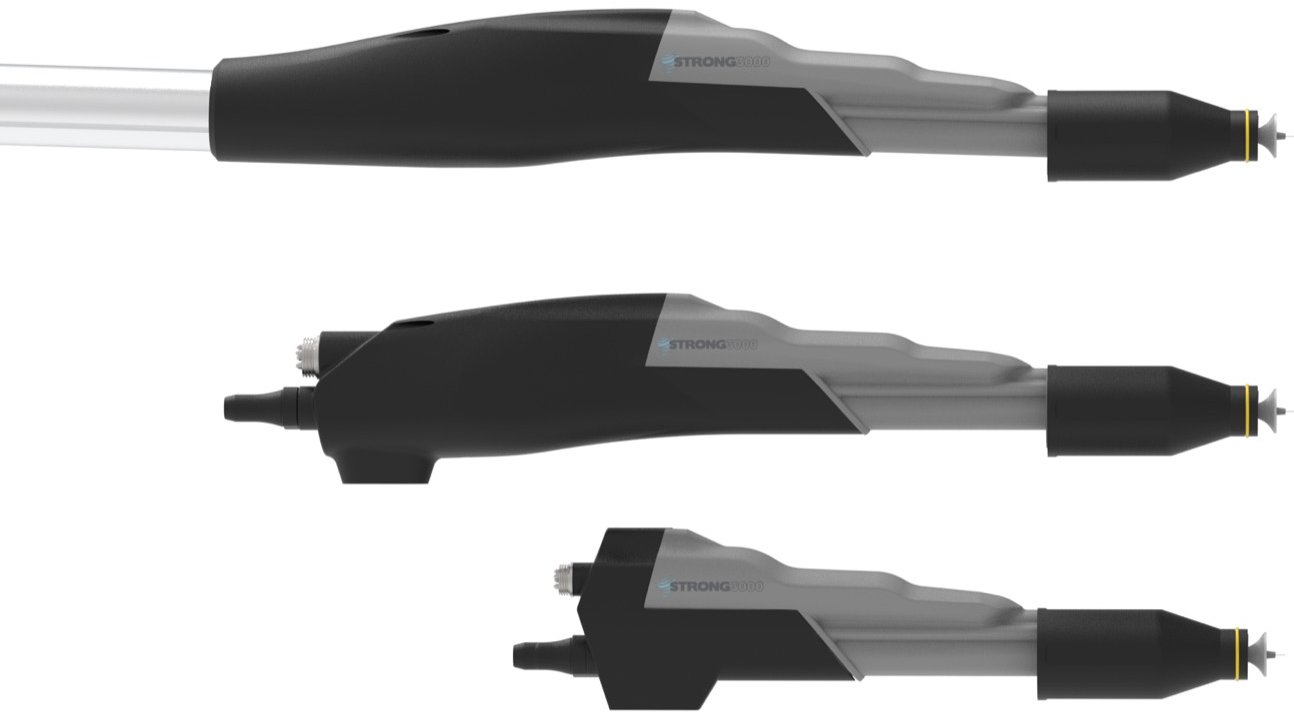
The guns are mounted on a slide (reciprocator) that moves up and down on a vertical axis. As the part passes at constant speed, the gun scans continuously. Efficiency is high on jobs where large numbers of the same part pass through and repeatable thickness is required.
Robotic / Intelligent Motion Booth
On complex geometries and parts with recesses and indentations, the gun has to approach the part at the right angle and distance. This is where multi-axis robots or intelligent motion gun systems come in. This choice is also the way to manage the Faraday cage effect; reaching corners and recesses is often impossible with a fixed gun.
In practice, the most common setup is to add a short manual touch-up station at the exit of the automatic booth: automatic guns coat the main body, and the operator completes the shadowed spots by hand. This mixed arrangement preserves both speed and coverage completeness.
Decision Questions
Before sitting down to collect quotes for a booth, answer these questions for yourself. The answers directly describe the system you will request from the supplier.
- How many colors do I run per day on average? If 1–2, a stainless body is suitable; if 3 or more, consider a PVC body + fast-emptying recovery.
- What are the size and geometry of my largest part? If long/panel, a pass-through booth; if one-off and complex, a robot/intelligent motion may be needed.
- What is my daily capacity target (parts/hour)? High volumes require an automatic gun array and a constant conveyor speed.
- Is repeatable thickness a must, or does part variety dominate? Repeatability points to automation; variety points to manual flexibility.
- How much do I need to reduce my powder waste? Recovery efficiency drops with fine or metallic powders; a cartridge filter captures this powder better.
- What are the floor space and ceiling height in my workshop? Reciprocators and tunnel booths require a certain height and width.
- Am I planning to increase capacity/colors in the future? A modular booth and a design that allows a second cyclone to be added should be discussed now.
Once you give concrete numbers and answers to these seven questions, the booth type largely determines itself. The remaining technical details (face velocity, filter area, duct diameter) are the supplier’s job; your job is to describe your production profile accurately. Since the booth is the least visible part of the line but the one that loses the most days, these few hours of preparation pay off in the years that follow.
Frequently Asked Questions
Three things determine the decision: how many colors you run per day, the size of your largest part and whether application will be manual or automatic. A stainless body makes more sense for few colors and long runs, and a PVC body for frequent color changes.
Thanks to its insulating surface, PVC holds less powder and wipes down in a few minutes at a color change; it suits workshops that change colors frequently. Stainless sheet is more durable but takes longer to clean and is preferred for heavy use with few colors.
If you run more than 3 colors a day, a fast-emptying monocyclone and an easy-to-wipe PVC body stand out; a design that allows a second cyclone to be added shortens color change time.