Summary
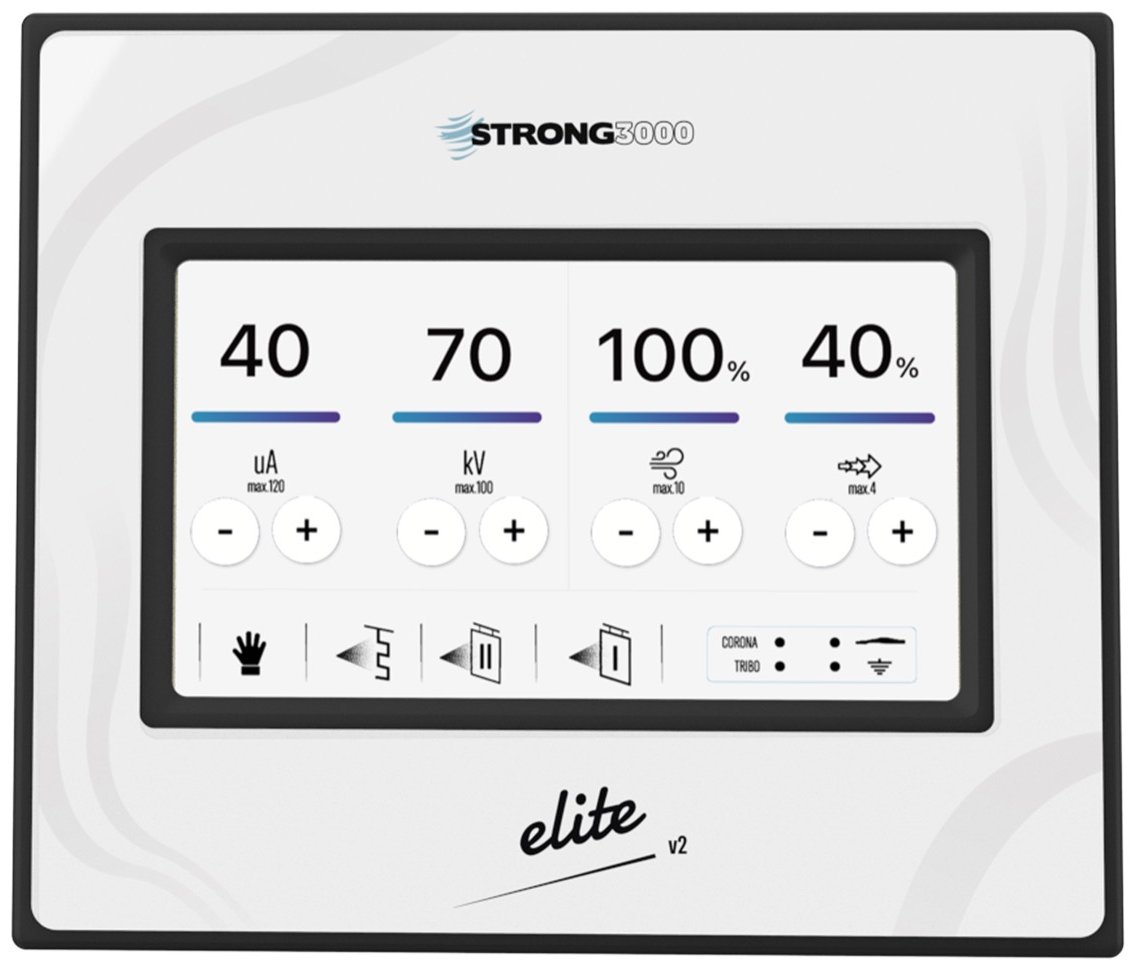
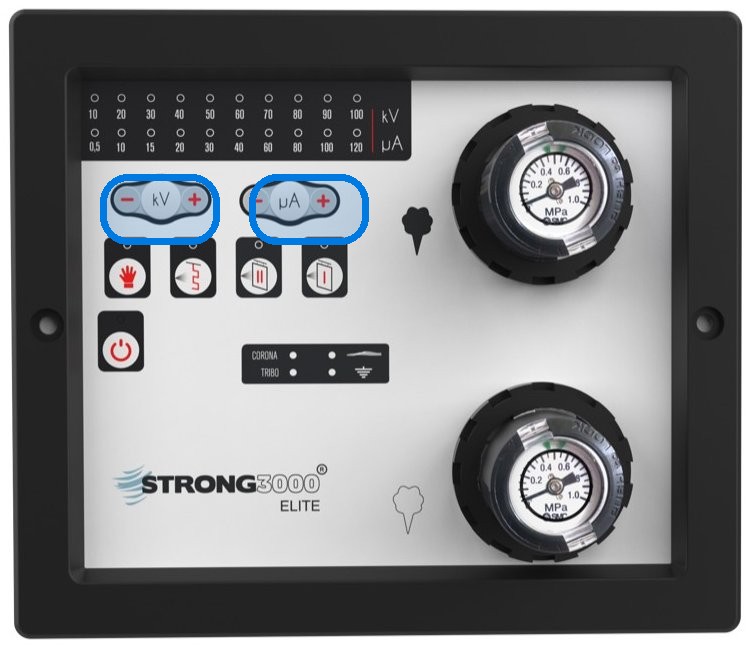
- kV (voltage) determines the strength of the electrostatic field, while µA (current) determines the amount of free ions produced — the two do different jobs.
- A single shared setting does not work on every part; a flat surface and a deep recess are not coated well with the same kV/µA.
- Independent adjustment: efficiency on flat surfaces with high kV, and penetration with less back ionization in corners/recesses with low µA.
- In powder enameling, particles behave heavier/more conductive, so current management is even more decisive.
Electrostatic powder coating and powder enamel guns have two fundamental values: kV (applied voltage) and µA (current flowing from the electrode). Many users think of the two as a single “power” setting. In fact, kV and µA do different physical jobs, and being able to adjust them independently of each other is one of the most important capabilities directly determining coating quality.
What Do kV and µA Do?
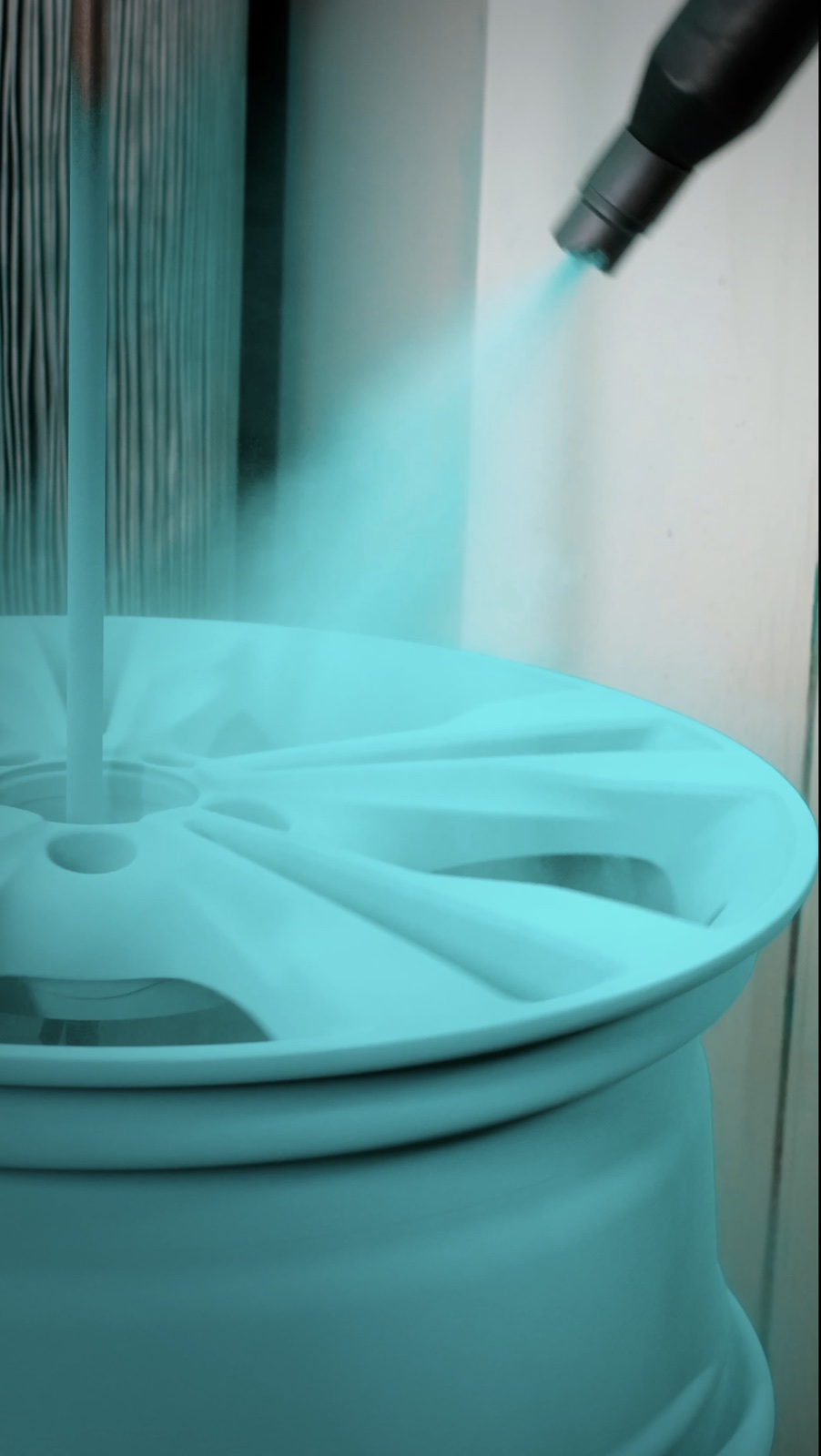
kV (voltage) determines the strength of the electric field between the electrode and the grounded part. High kV strengthens the field that pulls powder to the part and speeds up initial deposition; it delivers high transfer efficiency on flat, wide surfaces.
µA (current) relates to the amount of free ions produced at the electrode tip. Too many free ions lead to charge buildup on the part surface and to Faraday cage and back ionization problems. Limiting µA cuts back this flood of free ions, letting particles reach recesses and corners.
In short: kV answers “how strongly should we attract,” while µA answers “how many free ions should we produce.” A good coating often comes from a high kV + controlled (low) µA combination — and this is only possible if the two can be adjusted separately.
Why Adjust Them Separately?
A single shared setting falls short when part geometry changes. A value that works perfectly on a flat panel leaves the corners bare in a deep radiator channel; a value suitable for corners stays slow and inefficient on flat surfaces. With independent kV/µA:
- Better penetration: By lowering µA, you get powder into deep recesses and inside corners; the Faraday cage effect eases.
- Less back ionization: Controlled current reduces charge buildup on the surface and the formation of craters/starring in the film.
- Uniform film thickness: Excess ions repel new particles and limit thickness; managing current gives smoother, more controlled thickness.
- Less waste: The right combination increases transfer efficiency, so less powder goes to recovery.
Tip
Rule of thumb: flat/wide surface → high kV (80–100) and unrestricted current; deep corner/recess → medium kV (40–60) and low µA. If you cannot adjust the two separately, you cannot strike this balance.
Benefits in Powder Coating
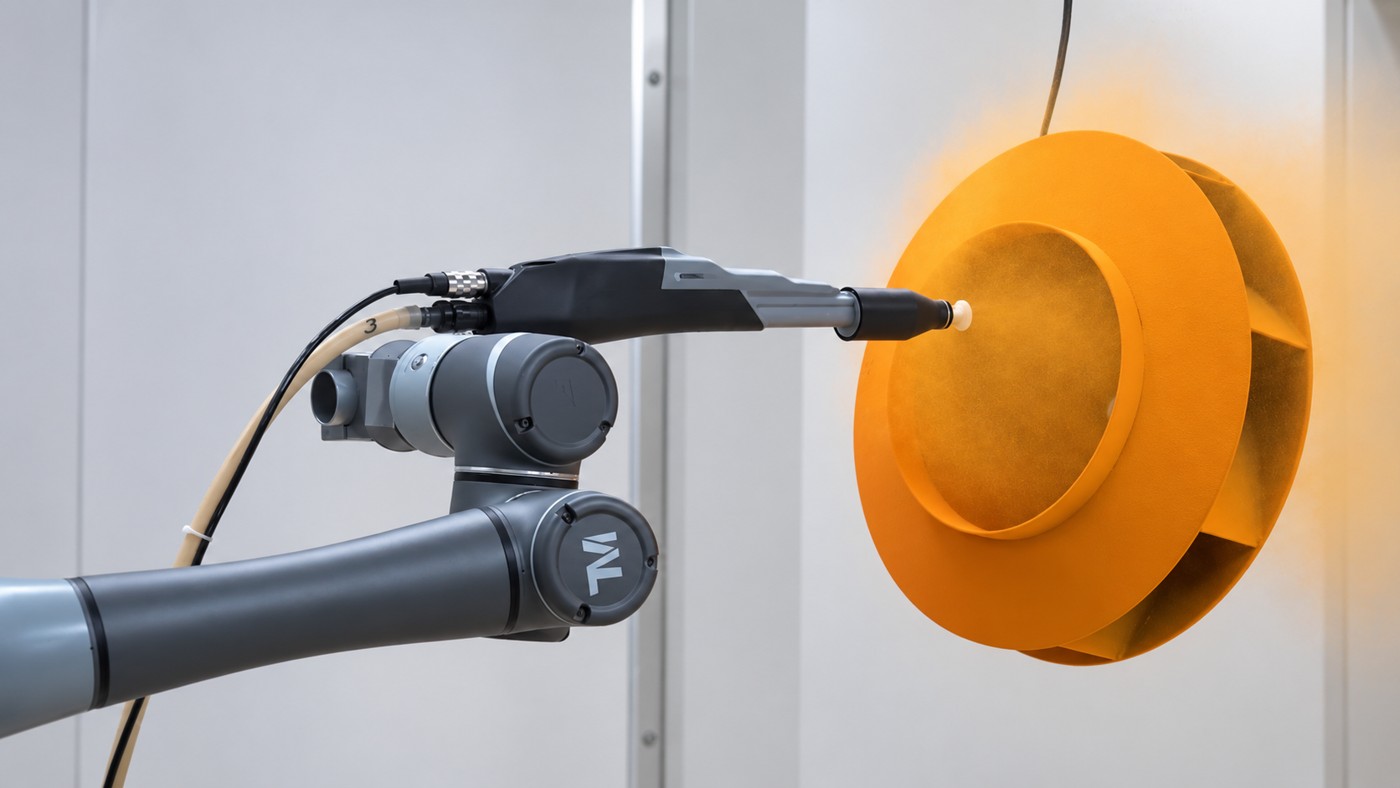
The two most common problems in powder coating — bare corners and starring on the surface (back ionization) — are directly related to current management. Being able to keep kV high while turning µA down to suit the part makes it possible to coat both flat covers and deep profiles with the same gun under a single-recipe logic. When saved as a recipe, the same part comes out at the same thickness and flawless every time.
Benefits in Powder Enameling
Powder enamel particles generally behave heavier and with different conductivity than powder coating. This makes the charging and ion balance more delicate. Being able to manage voltage and current separately reduces enamel powder accumulation at edges (edge build-up), provides a more uniform pre-fired film on inner surfaces and cavity areas, and improves adhesion before firing. Separate kV/µA control is especially decisive on recessed enamel parts such as oven cavities and boiler inner tanks.
Frequently Asked Questions
Yes. STRONG3000 Elite, Elite Plus and Smart control units adjust voltage (kV) and current (µA) independently; efficiency on flat surfaces with high kV and penetration in recesses and corners with low µA are achieved at the same time.
The µA limit controls the amount of free ions coming from the electrode. Low µA reduces back ionization and lets particles enter recesses in Faraday cage areas.
Yes. Because powder enamel particles behave heavier and with different conductivity, current management is even more critical; separate control improves thickness and edge behavior.