In Short
- Cathodic electrocoating (KTL) is a method in which a film is deposited by an electric field in a bath into which the part is immersed.
- Its greatest strength is penetration: it leaves a uniform primer on every surface, including closed box sections, internal cavities and hidden recesses.
- On its own it is a corrosion primer; for UV and decorative durability, a powder coating top coat is applied over it.
- It is the standard corrosion defense for automotive bodies/chassis, agricultural and construction machinery, and heavy industry.
How does coating get into a chassis's internal box sections, closed profiles and weld pockets? Conventional spraying cannot reach them; a gun cannot carry powder or liquid paint to a surface it cannot see. Cathodic electrocoating solves this problem with an electric field: the part is immersed in the bath, current is applied, and the paint film deposits at equal thickness on every reachable point of the conductive metal. That is why this method has handled automotive body priming for decades.
What Is Cathodic Electrocoating
Cathodic electrocoating, in full cathodic dip electrocoating (KTL), deposits a film by applying direct current (DC) to a part immersed in a water-based paint bath. The part becomes the cathode (negative pole) and the counter electrodes in the bath become the anodes. The paint resin is dispersed in the bath as charged particles; the electric field carries these particles to the part surface and deposits them there. This is called electrophoresis, the migration of charged particles in a field.
There are two basic variants. In the anodic system, the part is the positive pole and a small amount of metal dissolves; in the cathodic system, the part is the negative pole, no metal dissolves, and corrosion resistance is markedly higher. In industry, “KTL” almost always means the cathodic system.
The distinctive feature of the process is that it is self-limiting. As film builds up on the surface, the electrical resistance of that area increases and current shifts to less-coated points. As a result, the film evens itself out even on complex geometry. Typical dry film thickness is in the 15-35 μm range; the exact value varies with bath chemistry, application voltage (generally a few hundred volts) and immersion time, and the paint manufacturer's technical datasheet (TDS) is the reference.
After coating, the part is rinsed and baked. Depending on bath type, cure is generally tied to a part metal temperature (PMT) of 160-190 °C; at this stage the film cross-links and attains its final hardness/chemical resistance. What counts is the temperature the part reaches, not the oven air.
Tip
KTL is a primer method, not the entire coating process. For a good result, degreasing, conversion coating (zinc phosphate or nano-ceramic) and rinsing beforehand are essential. Poor surface preparation results in weak adhesion and corrosion resistance, however good the bath.
Why Superior Corrosion Protection
Corrosion starts at a part's weakest point; this point is often an internal surface that cannot be coated. This is exactly where cathodic electrocoating gains the upper hand. Because the electric field reaches every part of the conductive metal, film forms not only on outer surfaces but also in internal cavities, closed profiles, weld roots and bolt holes. With spray methods, these areas are either coated very thinly or left bare.
Penetration ability is known in bath terminology as “throwing power” and is cathodic electrocoating's strongest feature. It measures the ability to carry film to a certain depth on the inner surface of a box section. This means that hidden sections most exposed to factors such as salt, moisture and road salt are protected too.
Film uniformity is the second advantage. Because the thickness distribution stays within a narrow range, it leaves no thin areas that would therefore rust early. Even if the film is locally damaged by a scratch or stone chip, having a sound conversion coating and uniform primer underneath slows the lateral spread of corrosion.
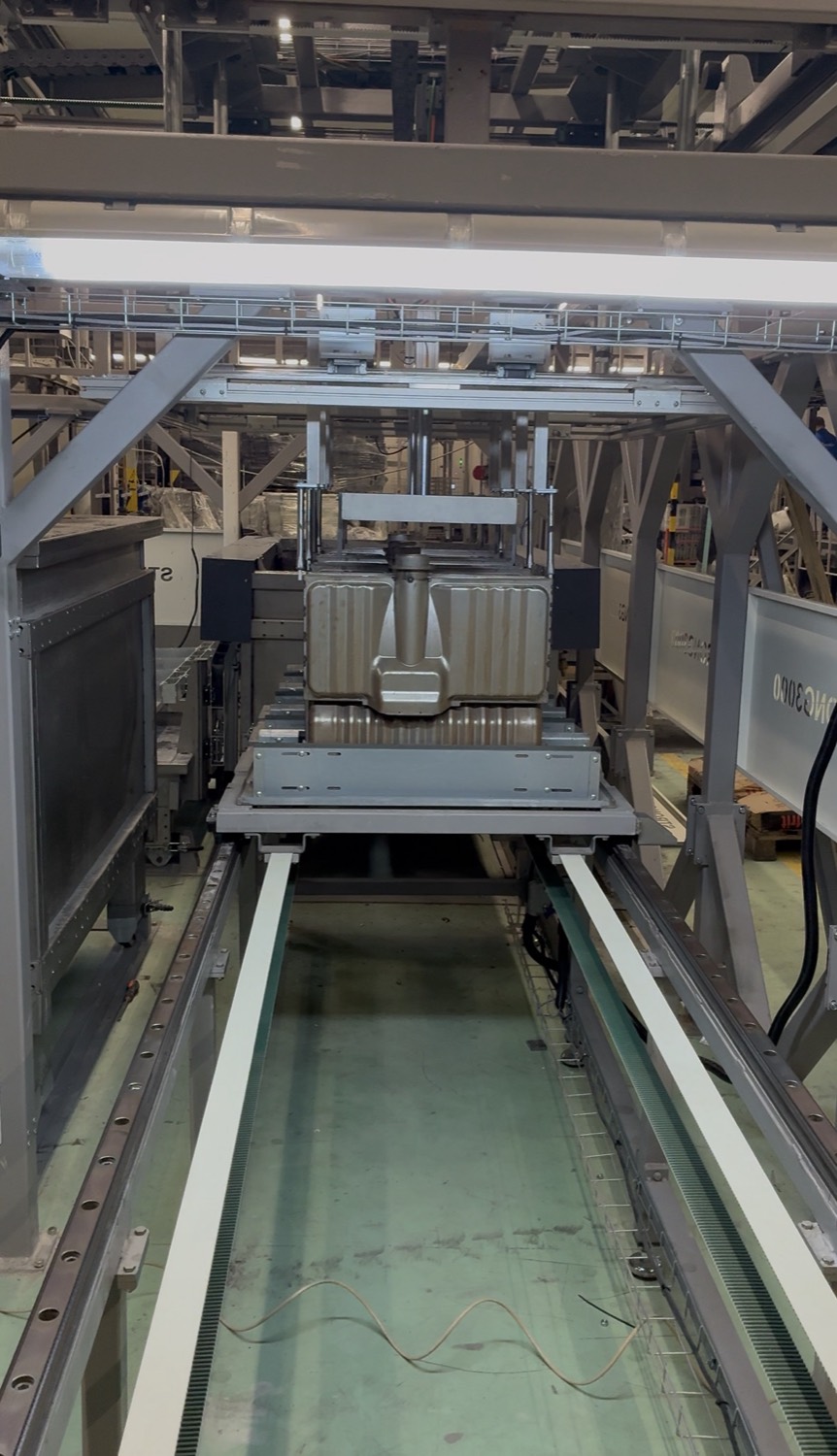
These properties make cathodic electrocoating the standard corrosion defense for underbodies and chassis on automotive coating lines. The same logic applies to parts working under heavy loads and outdoors, such as agricultural equipment.
Combined KTL + Powder Coating Line
Cathodic electrocoating has one weakness: standard KTL films lose color and gloss over time under UV. That is why it is not used alone as the decorative layer on parts visible outdoors. The solution is a combined line that unites the strengths of both methods: cathodic electrocoating underneath as the corrosion primer, and powder coating on top as the decorative, durable top coat.
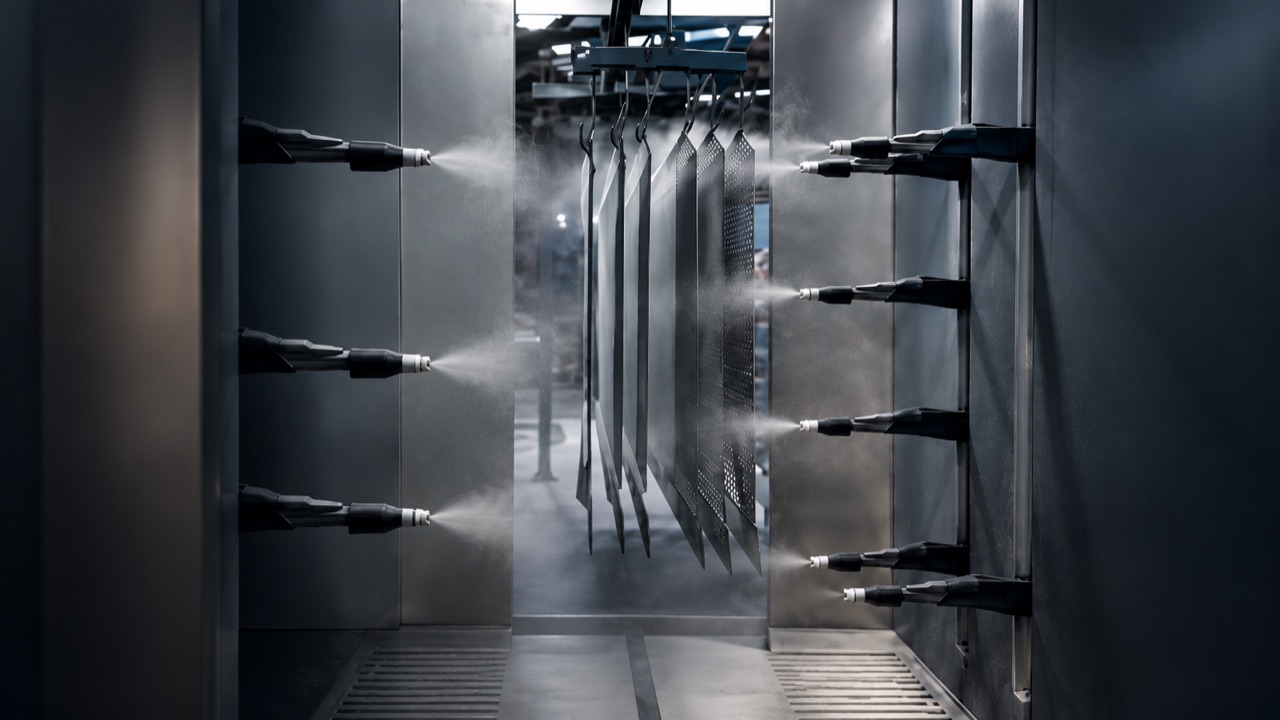
The what is powder coating article, which explains powder coating and its types in detail, covers the second leg of the process. In short, polyester-based powder coatings provide good UV resistance outdoors, a wide choice of RAL colors and a robust decorative surface in the 60-90 μm range. The KTL primer handles corrosion, and the powder coating top coat handles appearance and UV.
| Feature | Cathodic electrocoating (KTL) primer | Powder coating top coat |
|---|---|---|
| Main role | Corrosion primer | Decorative and protective top coat |
| Penetration (internal cavities/recesses) | Very high, reaches every surface | Limited, struggles to enter recesses due to the Faraday cage effect |
| UV / outdoor color retention | Poor, tends to fade | High with polyester |
| Color / decorative options | Narrow (usually black/gray primer) | Wide RAL range, various finishes |
| Typical film thickness | 15-35 μm | 60-90 μm |
| Application | Bath immersion + current | Electrostatic spraying + curing |
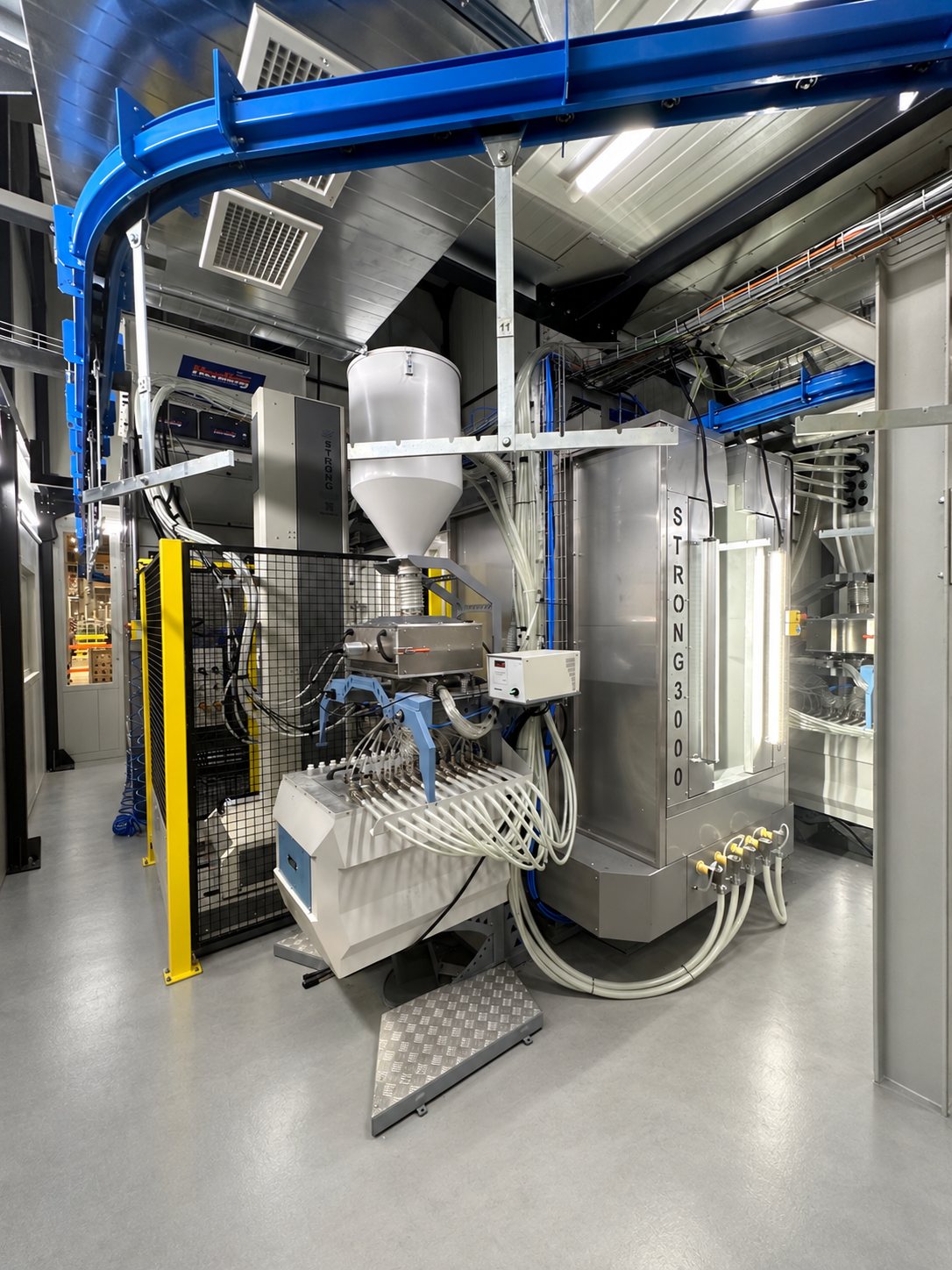
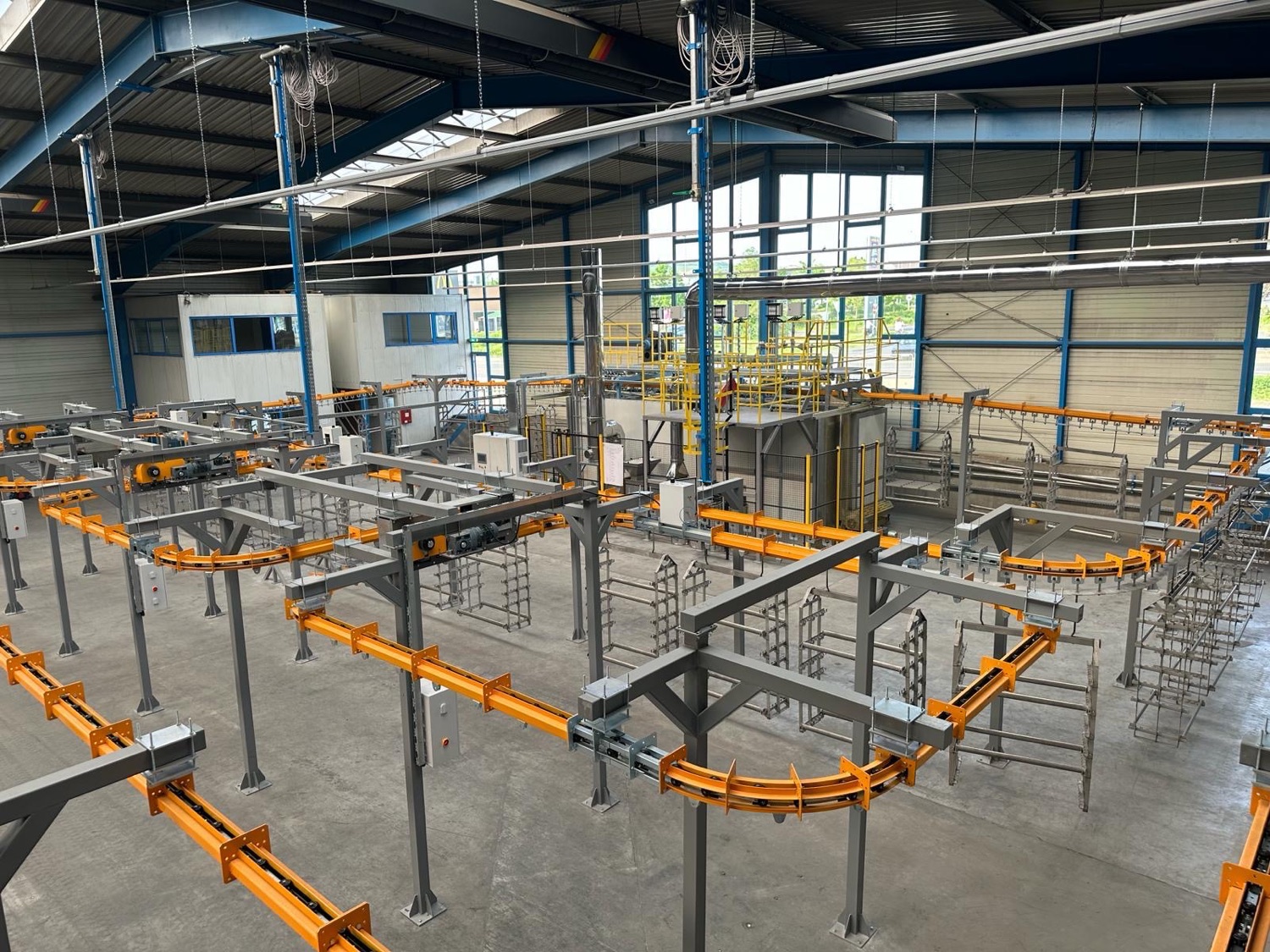
On a combined line, the part first passes through pretreatment and the KTL bath, the primer is baked, then the top coat is applied in the powder coating booth and cured again. The two layers complement each other: the penetration advantage of one is matched by the decorative and UV advantage of the other. Exact layer thicknesses and curing regime vary by part and paint system and are confirmed by field measurement.
Caution
Thinking of powder coating alone as a corrosion solution is a common mistake. Powder coating provides a good barrier and decorative coat, but because of the Faraday cage effect it cannot get inside closed profiles and deep recesses. Hidden sections with high corrosion expectations need cathodic electrocoating or an equivalent primer underneath.
Where It Is Used
Cathodic electrocoating stands out wherever corrosion risk is high and geometry is complex.
- Automotive: Body-in-white (BIW), chassis, underbody parts and closed profiles. The KTL primer is the foundation of a vehicle's long-term corrosion warranty; primer/base/clear coat, or powder coating on industrial parts, goes on top.
- Agricultural and construction machinery: Tractor chassis, buckets, axles and welded frames. These parts, working under mud, fertilizer, salt and constant moisture, require both internal section protection and an impact-resistant outer coat; the KTL + powder coating combination meets this need.
- Heavy industry: Steel structures, electrical enclosure bodies, pipe/profile systems and large metal components. On parts with many internal surfaces and weld seams, a uniform primer is critical.
The common point is this: the more closed sections, recesses and weld roots a part contains, the more valuable cathodic electrocoating's penetration advantage becomes. For simple parts with flat, open geometry that are not visible outdoors, powder coating alone may often be sufficient. The right choice depends on the part's geometry, corrosion expectations and appearance requirements.
Frequently Asked Questions
Cathodic electrocoating is a corrosion method that immerses the part in a bath and deposits a primer by an electric field, reaching even closed internal surfaces. Powder coating is an electrostatically sprayed decorative top coat that excels in UV resistance and color. On a combined line, they are used together, one as the primer and the other as the top coat.
It is very strong as a corrosion primer, but standard KTL films fade under UV and color options are narrow. On parts visible outdoors, a decorative, UV-resistant top coat such as powder coating is applied over it.
Because a car body contains many closed profiles, weld roots and internal cavities, and corrosion starts in these hidden sections. Since cathodic electrocoating carries a uniform primer to these surfaces with an electric field, it forms the basis of long-term corrosion protection.