In Short
- Enamel is not a paint; it is a glassy coating formed by fusing glass in frit form onto metal.
- Powder enamel means electrostatic powder application + firing; wet enamel means slip dipping/spraying + drying + firing.
- Steel is fired at roughly 780–850 °C and aluminum at 530–570 °C; the exact range varies with the substrate and the frit.
- Fish scaling is prevented with well-decarburized enameling steel (EN 10209 / DC04EK) and correct firing.
If you have ever wondered how a water heater inner tank or an oven cavity gets a surface that is fired at around 800 °C, glossy as glass yet as tough as steel, the answer is enamel. The most common mistake in the field is to think of enamel as a kind of oven paint. It isn’t. Enamel is molten glass chemically bonded to metal; this article explains with practical detail what powder enamel is, how it differs from wet enamel and how a line works.
What Is Enamel (Glass)?
Enamel is formed by fusing a specially formulated glass onto a metal surface. The starting material is frit: raw materials melted at high temperature and quenched into brittle glass particles. When the frit is milled, a powder or suspension ready for application is obtained.
The backbone of the frit composition comes from glass formers. A typical formulation contains the following groups:
- Silica (SiO2): the main network former of the glass; determines hardness and chemical resistance.
- Boron oxide (B2O3): lowers the melting range and adjusts fluidity and wetting of the metal.
- Soda (Na2O) and potash: alkali fluxes; control the firing temperature.
- Feldspar: source of alumina and alkali; contributes to the durability of the glass.
- Metal oxide colorants and adherence agents: cobalt and nickel oxides strengthen adherence to steel; titanium, iron and chromium oxides provide color and opacity.
At furnace temperature, the frit softens, flows and bonds by forming a transition zone with the oxide layer on the metal surface. On cooling, this glass solidifies; the result is a glassy layer combining the hardness of metal with the chemical resistance of glass. That is why the correct term is vitreous enamel or porcelain enamel; the coating is not an organic film like paint but genuinely a glass.
Tip
Frit selection determines the entire character of the coating. Two different frits applied to the same steel give very different acid resistance and firing ranges. The frit manufacturer’s technical data sheet (TDS) is the basis for exact values.
Powder Enamel vs Wet Enamel
The same glass coating can be reached by two different routes. The essence of the distinction is how the frit is carried to the metal.
Wet enamel is the classic method. Milled frit is mixed with water, clay and electrolytes to form a suspension called slip. The part is dipped in this slip, flow-coated or sprayed with a gun; then, before entering the furnace, it is dried to drive off the water (typically at around 100–150 °C). The dry film is then fired. Wet enamel provides good coverage on complex geometries and interior surfaces, such as the inside of a water heater tank.
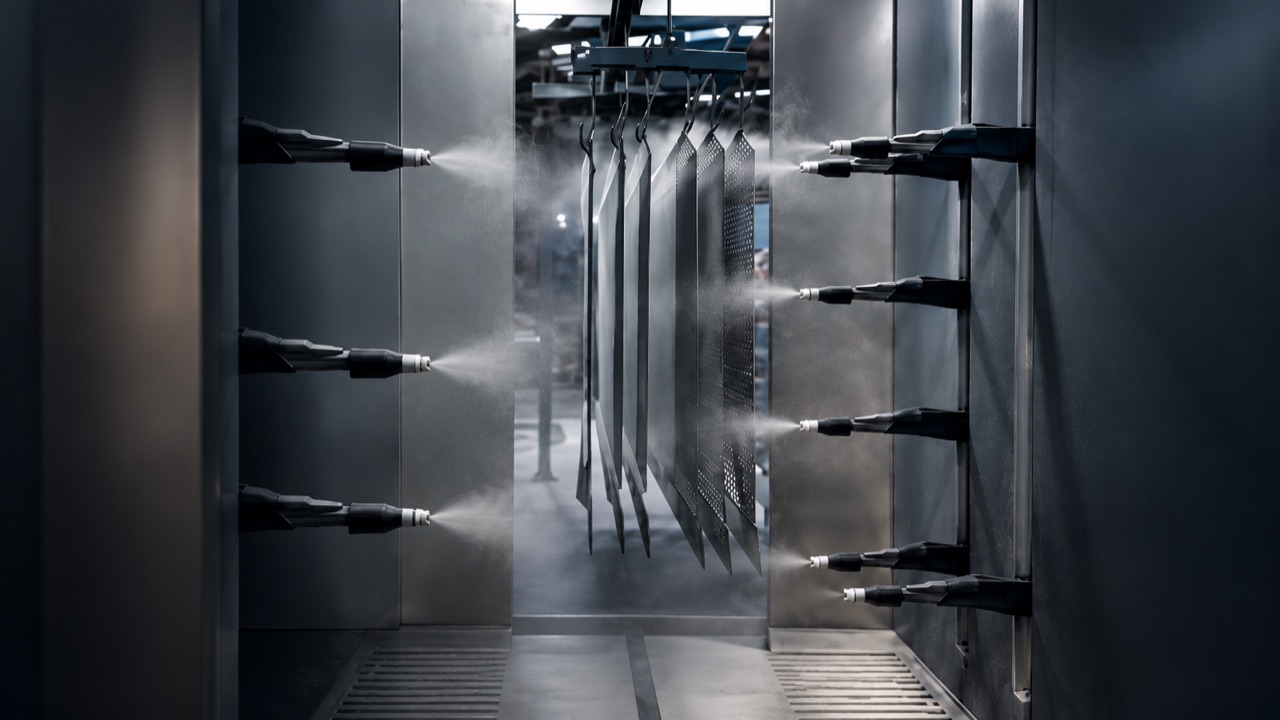
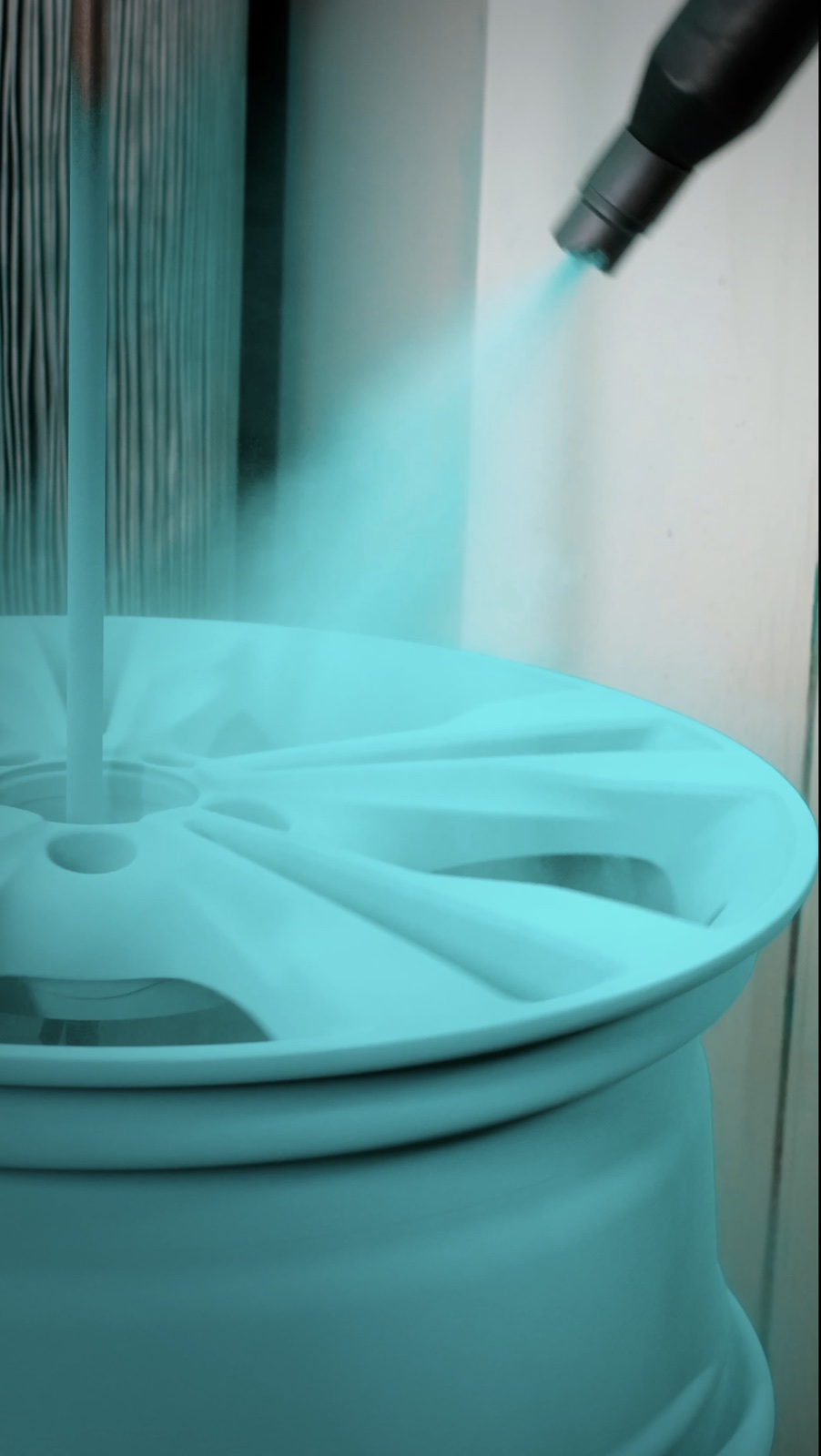
Powder enamel, on the other hand, is the electrostatic application of dry frit. Specially prepared enamel powder is charged in the gun, adheres to the grounded part and is fired directly. With no water and no drying step, the cycle is shorter, and most of the powder that does not coat the part is recovered and reused. Efficiency and repeatability are high on flat and moderately complex parts; in very deep recesses and concave areas, the Faraday cage effect can make coverage difficult.
| Feature | Powder Enamel | Wet Enamel |
|---|---|---|
| Carrier | Dry powder (water-free) | Water-based slip |
| Application | Electrostatic gun | Dipping / flow coating / spraying |
| Drying step | No | Required (100–150 °C) |
| Excess material | Largely recovered | Partially recovered |
| Strength | Efficiency, speed, clean operation | Complex geometry, interior surface coverage |
| Challenge | Deep recesses / Faraday cage | Cycle time, wastewater management |
If you want to see in more detail how the two processes, and powder coating as well, differ, the article on the difference between powder coating, powder enamel and wet enamel covers the topic from start to finish.
Which Metal Fires at What Temperature
The first thing that determines firing temperature is the substrate. The glass must be fired below the softening point of the metal but at a temperature at which the frit flows and bonds; that is why each metal has its own frit and its own range.
- Steel: roughly 780–850 °C, typically 3–6 minutes. It is the most common enamel substrate; water heaters, ovens and cookware fall into this group.
- Aluminum: 530–570 °C. Because aluminum has a low melting point, special low-temperature frits are used; seen on architectural panels and some home appliances.
- Cast iron: generally fired for longer than steel and at a slightly lower or similar temperature range; used for thick-section parts such as bathtubs, grates and radiators.
The coating is usually built up in two layers: the ground coat, which provides adherence to the metal, and the colored/functional cover coat on top. In the classic method, each coat is fired separately. In modern two-coat one-fire (2C1F) systems, the ground coat and cover coat are applied wet-on-wet and matured together in a single firing; this eliminates one furnace cycle, saving energy and time.
Caution
The ranges here are for guidance. The actual set point varies with the frit, film thickness and part mass. A thick casting and a thin sheet reach the same temperature in the same furnace air at different times; what counts is the part temperature, not the furnace air. The exact value is established by on-site measurement and the frit TDS.
Enameling Steel and Surface Preparation
The most critical variable in enameling steel is the steel itself. What really determines enamel quality is the steel’s hydrogen behavior. During firing, gas is released from opened pores and from the reaction of carbon in the steel; when this gas combines with hydrogen still dissolved in the steel during cooling, defects such as fish scaling, bubbles and black specks appear in the glass.
The solution is to use low-carbon decarburized enameling steel. These steels are defined in the EN 10209 standard; a common grade is DC04EK. Decarburized steel contains little carbon and, instead of retaining hydrogen, releases it in a controlled way into voids in its microstructure; so no pressure builds up under the glass during cooling. Ordinary high-carbon sheet, by contrast, practically invites fish scaling under the enamel.
Surface preparation is as important as the coating itself:
- Sheet steel: a clean, active surface is obtained through degreasing, pickling and, where necessary, nickel deposition. Oil, grease and oxide residue impair adherence.
- Cast iron: casting skin and sand residue on the surface are removed by blasting; on some parts, pre-annealing is applied to reduce the risk of outgassing.
Whatever the metal, cleanliness is non-negotiable. To go deeper into the causes and prevention of enamel defects, see the enamel coating defects article.
Where Powder Enamel Is Used
Enamel is chosen wherever the chemical and thermal resistance of glass is required. The main application areas:
- Water heater and storage tank interiors: long-lasting corrosion protection against hot water and variable water chemistry. For details on this area, the water heater inner tank enameling page is a reference.
- Oven cavities and cooking surfaces: an easy-to-clean surface that withstands high temperatures, grease and repeated heating.
- Cookware and kitchenware: a food-safe, hygienic, scratch-resistant surface.
- Chemical industry: reactor interiors, tanks and silos; a glassy barrier against acids and alkalis.
- Heat exchangers: enamel surfaces resistant to corrosive environments in some specialized exchangers.
Advantages and Limits
The appeal of enamel is that it combines several properties in a single surface. Its strengths, which come from being glass:
- Glass hardness and high scratch resistance.
- Superior resistance to acids, alkalis and chemicals in general.
- Resistance to high temperatures and thermal shock.
- Food safety and hygiene; the non-porous surface does not harbor bacteria.
- UV and color stability; unlike organic coatings, it does not fade.
On the other hand, its limit also comes from the nature of glass. Enamel is brittle; under a hard, concentrated impact it cracks or chips and does not flex. If the substrate bends, the glass cannot follow and detaches. That is why enamel is the right choice for parts where chemical and thermal stress, rather than impact, is expected. If a part takes constant mechanical impact, an organic system may be more suitable.
Components of an Enameling Line
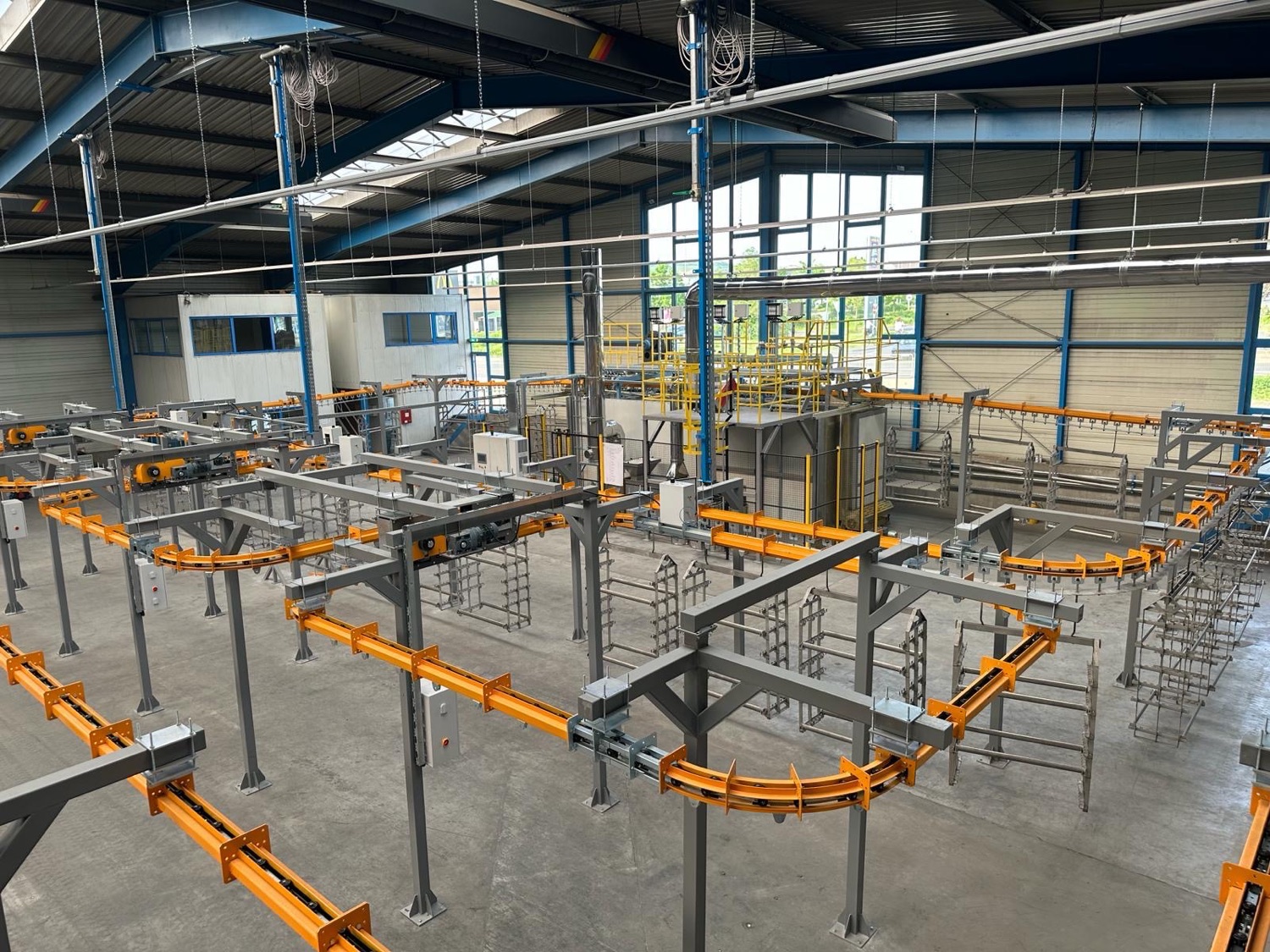
In principle, a powder enamel line resembles an electrostatic powder application system; the difference is that the powder is glass frit and there is a firing furnace at the exit. The main components:
- Application gun: charges the enamel powder and carries it to the grounded part. Because enamel powder is abrasive, the internal surfaces of the gun and hoses are selected accordingly.
- Application booth: an enclosed space that collects oversprayed powder and protects the operator and the surroundings.
- Recovery system: collects the powder that does not coat the part with a cyclone or cartridge filter and returns it to use. With glassy powder, controlling fines and moisture is important for preserving the quality of the recovered material.
- Firing furnace: the section where the part is brought to the temperature set for the frit and the glass matures. The temperature profile and cooling rate are decisive for final quality.
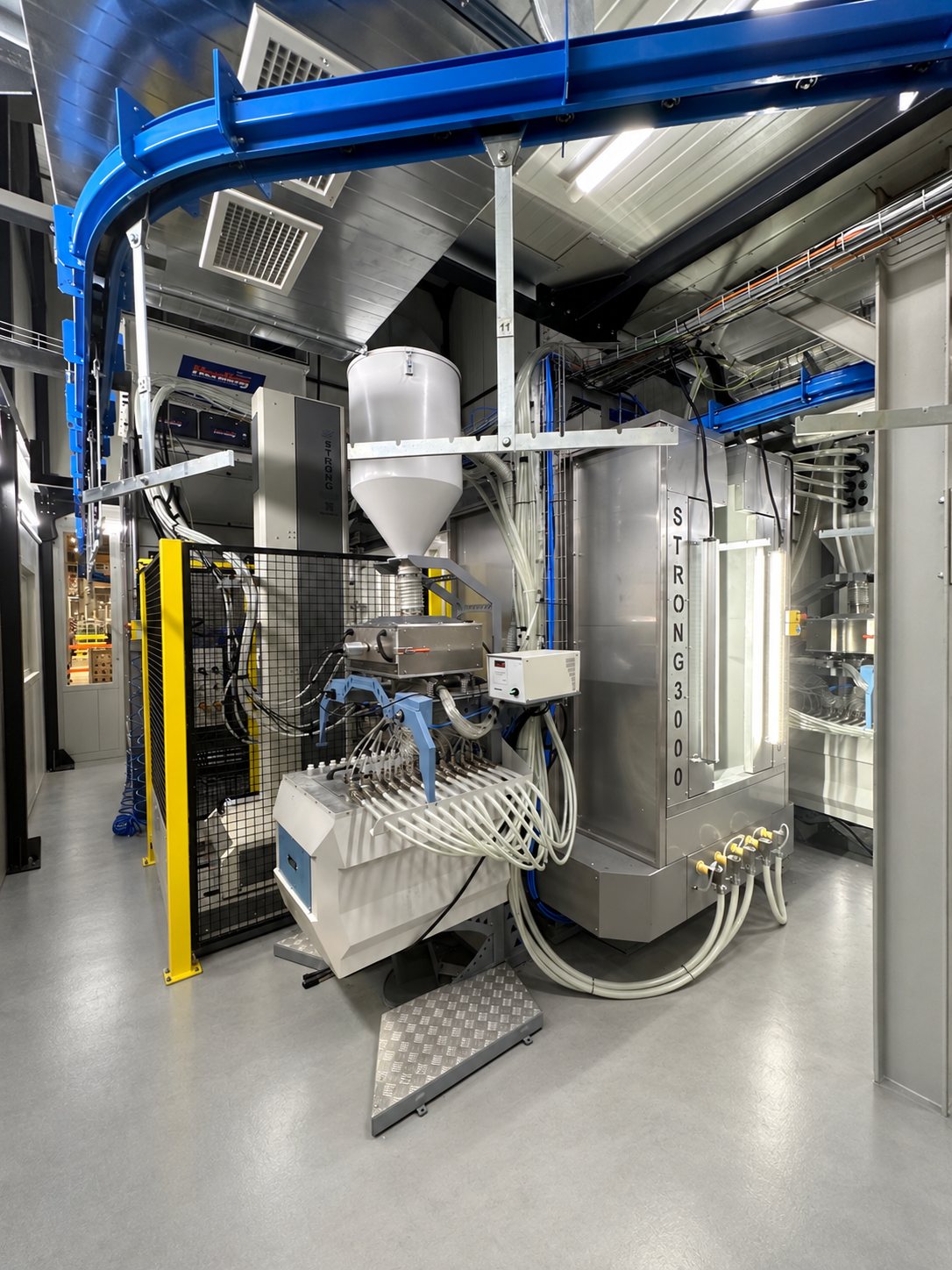
The STRONG3000 equipment family is one example of intelligent motion gun systems used in such applications; for technical setup and selection, the powder enamel coating system page looks at the process as a whole. Which gun, booth and furnace combination is right is engineered per project according to part geometry, daily output and the frit used.
Frequently Asked Questions
No. Enamel is a glassy coating; glass in frit form is fused onto the metal and bonds chemically. It is not an organic film like paint but a genuine layer of glass.
It depends on the substrate. Steel is fired at roughly 780–850 °C, aluminum at 530–570 °C, and cast iron generally in similar ranges over a longer time. The exact value is determined by the frit TDS and the part temperature.
Not exactly, but they are related. Both are glassy ceramic structures; enamel (porcelain enamel/vitreous enamel) is a glass coating fused onto metal, while porcelain is a ceramic body shaped and fired on its own.
Because it is glass, it is brittle; it can crack and chip under a hard, concentrated impact or when the substrate bends. Although it is highly resistant to chemical and thermal stress, it does not flex under mechanical impact.