
In Short
- Enamel is a vitreous coating formed by fusing ground glass (frit) onto a metal surface at high temperature; it is not paint.
- Firing is typically 780-850 °C on steel and 530-570 °C on aluminum.
- Hardness, hygiene, acid/alkali resistance and heat resistance are its strongest points; brittleness is its most notable limitation.
- Its uses range widely, from cookware and oven trays to boiler tanks, silos and chemical reactors.
If the inside of a teapot stays unstained and unscratched for years, or the steel tank of a hot water boiler holds up despite scale and corrosion, the same material is usually behind it: enamel. This coating, found everywhere from kitchenware to industrial tanks, is often mistaken for something “painted.” Chemically, however, the difference between enamel and paint is huge.
What Is Enamel
Enamel is a vitreous coating formed by melting finely ground glass and fusing it onto a metal surface at high temperature. That is exactly why it is called “glassy enamel” or “vitreous enamel”: it is not a paint that leaves a film as it dries, but a true glass layer that forms a chemical bond with the metal.
When asked what enamel means, the most accurate answer is: glass fused onto metal. Paint carries pigment in a binder resin and usually dries or cures to hardness at around 150-200 °C. Enamel, on the other hand, melts and fuses with the metal at temperatures above 500 °C. That is why an enamel coating cannot be scraped or peeled off like a layer of paint; it forms a glassy surface bonded to the metal.
Tip
In Turkish, “emaye” and “mine” often describe the same thing. While tooth enamel is a natural tissue, industrial enamel is a man-made glass coating; both carry a similar connotation of being hard and wear-resistant.
How It Is Made
Enamel starts with frit. Frit is produced by melting glass formers such as silica (sand), boron oxide, soda and feldspar together with metal oxide colorants, then quenching them so they turn into brittle glass flakes. These flakes are ground into a fine powder and used as the coating material.
There are two basic ways to apply frit to metal:
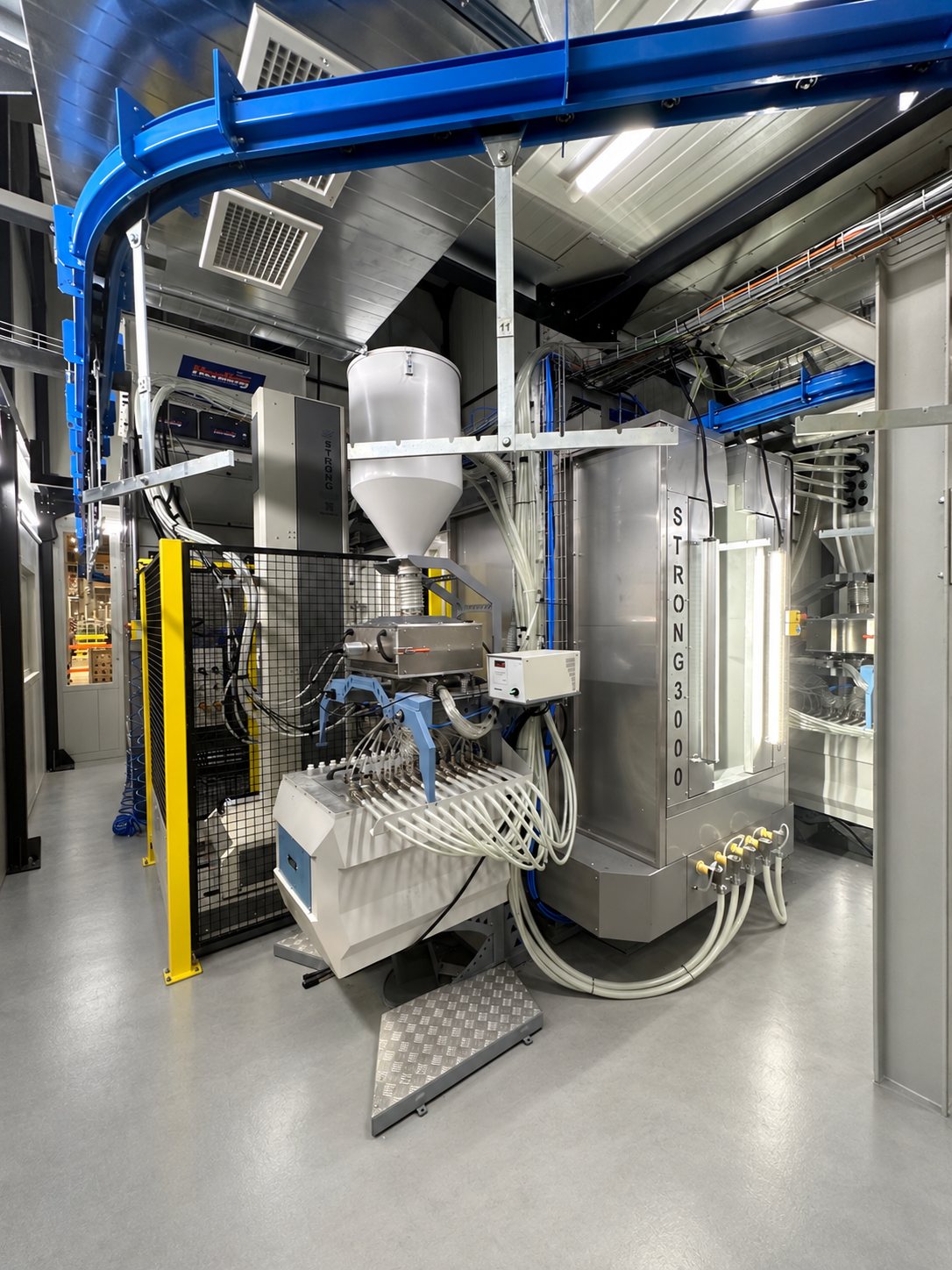
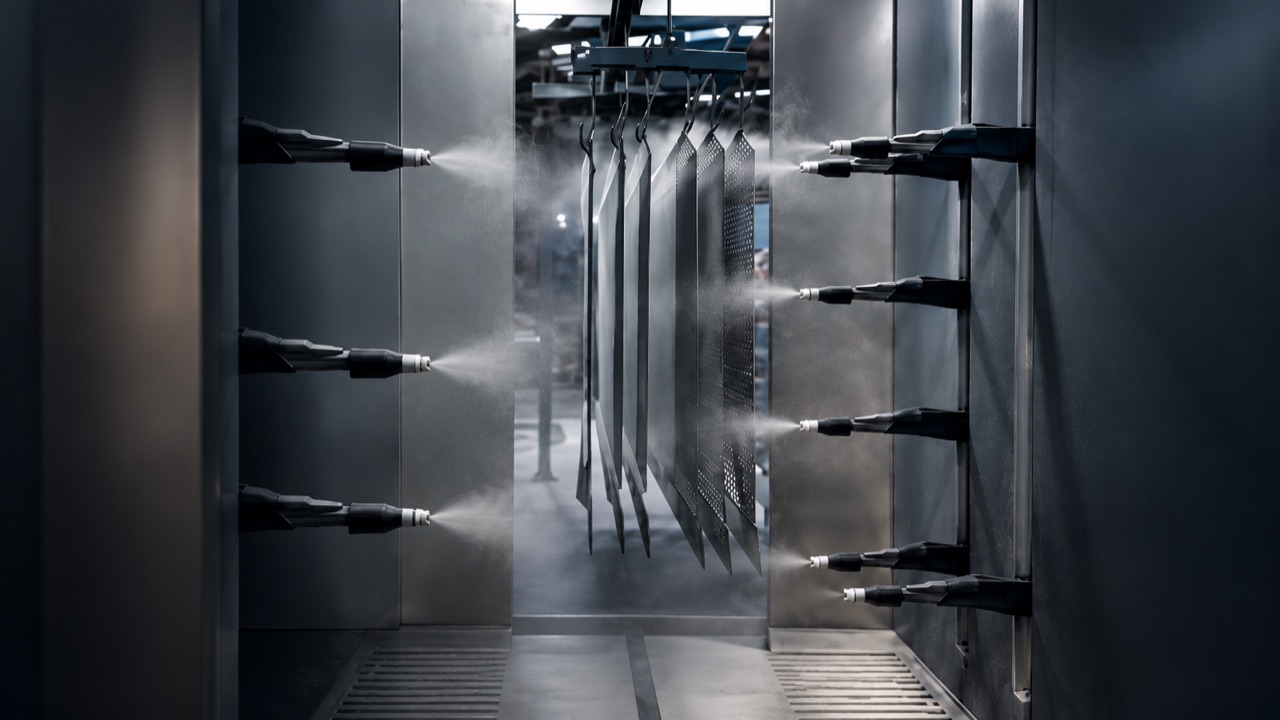
- Powder application: Dry frit powder is electrostatically charged and sprayed onto the metal surface. This method is the subject of what is (industrial) powder enamel and offers advantages in color change and efficiency in mass production.
- Wet application: The frit is turned into a suspension (slip) in water; the part is dipped into this suspension, flow-coated or sprayed. It is explained in detail in the what is wet enamel article.
After application, the part is fired (sintered). This is not “curing” as with paint; the temperature is raised to the melting point of the glass. Firing temperature varies by substrate:
| Substrate | Typical firing temperature |
|---|---|
| Steel (decarburized enameling steel) | ~780-850 °C |
| Aluminum | ~530-570 °C |
| Cast iron | Usually around 800 °C |
The literature cites values between 450 and 1200 °C depending on substrate and frit type; the exact value is always set by the frit manufacturer's technical datasheet. Most enamel systems consist of two coats: a ground coat that adheres well to the metal, and a cover coat on top. Modern two-coat one-fire (2C1F) systems combine both functions in a single firing.
On the steel side, material selection is critical. Low-carbon, decarburized steel (EN 10209; e.g. DC04EK) is used for enameling. In steel with high carbon and hydrogen content, hydrogen released during cooling causes crescent-shaped flaking known as “fish scaling.” Because decarburized steel does not retain hydrogen, it prevents this defect.
From the Kitchen to Industry
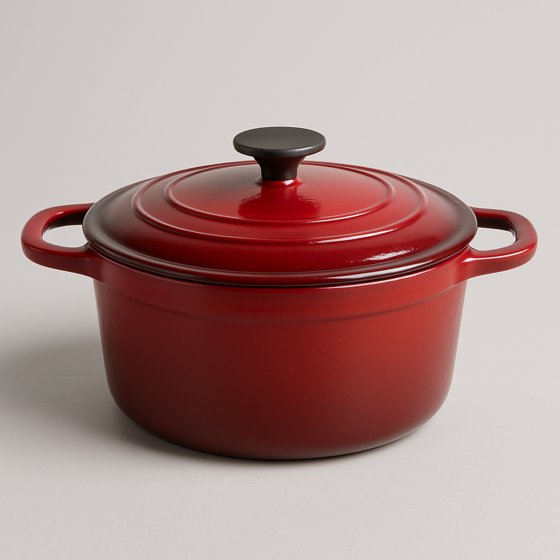
Enamel's most familiar face is the kitchen. In products such as enameled pots, kettles, oven dishes, grill trays and bathtubs, the glassy surface provides both hygiene and easy cleaning. Oven cavity liners are also frequently enameled; some self-cleaning oven systems work with special enamel surfaces that break down grease at high temperature.
In industry, the same material takes on far more demanding jobs:
- Hot water boilers and tanks: Boiler inner tanks are mostly enameled to resist the corrosive effect of hard and chlorinated water. The glassy surface isolates the steel from contact with water.
- Silos and storage tanks: Enameled panels are preferred in grain, water, wastewater and food storage tanks for long service life and easy cleaning.
- Chemical industry: Reactors, agitators and pipelines are enameled (glass-lined) to withstand acidic and alkaline environments. The chemical resistance of glass offers a more suitable surface than stainless steel for many aggressive processes.
A kitchen pan and a chemical reactor may look like very different parts, but the same principle works on both surfaces: a chemically stable glass layer that protects the metal and is easy to clean.
Properties of Enamel
Enamel takes its advantages directly from glass. The same property also explains its single notable weakness.
Strengths:
- Hardness and scratch resistance: The glass-hard surface resists metal utensils and abrasion.
- Hygiene: The non-porous surface does not hold bacteria or stains; it is suitable for food contact.
- Chemical resistance: It is stable against acids, alkalis and most solvents. Special acid-resistant enamels are produced for even more aggressive environments.
- Heat and thermal shock resistance: It withstands high temperatures and sudden temperature changes far better than paint.
- Color stability and UV resistance: The color comes from metal oxides incorporated into the glass; it does not fade or chalk.
Limitation: Enamel is brittle. A hard impact or point impact can cause cracking or chipping on the surface. Glass does not flex; if the substrate bends too much or takes an impact, the coating is damaged. That is why impact control matters when handling and assembling enameled parts.
Caution
If there is a crack or delamination on an enameled surface, the underlying metal is exposed and corrosion starts from that point. When a scratch or crack is noticed on an enameled pot or tank, the damaged part should be assessed before it comes into contact with food or the process.
On the production side, the most common defects are fish scale, blistering, pinholes, dimples and black specks. Most of these stem from wrong steel selection, inadequate surface preparation or a faulty firing/cooling regime. They are largely prevented with the right frit, decarburized steel and controlled firing.
Frequently Asked Questions
Enamel means a vitreous coating fused onto a metal surface by melting at high temperature. It is not a layer of paint but a true glass layer that forms a chemical bond with the metal.
An enameled surface is non-porous and chemically stable, so it is suitable for food contact and does not harbor bacteria. As long as there are no cracks or chips on the surface, it is considered safe for kitchen use.
It is used for its hardness, hygiene, chemical and heat resistance, and color stability. It protects the metal, is easy to clean and remains stable in acidic and alkaline environments.
Enamel is a hard coating made of fused glass that resists scratching and high temperatures. Teflon is a non-stick polymer coating that can degrade at relatively low temperatures; it falls behind enamel in hardness and heat resistance.