In Short
- In enamel firing, what matters is that the part's core temperature, not the furnace air, reaches the target; the typical range is ~780-850 °C on steel and ~530-570 °C on aluminum.
- High temperature is required for the frit to melt, bond chemically with the metal and vitrify; time varies with part mass and furnace type.
- A continuous conveyor furnace suits high-volume sheet metal production, while a batch furnace suits thick parts in small numbers.
- Cooling is at least as critical as firing; uncontrolled cooling produces fish scale, cracks and stress cracking.
In an enamel line, the furnace is the station that consumes the most energy and forgives the least. This is where it is decided whether the frit stays a mere layer of color or turns into a glass surface fused with the metal. Most defects seen in the field come not from the gun but from the wrong temperature profile and uncontrolled cooling. If one batch comes out flawless with the same frit while the next shows pinholes and flaking, the firing regime is the first place to look.
Why High Temperature Is Required
Enamel is not paint; the glass, in frit form, is melted on the metal surface and bonded chemically. That is why enamel is “fired” or “sintered,” not “cured.” In powder coating, the resin melts and cross-links at around 160-200 °C; with enamel, a much higher temperature is essential for the glass to soften, flow and bond with the substrate through interface oxides.
Three things happen at the same time at firing temperature. First the frit softens and spreads over the surface; then the molten glass wets the oxide layer on the metal and penetrates its pores; finally, as it cools, this interface solidifies and leaves a continuous glass-to-metal bond. If the temperature is too low, the frit does not melt fully, the surface comes out matte and porous, and adhesion is weak. At excessive temperature or with too much time, the glass over-flows and pulls back from the edges, color and gloss deteriorate, and in steel grain growth and distortion begin.
Tip
For a deeper background on what enamel is and how frit bonds to metal, the frit and firing section of the what is powder enamel article is a good starting point.
Temperature and Time
Enamel firing temperature is not a single number; it varies with substrate, frit type and number of coats. What matters is that the part's actual metal temperature stays within the target range for a certain time. The furnace air may read 830 °C, but the core of a thick casting reaches the same value only minutes later.
| Substrate | Typical firing temperature | Approximate hold time | Note |
|---|---|---|---|
| Low-carbon enameling steel (sheet) | ~780-850 °C | ~3-6 min | Short time on thin sheet; ground coat and cover coat can be fired separately |
| Cast iron | ~780-850 °C | Longer | High mass, core heats slowly; the dusting (wet-dust) method is also used |
| Aluminum | ~530-570 °C | Short | Special low-melting frits are mandatory |
| General literature range | ~450-1200 °C | Variable | Depends on frit and substrate; exact value in the TDS |
Time is counted after the part reaches the target temperature, not from when it enters the furnace. A thin sheet part reaches the target quickly and fires in a few minutes. A thick casting or massive part both heats slowly and develops a temperature difference between its core and surface. That is why, for massive parts, the furnace is set so that even the thickest section fires sufficiently; otherwise the thin edges over-fire while the thick zone stays under-fired.
Together, temperature and time form a “firing window.” The same result can be achieved at a higher temperature for a shorter time, or at a slightly lower temperature for longer, but the limits of the window are set by the frit. Below the window, the surface is matte, porous and poorly adhered; above it, the glass pulls back from the edges, the shade shifts and gloss deteriorates. In practice, the goal is to run in the middle of this window and leave margin for zonal temperature fluctuations inside the furnace.
The ground coat and cover coat are usually fired separately. The ground coat carries the adhesion oxides (such as cobalt and nickel) that bond glass to steel and generally requires a slightly hotter or longer regime. The cover coat provides the color and surface properties. Modern two-coat one-fire (2C1F) systems combine both coats in a single firing; this saves energy but is not suitable for every color and part. The exact temperature and time are always confirmed by the frit manufacturer's technical datasheet (TDS) and field trials.
Caution
Do not mistake the air temperature shown by the furnace thermostat for the firing temperature. Actual firing is determined by the part's metal temperature. When commissioning a new part or a new frit, recording a temperature profile with a thermocouple attached to the part (data logger) turns trial and error into a measurable setting.
Furnace Types
Enamel furnaces work on two main principles: continuous flow and batch. The choice depends on production volume, part size and color/variant variability.
Continuous (conveyor) furnaces
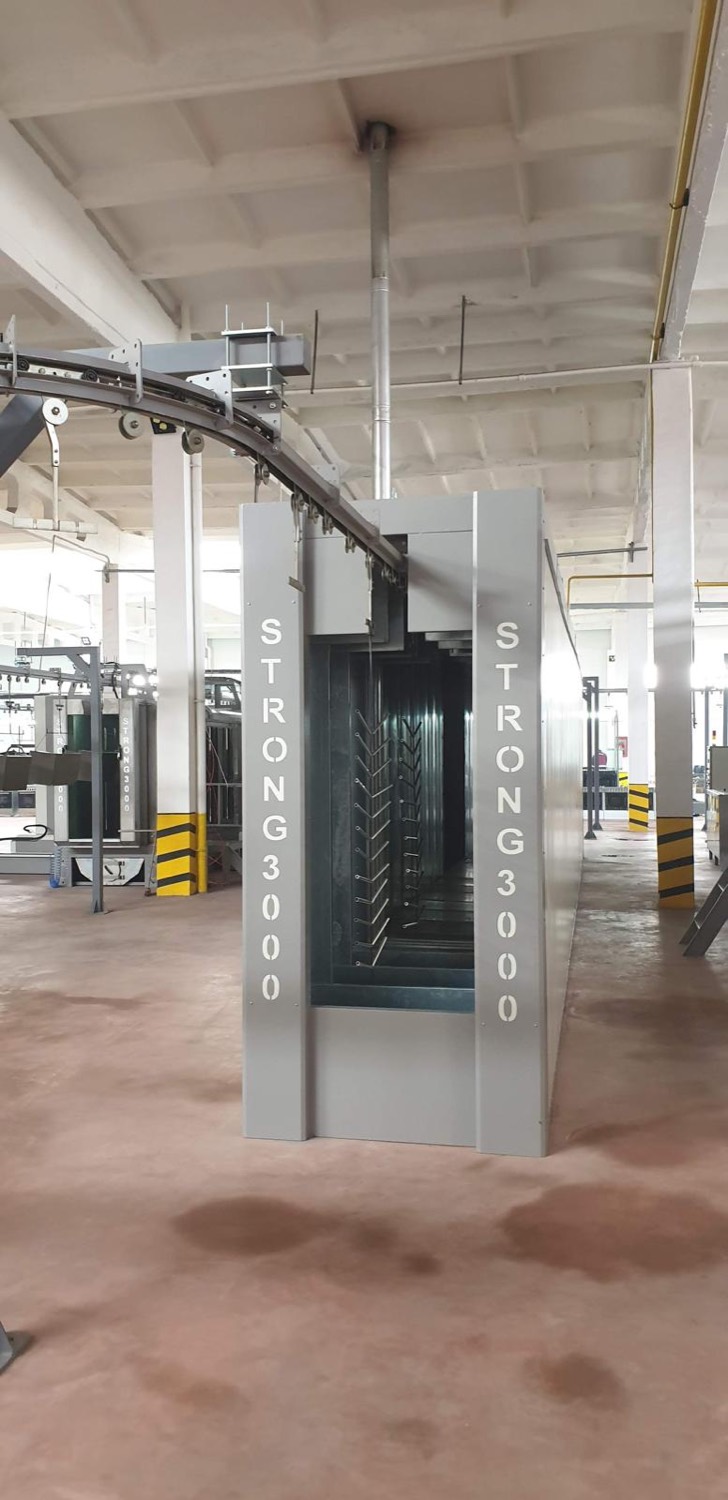
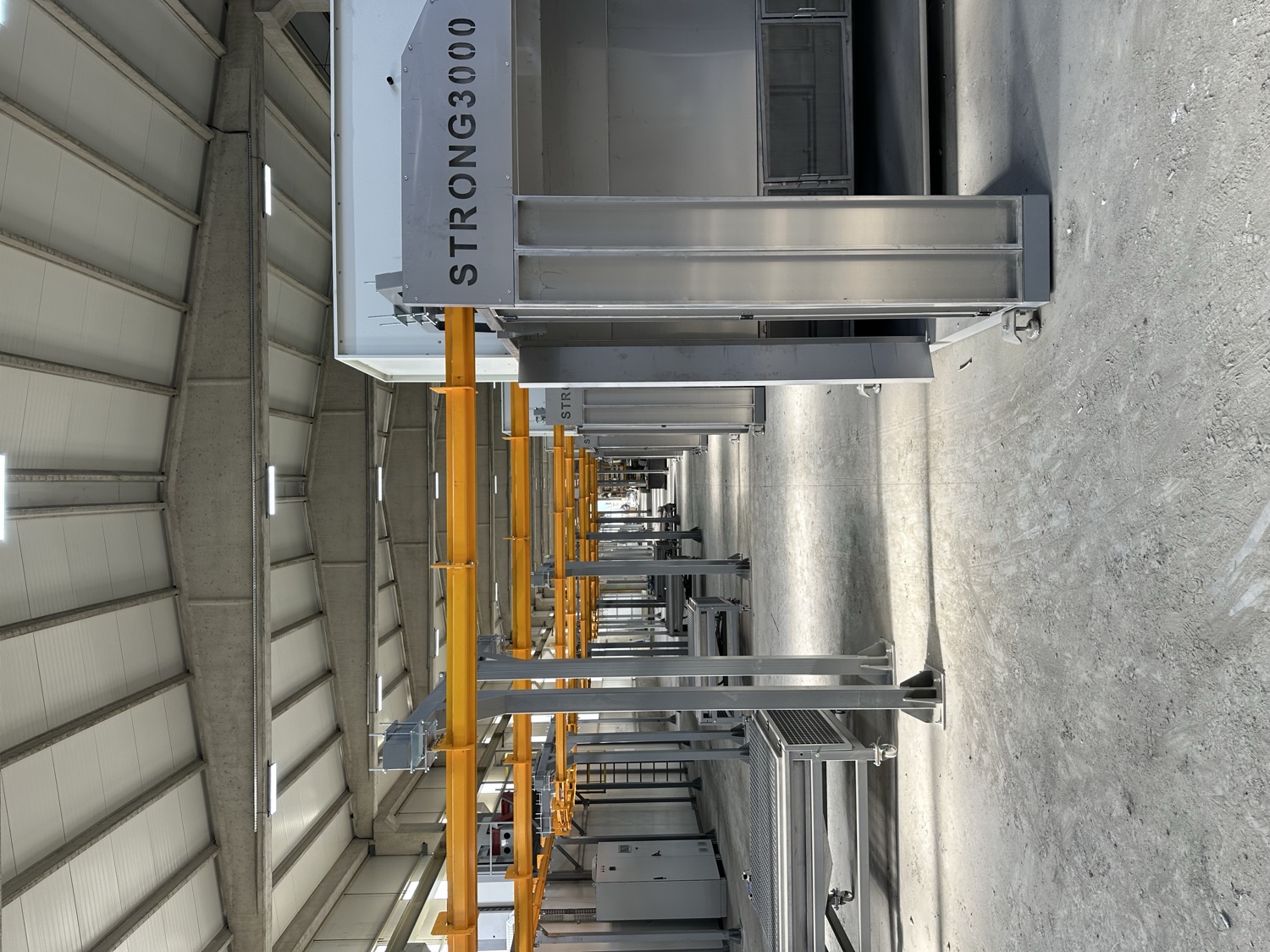
Parts pass through the furnace at constant speed on an overhead conveyor or wire mesh belt. The furnace is divided into entry (preheat), firing (hold) and exit zones. Because the temperature profile is held constant along its length, every part sees the same regime; in mass production, this means repeatability. It is the standard solution for sheet metal parts, boiler inner tanks and high-volume work. Conveyor speed and zone temperatures determine how long the part spends in the hold zone.
Batch furnaces
Parts loaded in batches are heated, held and unloaded. Setup flexibility is high; it suits jobs requiring different sizes, masses and regimes. Thick castings, large forms produced in small numbers and sample/prototype work are mostly fired in a batch furnace. The drawback is that heating-cooling cycles cost more time and energy than in a continuous furnace.
The heat source also matters. Electric (resistance) furnaces are clean and easy to control but depend on electricity costs. Gas-fired (direct or radiant tube) furnaces generally offer more economical energy at high capacity; since flue gas products contacting the surface in direct firing carry a risk of staining on sensitive cover coats, radiant tube (indirect) solutions are preferred for some jobs. Uniformity of heat distribution, the furnace's zonal temperature tolerance and insulation quality are decisive for both quality and the energy bill.
Controlled Cooling
Even if firing is done correctly, the part comes out defective if cooling is uncontrolled. Glass and metal have different coefficients of thermal expansion; during cooling, the glass layer and the steel contract at different rates. The stress created by this difference, when managed correctly, strengthens the enamel by keeping it under compression; when managed poorly, it produces cracks, hairline cracks and flaking.
In sheet steel enameling, the best-known cooling-related defect is fish scaling. Steel absorbs hydrogen during firing; as it cools, this hydrogen tries to escape and lifts the glass layer in crescent-shaped flakes. That is why enameling steel is chosen low-carbon and decarburized (EN 10209; e.g. DC04EK); decarburized steel does not trap hydrogen and releases it in a controlled way. On the frit side, fish-scale-resistant formulations are also used. However, if the cooling rate is wrong, flaking can occur even with the right steel and the right frit.
Caution
Exposing a hot enameled part to a sudden air draft or a cold surface creates thermal shock. Especially in thick, massive parts, cooling must be gradual and uniform. On conveyor lines the exit zone, and in batch furnaces the timing of door opening, provides this gradual step.
Cooling is an integral part of the firing profile; it should not be thought of as a separate step. For diagnosing cooling- and outgassing-related defects such as fish scale, blistering and cracking from symptom to root cause, the enamel coating defects article offers a step-by-step checklist. If you want to see why a powder coating curing oven and an enamel firing furnace require entirely different regimes, the powder coating oven temperature and curing article puts the two processes side by side.
In short, the furnace works with three levers that determine enamel quality: the right temperature, the right time for the part's mass, and gradual cooling. Once these three are made measurable, batch-to-batch variation with the same frit largely disappears.
Frequently Asked Questions
It depends on the substrate. The typical range is about 780-850 °C on steel and 530-570 °C on aluminum; depending on frit and substrate, the literature cites a range of 450-1200 °C. The exact value is determined by the frit's TDS and the part's metal temperature.
Because of the high temperature, enamel furnaces require much more energy than powder coating curing ovens. Consumption depends on furnace type, insulation, heat source (electric/gas) and part mass. Continuous conveyor furnaces are generally more efficient per unit in mass production.
Because glass and metal have different thermal expansion, stress builds up during cooling. Uncontrolled or sudden cooling leads to defects such as cracks, hairline cracks and fish scaling. Gradual, uniform cooling keeps this stress within safe limits.