In Short
- Powder coating is an organic resin film cured at 160–200 °C; enamel is a glassy coating fired at 780–850 °C on steel.
- Powder enamel and wet enamel produce chemically the same glass; the difference is the application method (electrostatic powder vs water-based slip).
- Enamel leads in heat, chemical and scratch resistance; powder coating leads in impact flexibility and low cost.
- The right choice depends on the part’s operating temperature, geometry and the environment it is exposed to.
Send the same steel part down three different lines and you get three different surfaces: on one, a flexible resin film 80 µm thick; on another, a hard layer of glass fused to the metal; on the third, glass again, but from a water-based slurry. People call all of them “paint,” yet two of them are not even paint. This is where the confusion starts, and the wrong choice ends with a coating that cracks in the field or blisters at 300 °C.
The Three Processes at a Glance
The first thing that separates the three processes is the material. Powder coating is an organic resin system: epoxy, polyester or a hybrid of the two. A dry powder that is electrostatically charged and clings to the part melts and flows in the oven, then crosslinks to form a continuous film. The result is a polymer coating.
Enamel, on the other hand, is glass. A glassy powder we call frit (silica, boron oxide, soda, feldspar and metal oxides for color) is fused onto the metal and, on cooling, turns into a glassy layer chemically bonded to the steel. That is why calling enamel “paint” is technically wrong; it is a glassy, or vitreous, coating. The answer to “what is enamel” is about glass, not resin.
Enamel itself has two application methods, and this is exactly where the difference between “powder enamel” and “wet enamel” lies. Powder enamel applies the frit as a dry powder with an electrostatic gun, then fires it. Wet enamel suspends the frit in water (this is called slip); the part is dipped in, flow-coated with or sprayed with this slurry, dried and fired. Both methods yield the same glass; the difference is whether it is carried by powder or liquid.
Tip
The rule is this: resin softens with heat, glass does not. If your part heats up in service (oven, cooktop, exhaust, boiler), the answer is most likely on the enamel side.
Temperature: Curing or Firing
The sharpest line between the two worlds is oven temperature. That is also why the terminology differs: in powder coating we say curing, in enamel we say firing.
In powder coating, the film cures in the 150–200 °C band. Epoxy runs at around 150–180 °C, polyester at 180–200 °C and epoxy-polyester hybrids at 160–190 °C. The point to watch is that the figure refers to the part’s own temperature (PMT, part metal temperature), not the oven air. Time is counted after the part reaches the target temperature: about 10–15 minutes at 200 °C, 20–25 minutes at 180 °C. The exact value is always given in the powder manufacturer’s technical data sheet (TDS).
Enamel is in an entirely different thermal regime. On steel, frit fires at about 780–850 °C — four to five times the temperature of powder coating. Aluminum enamel is lower, in the 530–570 °C band; cast iron is enameled as well. Depending on the substrate, the literature cites a range from 450 °C up to 1200 °C. This temperature difference sets the two processes apart from the start in terms of furnace, energy consumption and the type of steel that can be used. Ordinary sheet is not enough for enamel; decarburized enameling steel (EN 10209, e.g. DC04EK) is required, otherwise hydrogen trapped in the steel while cooling from 800 °C causes fish scaling.
Durability Comparison
Every coating has strengths and weaknesses; there is no single “best” answer, because it depends on the load it is under.
- Heat resistance: Enamel is far ahead. Its glassy structure does not degrade at hundreds of degrees and withstands thermal shock. Powder coating, being a resin, begins to soften and yellow above a continuous 200 °C; special silicone-based powders push this limit up somewhat but cannot compete with glass.
- Chemical resistance: Enamel behaves like glass against acids and alkalis and lasts long in aggressive environments. In powder coating, resistance depends on the resin; epoxy resists chemicals well but chalks from UV outdoors.
- Impact and flexibility: Here powder coating wins. The resin film flexes and absorbs light bending and impact. Enamel, being glass, is hard but brittle; under a hard impact it cracks or chips and does not flex.
- UV and color retention: Enamel does not fade for years. For outdoor powder coating, you need to choose polyester or super-durable polyester (Qualicoat class); epoxy chalks outdoors.
- Scratch/abrasion: Enamel has the hardness of glass and is markedly more scratch-resistant than powder coating. A powder film marks more quickly under loads such as knives or metal rubbing.
Caution
Do not underestimate enamel’s brittleness. Glass hardness is an advantage against scratching and a disadvantage against hard impact. An enamel panel hit by a dropped screwdriver during assembly can chip at that point; the same impact on powder coating leaves only a mark.
Which Part, Which Process
The soundest approach is to set theory aside and look at the part. The table below puts the three processes side by side; the part examples show the typical distribution in real production.
| Criterion | Powder Coating | Powder Enamel | Wet Enamel |
|---|---|---|---|
| Material | Organic resin (epoxy/polyester) | Glassy frit (dry powder) | Glassy frit (water-based slip) |
| Application | Electrostatic dry powder | Electrostatic dry powder | Dipping / flow coating / spraying |
| Oven temperature | 160–200 °C (curing) | 780–850 °C (firing) | 780–850 °C (firing) |
| Film thickness | 60–90 µm | ~100–250 µm | ~100–300 µm |
| Heat resistance | Low (continuous <200 °C) | Very high | Very high |
| Impact/flexibility | Good (flexes) | Poor (brittle) | Poor (brittle) |
| Geometry | Flat/moderately complex; Faraday difficulty in recesses | Complex exterior surfaces; powder struggles to enter recesses | Complex geometry and interior volumes (cavity) |
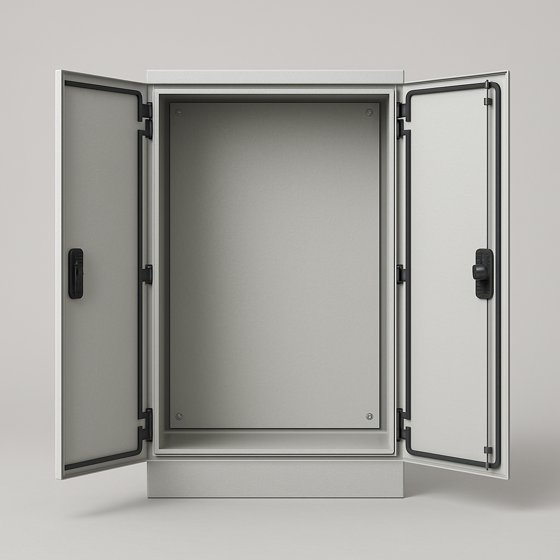
| Example part | Radiator panel, furniture profile, wheel rim, electrical cabinet | Appliance exterior, heater body, architectural panel | Oven cavity, cookware, boiler interior, bathtub |
The most instructive row in the table is geometry. Because slip is a liquid, wet enamel coats complex interior volumes and narrow gaps in a single dip. That is why deep, enclosed surfaces such as an oven cavity are done with wet enamel. In powder application (both powder coating and powder enamel), charged particles struggle to reach concave corners and recesses; this is called the Faraday cage effect. The solution is to lower kV and current, change the gun angle, use a robot/intelligent motion gun, or touch up manually.
Cost and Speed
The temperature difference is reflected directly in cost. Because enamel fires at 800 °C, furnace investment and energy consumption are markedly higher than for powder coating. Add the need for enameling steel (decarburized sheet) and often two coats (ground coat + cover coat), and the cost per part goes up.
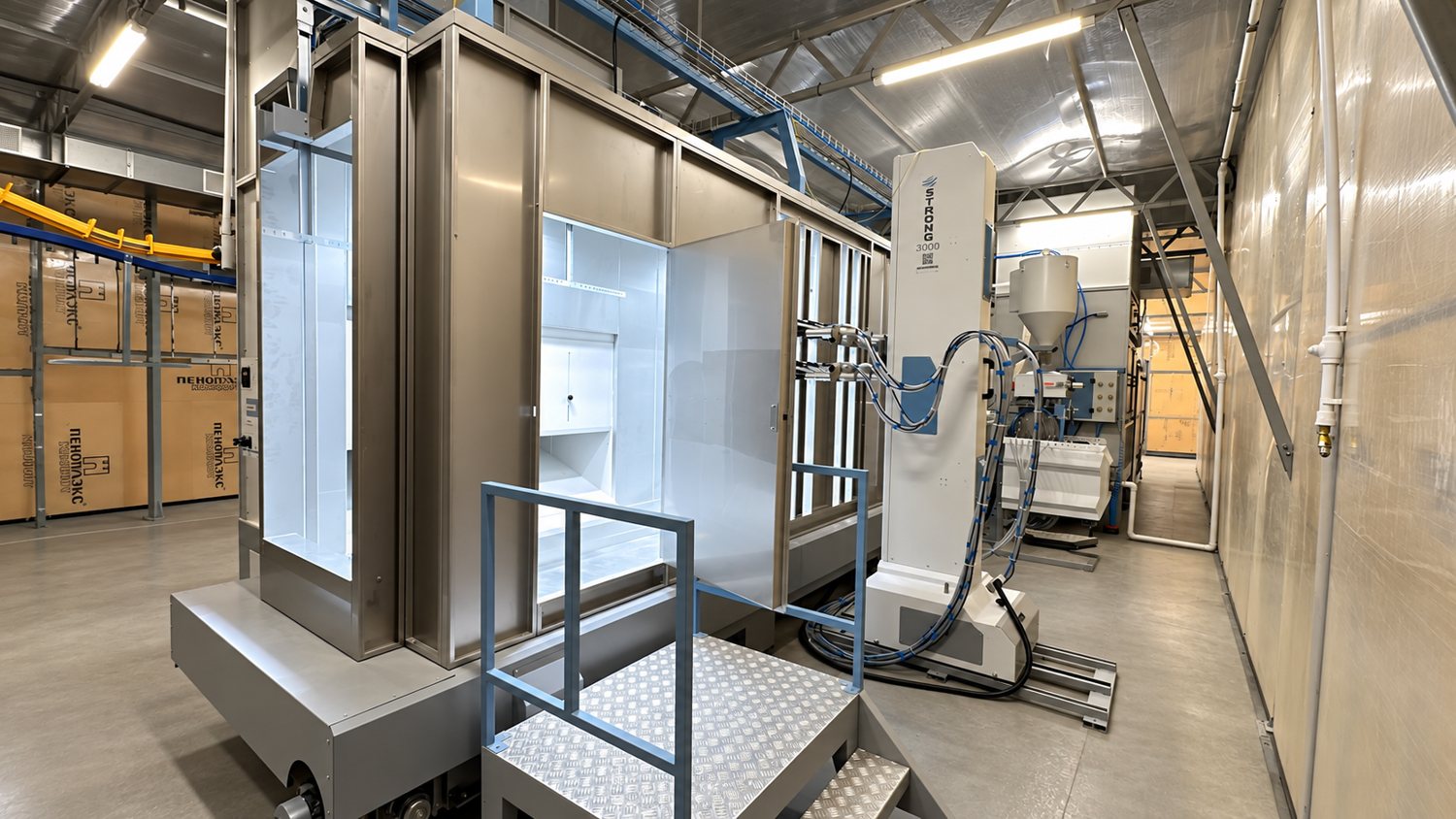
The economics are much better on the powder coating side. Curing takes place at low temperature, the line is simpler and faster, and a single coat is enough for most jobs. On top of that, most of the powder that does not stick to the part is recovered: with standard powder, collection of up to 95% is possible, and recovered powder is reused by blending it with virgin powder in proportion (typically 20–30%). This lowers both material cost and waste. On lines changing colors three or more times a day, recovery booths designed for fast color change shorten the cycle time.
Tip
In enamel, distinguish the two application methods in terms of cost as follows: powder enamel offers fast color change and high recovery and is efficient on large flat surfaces. Wet enamel comes in where it is needed on complex and hollow parts; there it has no rival.
Decision Guide
Put the part in front of you and ask these questions in order; the answers will lead you to the right process.
- How hot does the part get in service? If it is continuously above 200 °C (oven, cooktop, exhaust, boiler), powder coating is ruled out and enamel remains.
- Is the surface in contact with acid, alkali or food? If yes, enamel; hygiene and chemical resistance are glass’s job.
- Does the part take impacts or need to flex? If yes, powder coating; enamel would chip under that impact.
- Is the geometry complex or hollow (cavity, narrow gaps)? If the interior volume is to be coated, wet enamel; if the exterior surface is complex, powder enamel or robotic powder coating.
- Will it stay outdoors? If it is powder coating, choose polyester/super-durable polyester, not epoxy; enamel is UV-resistant anyway.
- Is budget and volume pressure high? If the technical requirements allow, powder coating is cheaper and faster.
In most projects, the answer is not a single process but a combination. The classic example is home appliances: the oven exterior is powder enamel or powder coating, while the cavity, exposed to heat and grease, is wet enamel. That is exactly why the interior is coated with enamel and not powder coating; resin would not survive the temperature there. To make the right decision concrete, put the part’s operating temperature, contact environment and geometry in writing; then base the material choice on that.
For details, see the articles on what powder coating is and what powder enamel is, and for a line design suited to your own part, start from the industry-specific solutions page. To dig deeper into the resin side of powder coating, the what is powder coating article is a good starting point; for details on the glassy side, try the what is powder enamel article.
A final note: the figures here are typical ranges. Exact curing/firing values are given in the frit’s and powder’s technical data sheets, and the real cycle is established by on-site measurement. The part’s mass, thickness and oven load change the time to reach temperature; so do not move to series production without verifying the recipe with the TDS and a trial firing.
Frequently Asked Questions
No. Powder coating is an organic resin film cured at 160–200 °C; enamel is a glassy coating fused to the metal and fired at 780–850 °C on steel. Technically, enamel is not called paint.
Cavity areas such as an oven interior get very hot in service; resin softens and degrades at that temperature. Glassy enamel is preferred because it withstands high temperatures and slip can reach complex interior volumes by dipping.
There is no single answer; it depends on the load. Enamel leads in heat, chemical, UV and scratch resistance. Where impact and flexing are required, powder coating is better because enamel is brittle.