In Short
- Powder coating is the curing of a dry, electrostatically charged powder; wet paint (liquid paint) is the application of a solvent- or water-based liquid.
- Single-coat film integrity and scratch/corrosion resistance are higher with powder coating under most conditions.
- In powder coating, overspray is recovered (up to 95% with standard powder); in wet painting, spray waste is generally lost.
- Wet paint still comes out ahead for heat-sensitive substrates, fine shade/effect work and one-off part production.
The first question that comes to the shop is usually the same: “Should we do this part in powder or liquid?” The answer depends on the part, but the decision becomes clear along three measurable axes: how long the film will last, what the cost per kilogram and the waste will be, and which emissions and waste you are prepared to take on. Even the film of the two methods does not form the same way. Before getting into the details, it is worth distinguishing what each one is; the what is powder coating and what is wet paint articles cover each process separately.
The Two Methods in Brief
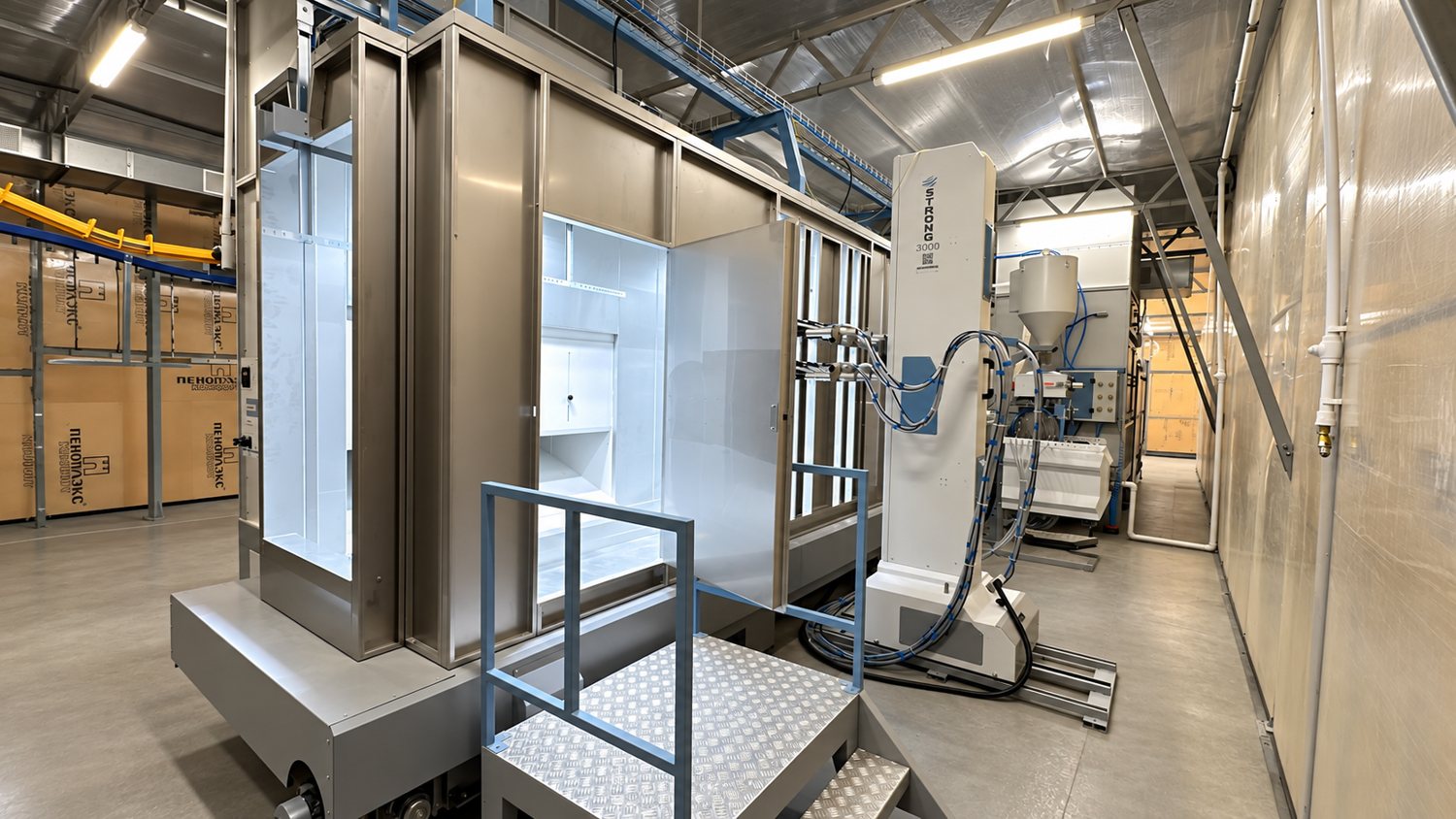
Powder coating is a dry, solvent-free resin-pigment mixture. It is electrostatically charged in the gun (free ions at ~60–100 kV with corona, ion-free charging by friction with tribo), adheres to the grounded part and cures in the oven to form a continuous film. Here the film cures through chemical crosslinking; it is a reaction, not drying.
Wet paint, by contrast, is applied as a liquid. It is a system in which binder, pigment and filler are dissolved or dispersed in a carrier. In solvent-based paint the solvent evaporates; in water-based paint the water evaporates, and the film is left behind. Application ranges from brush to spray gun, from electrostatic liquid application to dipping. The two systems must not be confused: liquid paint forms a film by losing its carrier, while powder melts, flows and cures.
Tip
Always make the comparison on the same part and the same service conditions. Instead of general statements like “powder is better,” work with a concrete scenario such as “polyester powder for exterior aluminum profiles” or “water-based liquid for a heat-sensitive composite.”
Durability
The most visible difference shows up in single-coat film thickness. Powder coating typically delivers 60–90 µm in a single pass; 60–80 µm is targeted for decorative work. With liquid paint, a single coat often stays thinner (around 20–40 µm), and multiple coats are needed for the same hiding. A thick film cured in one piece is naturally more intact against mechanical stress and moisture.
Powder coating also leads on scratch and impact under most conditions. A cured powder film is tough and elastic; edge coverage is good. Adhesion and flexibility are measured with cross-cut (ISO 2409 / ASTM D3359), mandrel bend and impact tests. Corrosion resistance is evaluated in hours with salt spray (ASTM B117), looking at creep from the scribe line. It must also be said clearly: salt spray results have limited correlation with real field life and are not a guarantee on their own.
Wet paint is not automatically at a disadvantage; a good liquid system with correct pretreatment and enough coats delivers very robust results. But in practice, when comparing single coats, the integrity of the powder film is an advantage. In both methods, the backbone of durability is pretreatment: degreasing, conversion coating (iron/zinc phosphate or nano-ceramic), rinsing and drying. Silicone or oil residue causes cratering; on a poorly prepared surface, even the best film cannot adhere.
| Criterion | Powder coating | Wet paint (liquid) |
|---|---|---|
| Single-coat film thickness | 60–90 µm | ~20–40 µm |
| Number of coats for hiding | Usually single coat | Often multiple coats |
| Curing / drying | Oven curing, PMT 150–220 °C | Solvent evaporation / water evaporation, oven if needed |
| Scratch and impact resistance | High (in a single-coat film) | Good, depends on number of coats and resin |
| Heat-sensitive substrate | Limited (high curing temperature) | Suitable (dries at low temperature) |
| Shade / effect precision | Limited, color change takes time | High, easy shade adjustment |
| Overspray recovery | Up to 95% (standard powder) | Generally lost |
| VOC emissions | Negligible | High with solvent-based |
Cost and Waste
The item most often overlooked in a cost comparison is waste. In powder coating, powder that leaves the gun and does not stick to the part is collected in the booth and recovered. With standard powder, recovery reaches up to 95%; in other words, almost all the powder that does not reach the part returns to the system. With powders high in fines (a lot of particles around 10 µm), this rate can drop to ~85%, because very fine powder escapes to the filter. Recovered powder is used blended with virgin powder in a set ratio (e.g. 20–30%); if you do not control fines buildup, coating quality drops.
Wet paint is a different story. In spray application, recovering the liquid that misses the target in an uncured state is not practical; this waste is generally a direct loss. Transfer efficiency varies with gun type and operator, but compared with the closed recovery loop of powder coating, material loss is markedly higher.
On the energy side, the balance shifts. A powder coating oven brings the part up to its target metal temperature (PMT): about 10–15 min at 200 °C, 20–25 min at 180 °C. This is a significant energy item, especially for heavy and thick parts. Water-based liquid paint can dry at room temperature or low temperature; in that case oven energy falls, but application, number of coats and labor costs may rise. So the answer to “which is cheaper” depends on volume, part size and color change frequency.
Caution
Do not calculate unit cost from the price per kilogram alone. Put waste rate, number of coats, oven energy, color change losses and rework on the table as well. A system that looks cheap on paper can turn out expensive once waste is included.
Environment and VOC
The sharpest environmental difference lies in volatile organic compounds (VOC). In solvent-based wet paint, the solvent is released into the air during curing/drying; this brings in both emission permits and worker health measures (ventilation, explosion safety). Water-based liquid paints reduce VOC considerably, but they may not be a one-to-one replacement for solvent-based systems in every application.
Powder coating has a clear advantage here: it contains no solvent, so VOC emissions are negligible. On the waste side, too, solid waste stays low because recovered powder returns to the system. On the other hand, the curing oven’s energy consumption and the associated indirect emissions must be taken into account. Pretreatment chemicals are also a shared environmental item for both methods; nano-ceramic conversion coatings offer lower temperatures and less waste, and chrome-6 systems are being abandoned in architectural applications.
When to Use Which
The decision can be simplified with four questions. What are the part size and geometry? For large, flat or moderately complex metal parts, powder coating delivers both speed and film quality. Because of the Faraday cage effect, powder may not reach deep recesses and concave areas; in that case, reducing kV/µA, adjusting the gun angle, using a tribo gun or manual touch-up is required.
Is the substrate heat-sensitive? Wood, some plastics and composites that cannot withstand heat treatment cannot tolerate the 150–220 °C curing range of powder coating; here, liquid paint that dries at low temperature is the right choice. Heat-resistant metals have no such limit.
Are shade and effect critical? For frequent color changes, precise shade matching and special effects, liquid paint is more flexible; changing colors is instant. In powder coating, a color change requires booth cleaning; if you run many colors a day, a monocyclone or a quick-clean booth is a must. Finally, volume: in high-volume series production, powder coating’s recovery and single-coat efficiency drive costs down; in low-volume, varied and one-off work, the setup flexibility of liquid paint comes out ahead.
The exact recipe always depends on the part. The powder manufacturer’s technical data sheet (TDS) is the basis for curing temperature, film thickness and powder/liquid type; final values are established by on-site measurement. The two methods are not rivals but two separate tools for different jobs; the right choice comes from the part itself.
Frequently Asked Questions
Under most conditions, yes. Powder coating delivers a thick, continuous film of around 60–90 µm in a single coat; in a single-coat comparison it is generally more resistant to scratches, impact and corrosion. However, the result depends on pretreatment and curing, and a good liquid system can also be very robust.
Generally yes, because overspray is recovered at up to 95% with standard powder, while spray waste is lost with wet paint. Even so, curing oven energy, volume and color change frequency alter the total cost; an exact comparison is made according to the part and production volume.
Wet paint comes out ahead on heat-sensitive substrates (wood, some plastics), in work requiring precise shades and effects, and in low-volume, varied production. Drying at low temperature and easy color change give it an advantage in these scenarios.