In Short
- Enamel is not paint: it is an inorganic glass layer fused to steel or cast iron in a furnace.
- Corrosion resistance, chemical resistance, a smooth surface, hardness, heat resistance and hygiene are the six properties that make enamel stand out for valves and pipes.
- Its uses range from drinking-water valves and oil-field pipes to ship cooling lines and cast iron pots.
- Glass is brittle: impact and bending are addressed through design, and no welding is done after firing.
A water pipe buried in the ground, a cooling line carrying seawater, a valve in a drinking-water network: in each case the metal is in constant contact with an environment that slowly eats it away, and the coating is the only barrier in between. Enamel coating builds that barrier not as a film but as a layer of glass fused to the metal. So why enamel?
What Is Enamel?
Enamel (vitreous enamel) is an inorganic coating made by melting glass frit onto a metal surface at high temperature so that it fuses to the metal. Frit is glass produced by melting glass formers such as silica, boron oxide, soda and feldspar with metal oxides and cooling the melt rapidly. The frit is applied to a steel or cast iron part and fired in a furnace: on steel, firing typically takes place at about 780–850 °C, and in STRONG3000 wet enamel systems, valves and pipes are fired at about 830 °C.
During firing the glass melts, flows over the surface and bonds chemically with the metal; once it cools, a hard, glassy layer remains. This is the fundamental difference from paint: paint leaves a film that dries or cures, whereas enamel forms a genuine layer of glass. We cover the basics in what is enamel.
Note
The bitumen, asphalt and coal-tar coatings also called “enamel” on pipelines are organic and should not be confused with the vitreous enamel discussed here.
Six Properties That Set Enamel Apart
Enamel’s advantages for valves, pipes and cast parts come directly from glass:
Corrosion Resistance
Corrosion starts where metal meets water, oxygen and salts. Enamel is a continuous glass barrier that separates the metal from this environment, so water, moisture, soil salts and seawater cannot reach it. That is why a pore-free, unbroken layer is critical: a damaged spot means the metal is exposed again at that point.
Chemical Resistance
Glass-lined steel resists acids and alkalis, with hydrofluoric acid and hot concentrated phosphoric acid as the known exceptions. This makes enamel valuable in chemical process piping. The right type of enamel is selected according to the composition, concentration and temperature of the medium.
Smooth Surface
During firing the molten glass flows out into an even, glossy, closed surface. This smooth surface reduces the build-up of deposits and scale, helping the inner surfaces of valves and pipes stay clean for longer.
Hardness and Abrasion Resistance
Enamel forms a hard, abrasion-resistant surface. Where the medium carries particles, as in oil-field pipes carrying crude oil, saline produced water and sand, this hardness works together with corrosion resistance.
Heat Resistance
Thanks to its inorganic structure, enamel withstands hot water and temperature changes. The test methods of ISO 11177, which covers enameled valves and fittings, include thermal shock and resistance to water and steam. Resistance to sudden temperature differences, however, depends on how well the enamel formulation is matched to the metal.
Hygiene
The glassy surface is non-porous and easy to clean. That is why enamel is used in drinking-water valves and in cast iron cookware that comes into contact with food.
Where Is It Used?
Enamel stands out on parts that are in constant contact with water, soil, saltwater and chemicals, and on products where hygiene matters as much as heat resistance:
- Raw-water and drinking-water valves: In valve enamel coating, the inner and outer surfaces of gate and butterfly valves, hydrants and fittings are coated together. ISO 11177:2016 specifies quality requirements and test methods for these valves and for pressure pipe fittings.
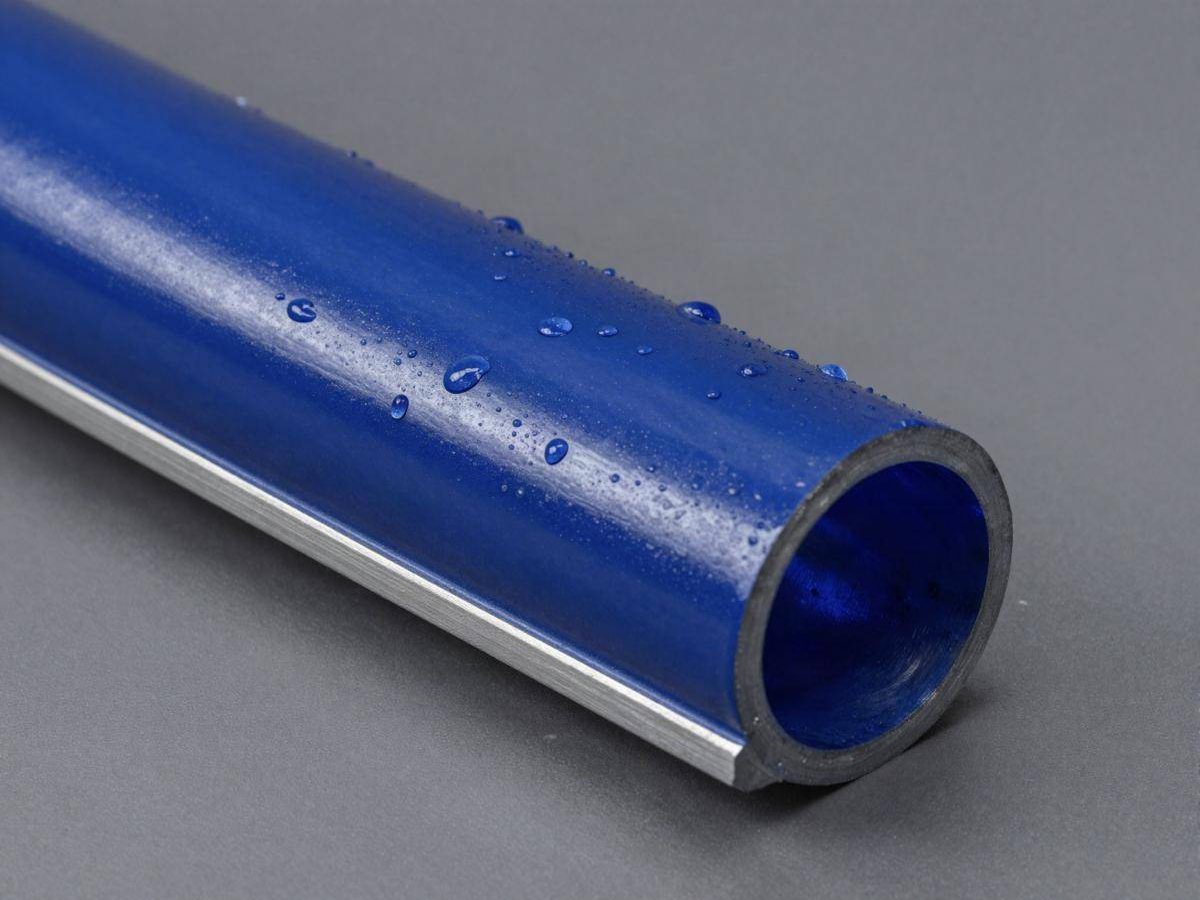
- Underground water pipes: Pipe enamel coating protects both surfaces at once; the outer surface faces moisture and salts in the soil, and the inner surface the flowing water.
- Oil-field pipes: In pipes carrying crude oil, saline produced water and sand, the inner surface has to resist corrosion and abrasion at the same time.
- Engine-room cooling pipes on ships: Lines that use seawater for cooling are directly exposed to saltwater.
- Chemical process piping: In lines carrying acids and alkalis, the chemical resistance of glass is decisive.
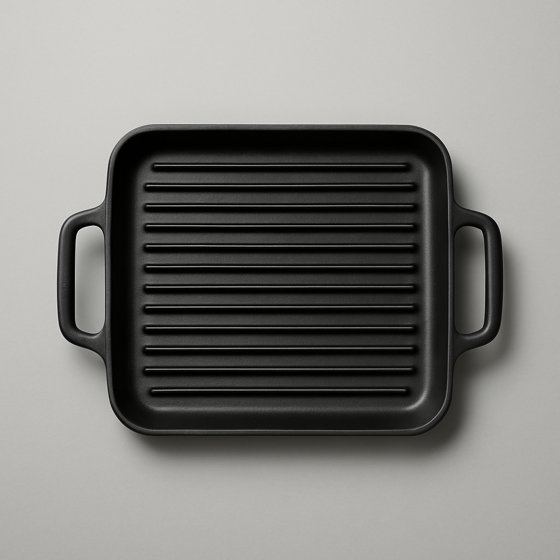
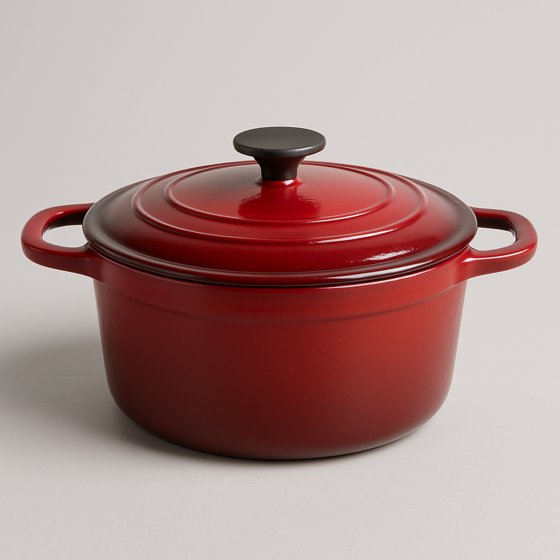
- Cast iron cookware: Pots, pans and Dutch ovens are the first things that come to mind with cast iron enamel; enamel gives them a hygienic, easy-to-clean and heat-resistant surface. Read more in our article on cast iron enamel.
- Gas-stove grates: Cast grates exposed to flame, high temperatures and spills are protected by enamel and stay easy to clean.
Application with Wet Enamel
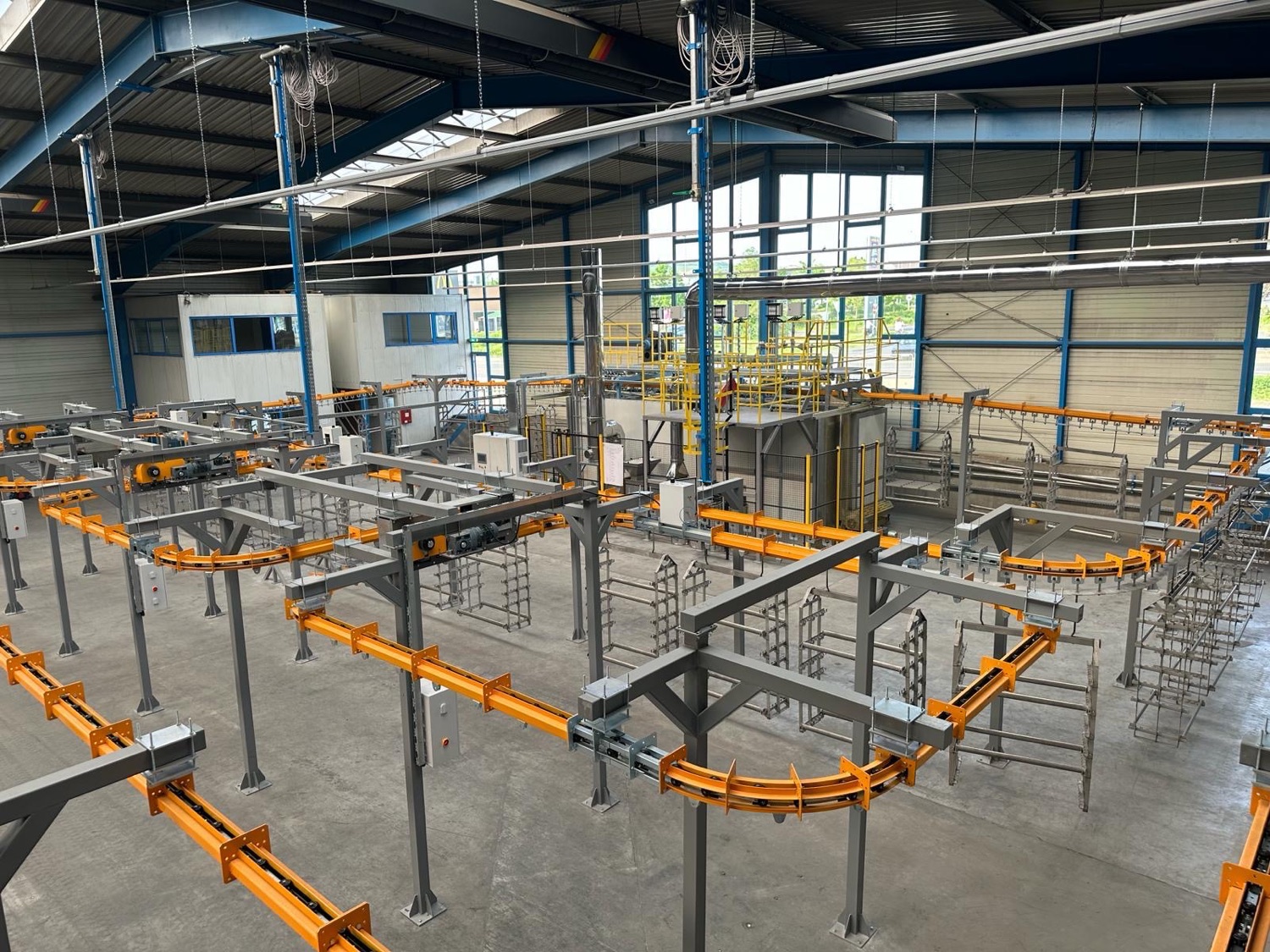
On parts with internal volumes, recesses and complex surfaces, such as valve bodies, pipes and castings, enamel is usually applied by the wet method. Wet enamel is a water-based suspension (slip) made from milled frit, clay and electrolytes. It is applied to the part by dipping, flow coating or spraying, dried, and then fired in a furnace.
Because it is a liquid, the slip covers inner surfaces, recesses and the complex areas of castings well. Most systems apply a ground coat for adhesion first, followed by a cover coat. For details, see what is wet enamel and our guide to enamel firing furnaces.
For flat, mass-produced parts, powder enamel, in which dry powder is sprayed electrostatically, is another option. You can explore the line setups on our wet enamel systems and powder enameling lines pages.
How It Differs from Organic Coatings
Epoxy powder coatings and liquid paints are organic coatings: they are resin-based and cure at much lower temperatures than enamel, forming a film on the metal. Enamel, by contrast, is inorganic; the glass melts in the furnace and fuses to the metal.
| Criterion | Enamel | Organic coating (epoxy, paint) |
|---|---|---|
| Material | Inorganic glass (frit) | Organic resin |
| Formation | Melts in the furnace and fuses to the metal | Cures to form a film on the metal |
| Process temperature | Typically 780–850 °C on steel | Much lower |
| Surface | Hard and glassy | Depends on the resin and formulation |
The two technologies answer different needs. Epoxy is a widespread, well-established solution for valves and pipes, and thanks to its low process temperature it can also be used on parts that cannot be taken to high temperatures. Enamel is preferred when the chemical resistance, hardness and hygiene of glass are the priority. The choice depends on the medium, the temperature, the mechanical loads and the part design together. For the epoxy option, see epoxy powder coating for valves and pipes.
Limitations of Enamel
The glass that gives enamel its strength also defines its limits. When evaluating a part for enamel, the following points should be considered from the outset:
- Brittleness: Glass does not flex; a hard impact or bending can crack or chip the enamel and expose the metal at that spot. Precautions against impact are needed during handling, installation and service.
- Design rules: Enamel chips most often at sharp edges and corners; edges should be rounded and the part designed for enameling from the start.
- No welding after firing: A part with fired enamel is not welded; welding and forming must be completed before enameling.
- Material and temperature: The part must withstand the firing temperature and be made of a material suited to enameling; the gas in the pores of castings and the carbon content of sheet steel must be kept under control.
Tip
For a part intended for enamel, edge radii, weld seams and how it will hang in the furnace should be planned in the first drawing; this prevents costly mistakes from the start.
Frequently Asked Questions
No. Paint and epoxy cure to form an organic film. Enamel is an inorganic glass layer that is melted in a furnace and fuses to the metal; on steel, firing typically takes place at about 780–850 °C.
Because it forms a glass barrier fused to the metal against water, soil, saltwater and chemicals; its smooth surface also reduces deposits and its hard surface resists abrasion. Requirements for raw-water and drinking-water valves are defined in ISO 11177.
No. Welding and forming must be completed before enameling. Because glass does not flex, the part must also be protected against impact and bending.
No. The bitumen, asphalt and coal-tar coatings also called “enamel” in the pipe industry are organic; vitreous enamel is glass-based and fired in a furnace.